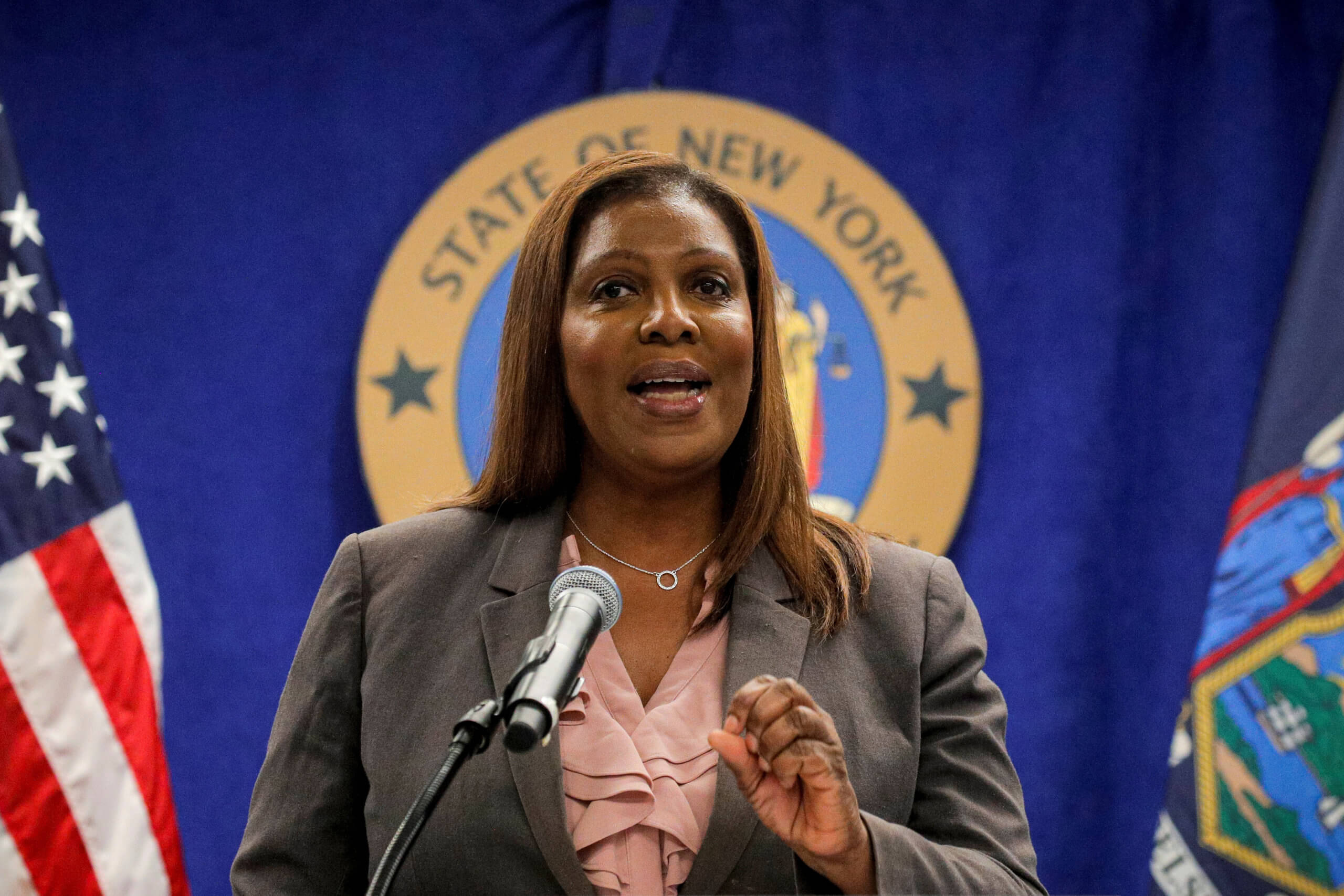
New York Attorney General Letitia James on Tuesday, Feb. 10, recovered more than $4.7 million from the owners of two New York City truck rental companies, Able Rentals, Inc. (Able) and Abarn Equipment Corp. (Abarn), and their accountant, Howard Zapken, for their roles in a decade-long sales tax evasion scheme.
James said an investigation by the Office of the Attorney General (OAG) found that the owners of the truck rental businesses, Myron and Martin Schulman, pocketed sales taxes that they collected from customers on more than $15 million in revenue from 2014 through 2024 by vastly underreporting their taxable sales to the state.
The New York Attorney General said Zapken, as founder of the accounting firm Zapken & Loeb (Z&L), helped the two businesses and their owners operate the scheme, which allowed them to avoid paying over $1.3 million in sales tax.
As a result of OAG’s investigation, James said the Schulmans will pay more than $3.9 million, and Zapken has paid more than $825,000.
“Businesses that cheat on their taxes are depriving our state of the funding that provides health care, education, and other critical services to New Yorkers,” said Attorney General James. “Abarn and Able violated both the law and the trust of their customers who expected the taxes they paid to benefit the public.
“This case sends a clear message to businesses and their accountants: my office will not tolerate tax evasion schemes, and we will hold you fully accountable,” she added.
James said the investigation revealed that the Schulmans “massively understated the amount of taxable sales they reported for years, allowing them to avoid paying most of the sales taxes they owed.
“They did not use the actual sales records of their companies to calculate taxable sales,” she said. “Instead, they instructed Z&L to use only cash deposits made to certain bank accounts to calculate sales tax due.
“These deposits represented a fraction of actual sales because they excluded all credit card transactions, which made up the vast majority of the businesses’ New York transactions,” she added. “These sales tax calculation methods allowed Able and Abarn to pocket most of the taxes they owed to the state.”
For example, in 2018, the New York Attorney General said Able and Abarn reported taxable receipts of $250,099, while their point-of-sale system recorded that total payments received that year were actually $1,888,388.
She said Myron Schulman then instructed Zapken to lower taxable receipts even further by disregarding portions of the cash deposits as supposed estimates of nontaxable transactions.
“When the resulting calculation of sales tax due was still too high, Myron Schulman told Z&L to lower the taxable amounts further,” James said. “Zapken knew this conduct was fraudulent and warned his clients that the amounts used to calculate sales taxes were too low. Yet he participated anyway, filing false and fraudulent sales tax returns for the companies for years.”
As a result of their scheme, James said Able and Abarn failed to report taxable sales of $15,008,715.98 over a 10-year period.
Under the settlements with OAG, she said the Schulmans will pay back $3,972,419.
James said the whistleblower who brought this conduct to OAG’s attention will receive $794,483.80 of the settlement funds.
In addition, she said a licensed accountant approved by OAG must certify that Able and Abarn’s sales tax returns reflect the actual transactions recorded by the businesses for the next five years.
Under Zapken’s settlement with OAG, James said he has repaid $826,660.61 and agreed not to sign, prepare, or file New York state tax returns for anyone other than his immediate family for the next five years.