Antigua and Barbuda
The government of Antigua and Barbuda has welcomed the start of construction of the US$200 million Long Bay Zen Resort saying that the project supports the country’s strategy of attracting more luxury tourism developments, which are expected to boost visitor spending and increase government revenue.
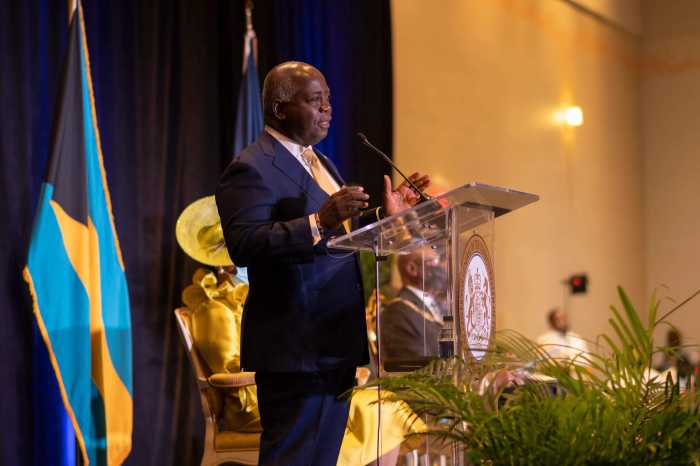
Prime Minister Gaston Browne said the resort is being designed to cater to high-end travelers, similar to the Hermitage Hotel, where room rates can reach US$3,000 per night, adding: “This is where we want them to go — offer service at a premium, while at the same time, take care of the staff. We want to pursue our development in an integrated way and we want to ensure that these luxury properties can operate profitably while at the same time ensure the staff are well paid.”
Prime Minister Gaston Browne reaffirmed that hotel workers should earn wages above the country’s upcoming minimum living wage. He also expressed the government’s full support for the project, praising lead investor Sophie Zhong as a credible investor.
Browne noted that despite setbacks linked to investments in a struggling financial institution, the investors have brought new capital into Antigua and Barbuda.
“That’s what you call real commitment!” Browne said, with his Tourism Minister Charles Fernandez indicating that Antigua and Barbuda had taken another significant step towards the advancement of its Vision 2030 tourism and national development agenda.
“This project represents a new direction for tourism in Antigua and Barbuda. Long Bay Zen Resort embodies the evolving demands of the modern traveler, one who seeks more than just accommodation, but experience, wellness, authenticity, tranquillity, and connection.”
Fernandez said the resort project is launching as the country continues to expand its airline connections and tourism facilities.
“As our airport expansion continues and as we aggressively pursue increased airlift and new international routes into Antigua and Barbuda, the demand for quality room stock continues to grow. Developments such as this position us strongly for the future,” Fernandez said, noting: “This project forms part of our broader Tourism Vision 2030, a vision focused on sustainability, innovation, luxury development, community involvement, and long-term economic resilience.”
Zhong said the resort is being developed to support the government’s goal of creating a smarter and more sustainable country.
Bahamas
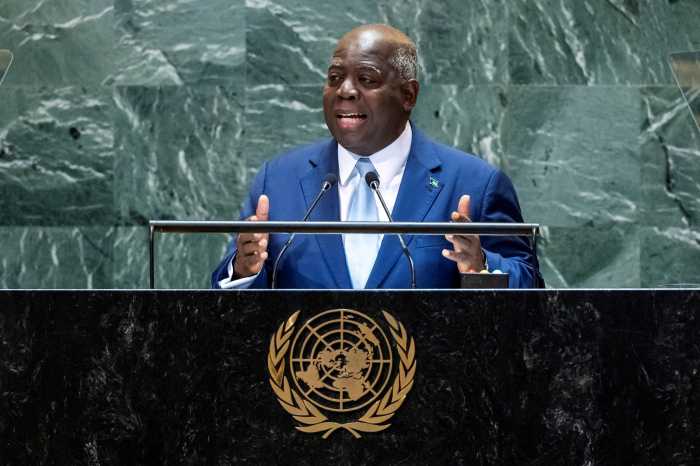
The Bahamas government has imposed an immediate 30-day travel ban on people who have recently visited the Democratic Republic of the Congo, Uganda, or South Sudan.
The government said the measure is a precaution to help protect residents and visitors from the potential spread of the deadly Ebola virus.
“This measure will take effect immediately and will remain in place for a period of 30 days, subject to review by the Ministry of Health and Wellness.”
Authorities in Bahamas isolated two foreign nationals who had recently arrived from the Democratic Republic of the Congo after they developed fevers. Officials later reported that the fevers had subsided.
“At this time, they do not present with any symptoms consistent with Ebola virus disease,” the ministry said, adding that “the public is reminded that the risk to the public remains low and that there are no confirmed cases of Ebola in The Bahamas.”
Health Minister Michael Darville said the two men are still in isolation but are in good condition.
Haiti
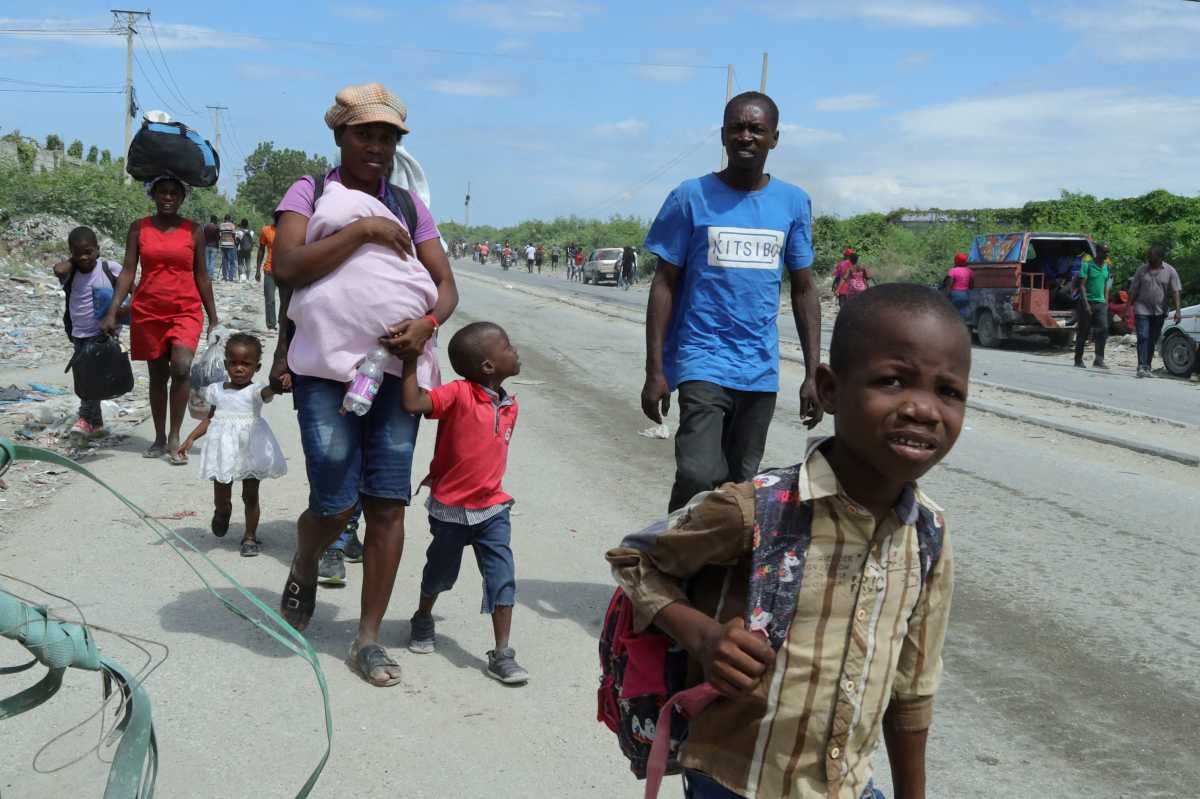
The United Nations says the humanitarian crisis in Haiti is worsening, especially in the neighborhood of Cité Soleil, due to increased armed violence.
According to UN spokesman Farhan Haq, the United Nations Office for the Coordination of Humanitarian Affairs is coordinating relief efforts to help those in need.
New estimates from the International Organization for Migration show that approximately 17,500 people, which is over 4,200 households, have been displaced in Haiti in the last two weeks.
“More than 80% of the displaced people are taking shelter in 33 sites, while others are hosted by already vulnerable families. Assessments at the displacement sites point to rapidly growing needs for food, clean water, healthcare, and hygiene supplies,” Haq told reporters, adding that “conditions at the sites, including poor lighting, are also raising concerns over people’s safety.”
“Children separated from their families, pregnant women and people with disabilities are at greater risk as a result. Our humanitarian partners continue to respond despite the insecurity and access constraints,” Haq said.
Jamaica
Bank of Jamaica expects Jamaica’s economy to recover gradually, with GDP growth of 1–3% over the next two financial years and 1–2% on average in the medium term.
BOJ Governor Richard Byles said the country’s foreign reserves remain strong at US$6.5 billion, well above the adequate level, providing protection against external economic shocks.
“Going forward, Jamaica’s foreign reserve levels are expected to remain adequate over the medium term and will support the orderly functioning of the foreign exchange market, helping to limit volatility and thereby containing imported inflation,” Byles said, emphasising that the domestic financial system remains sound with adequate capital and liquidity.
Byles said that despite a temporary decline in tourism earnings, Jamaica’s foreign exchange market has remained relatively stable.
“On the 19th of May 2026, the exchange rate had appreciated on a year-over-year basis by 0.5%, compared with a depreciation of 1.7% over a year earlier,” adding that this stability in Jamaica’s foreign exchange market has been supported by the Bank of Jamaica’s ongoing measures to reduce currency volatility, with the aim of keeping inflation expectations down and maintaining inflation within its target range.
BOJ reported that it sold US$1.3 billion through its B-FXITT facility over the 12 months ending April this year. This was US$200 million more than the US$1.1 billion sold in the previous year.
“Notwithstanding these sales, however, the bank purchased US$906.4 million more than it sold in the 12 months to April 2026,” the governor said, stressing that the recent geopolitical tensions have introduced significant uncertainty and challenges to the economic outlook.
“The negative impact of the conflict on the country’s external accounts is projected to be significant, with the current account balance expected to deteriorate over the near term,” Byles said.
He said the expected economic deterioration will mainly be driven by higher imported fuel costs, increased imports needed for post-Hurricane Melissa infrastructure rebuilding, and the negative impact of Hurricane Melissa on the tourism sector.
“In this context, the bank anticipates that the current account balance will fall within a range of a deficit of 0.5% of GDP to a surplus of 0.5% for the financial year 2025/26, compared with a surplus of 3% of GDP recorded in 2024/25,” Byles stated.
Saint Lucia
Prime Minister Philip J. Pierre said his government will carefully consider whether to resume capital punishment in Saint Lucia, following growing public support for a petition calling for its enforcement after a recent murder case.
The country has not carried out an execution since October 1995 and currently maintains a de facto moratorium on the death penalty, though three people are on death row.
“That is a serious, serious issue in the country. Every day someone tells me, bring back hanging, every day. It’s complex, it’s has become an international issue and there are countries who suffer reprisals if they introduce again,” Prime Minister Pierre told the post-Cabinet news conference.
“So it is, it’s a matter that we have to think of very, very carefully. I will not venture to give an opinion on it now,” Pierre said, noting that, for example, the Roman Catholic Church opposes capital punishment.
“You’re aware of that, right? So it’s a very complex issue. It’s not an issue that we can just proclaim on. At this point I’m not willing to say, nor am I in a position to see whether we will bring back hanging or not.
“But I can tell you, many people, many, many people people in the country are asking for the return of hanging, of capital punishment. Many, many people. People are saying you can move from hanging to the lethal injection,” Pierre said, reiterating “I will not venture an opinion at this time.”
Pierre said all governments in Saint Lucia have had to address serious crime, particularly murders, and he referenced a legal principle that it is better for many guilty people to go free than for one innocent person to be wrongly punished.
“It’s a very hard situation because you know again, you must look at our history,” Pierre said, noting the emotional nature of the debate on capital punishment as response to the crime situation. “We come from a history where people were just accused of doing things that they never did. People were lynched for committing a crime,” he said, insisting that his administration has provided financial and other assistance to the police.
“Our history is that there must be independence of the judiciary. There must be, no matter how painful it is. And I know it’s painful… it’s painful. It hurts. It hurts me, but we have to understand there must be independence of the judiciary,” he said, noting that the government has spent million of dollars on providing buildings for the Eastern Caribbean Supreme Court of Justice.