Late last month, federal officers in Orlando, Florida, made a deep dive into two shipments of canned foodstuffs headed to the Eastern Caribbean nation of Dominica, but on closer inspection, they instead found a sizable cache of handguns, magazines, and ammunition.
This bust reveals a larger pattern: organized crime groups with Caribbean connections are sending large shipments of illegal weapons to nearly every corner of the Caribbean Community, escalating regional security risks from Guyana and Suriname to Jamaica, The Bahamas, Haiti, and Belize.
A suspect with connections to the French Caribbean was arrested and charged with smuggling the guns to the Caribbean, in what regional governments and law enforcement officials in the US say is a thriving business they are working to eradicate.
Latest figures indicate that the US is the primary source for weapons smuggled to the region, with Florida, Georgia, New York, and Maryland being the main acquisition states.
Tracking the racketeering, the Trinidad-based Implementation Agency for Crime & Security (IMPACS), the umbrella crime monitoring regional agency, says that up to 73 % of weapons seized in the Caribbean can be traced back to the US, with Florida as the number one supplier destination.
The situation is so worrying to regional governments that in some destinations, such as Dominica and its neighboring islands, the Bahamas, and Haiti, they are now heavily relying on US law enforcement to help them reduce proliferation.
While signing agreements for closer defense and security cooperation with the US, several nations like The Bahamas, Antigua, Trinidad, Jamaica, Belize, and St. Vincent say they were desperate enough to join Mexico in a lawsuit against American gun manufacturers in an effort to hold these producers accountable for the deaths and mayhem that gun violence is causing in the 15-nation bloc. The Supreme Court threw out the case last summer, ruling that the manufacturers were operating legally.
As an example of how some governments are worried, police in tiny Dominica say, for example, that between January and mid-June last year, they took at least 60 guns off the streets, including powerful AR-15 rifles and hundreds of rounds of ammunition, and now realize that some of these guns were being concealed in food and other shipments as far back as 2021. For Dominica, this is an astonishing number of guns that were intercepted by police.
Regional leaders’ explicit description of violence as a public health crisis rooted in gun smuggling reflects deep alarm: they link the epidemic of illegal US-sourced firearms to threats against democracy and societal stability, urging reciprocal cooperation from the US in this fight.
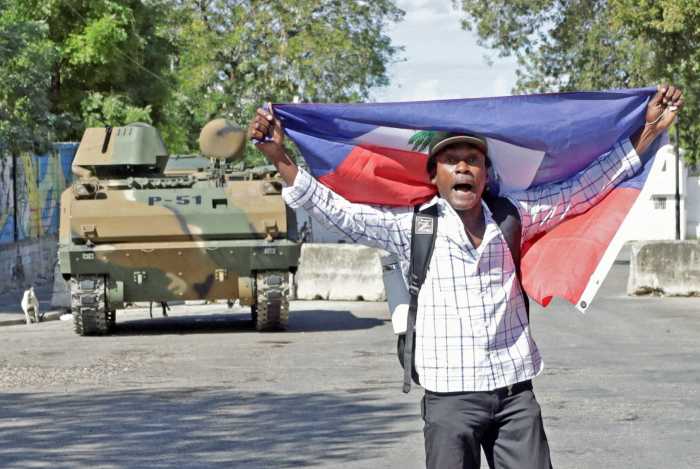
Meanwhile, the US mission in Haiti last Tuesday announced indictments for two Florida-based Haitian brothers for unlawfully shipping weapons to the Dominican Republic, presumably for overland forwarding to neighboring Haiti, where heavily armed gangs are terrorizing, disrupting daily life, and preparing for general elections next year.
Police say they recently seized 18 rifles, five handguns, magazines, and more than 36,000 rounds of ammunition from inside a container headed to the DR. And between mid-2025 and early 2025, the brothers bought 46 more rifles, including two very high-powered, armor-piercing .50-caliber rifles that were also headed to the DR and Haiti.
And while a UN-authorized international force battles gangs in Haiti, authorities in Trinidad say they actually have positive news to report, as they have seen a massive reduction in violent crime, cocaine, and weapons smuggling in particular. For this, they credit the Trump administration’s attacks on alleged drug smuggling and other boats, saying the military presence and activity have clearly disrupted the supply chain from nearby Venezuela and other South American nations.
Prime Minister Kamla Persad Bissessar and Security Minister Roger Alexander both noted that “we have seen a major drop in the number of murders. “We have 240 fewer murders less this year than last year. Again, I thank the US, which has partnered with us to fight the narco trafficking, the gun running, and the human trafficking,” she told reporters.
Alexander notes that “persons are hesitating. There is great hesitation in persons bringing in guns, illegal drugs, and performing this act of human trafficking. That much I can tell you. I continue to shower praise on them. Our borders were very porous over the years,” he says.
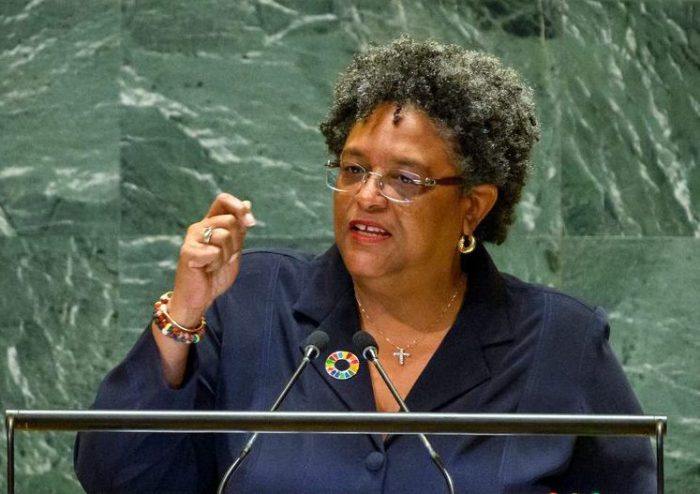
In Barbados, the Mia Mottley administration is moving to introduce domestic terrorism legislation following several mass shooting incidents in recent years, with the latest occurring earlier this month when 10 people disembarking from a leisure cruise were injured by gunfire. An angry prime minister says the time has come to move past simple murder and aggravated assault charges and notch up to terrorism.
“We will have one, a domestic terrorism bill. We are now into the area where people are seeking to cause terror. They must face the full weight of the law, “ she said in a national address after the shooting.