Bahamas
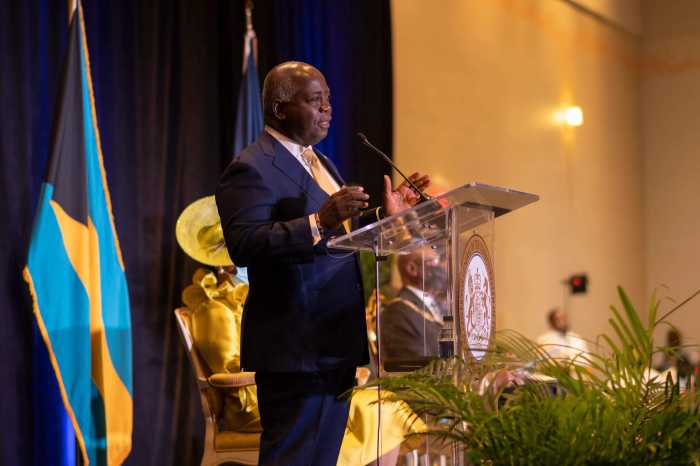
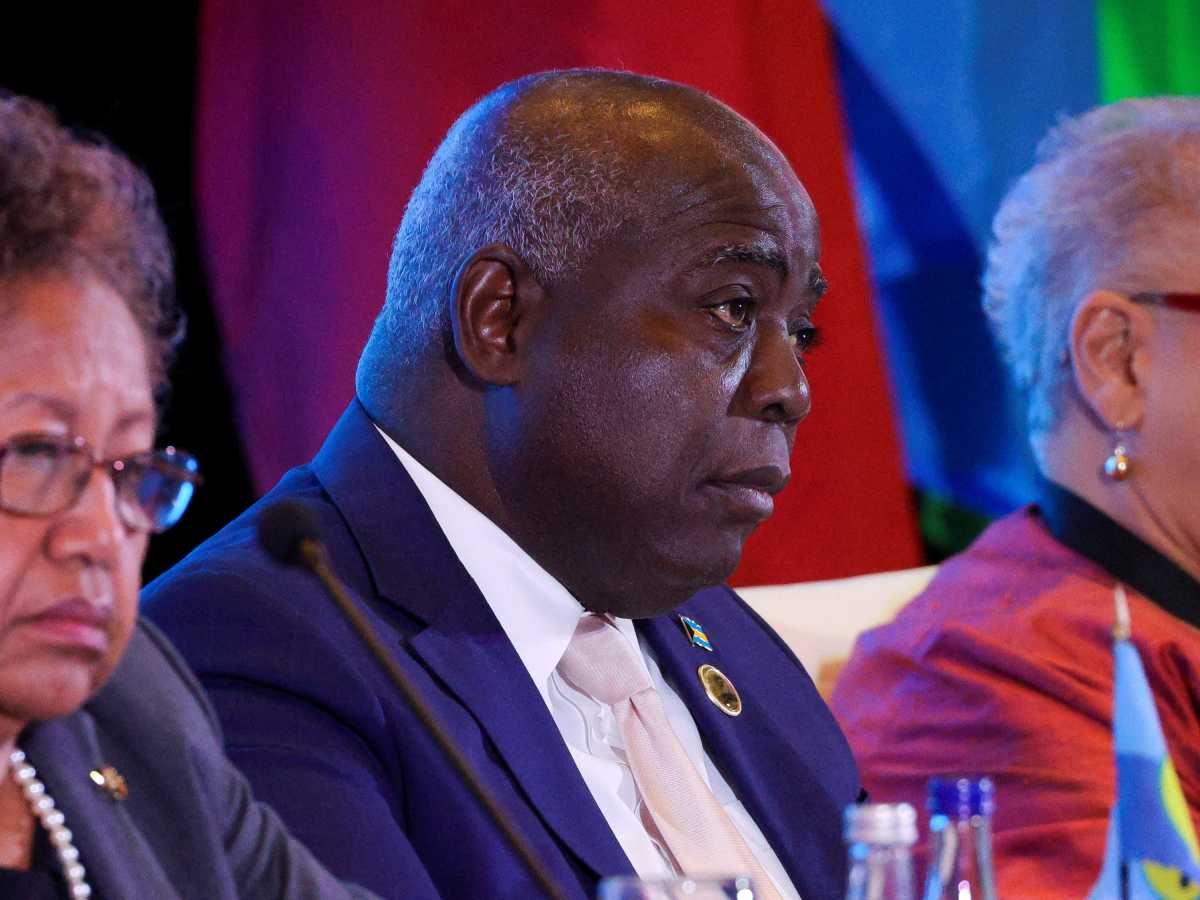
Prime Minister Philip Davis has voiced his “disappointment” after the Bahamas Union of Teachers (BUT), decided to take industrial action, after expressing concern over the long promised salary increases that were paid out recently.
“I’m disappointed they are not (satisfied)” Davis said, adding that “the increases are something that I gave to them, and they will have an opportunity during the course of their negotiations for the new industrial agreement to raise those issues there.
“That was not a matter that was negotiated by them. It was something I did for them.” he added.
BUT president Belinda Wilson said that an internal poll however showed that 87.8% of members indicated they were prepared to take industrial action, with 92% supporting a strike vote.
“The president and executives of the BUT will advise the members on the way forward,” Wilson said.
Officials have said the exercise aims to narrow gaps between public service pay and the wider public sector.
Davis had promised in June that all levels of public servants would receive their increases by September.
But the payment was delayed with Davis saying that the delayed payments would be made in December, which led to members of both unions taking to the streets in protest even as the prime minister insisted that the payment would be made “before Christmas.”
When the payments were made, Wilson described them as “crumbs”, noting that some teachers received nothing, while others received increases between US$150 and US$341, as a result many workers were demanding clarity on how the increases were calculated.
The Director of Communications in the Office of the Prime Minister (OPM) Latrae Rahming defended the increase amounts, noting they should not be viewed “in isolation” but rather in the context of the Davis administration’s broader “commitment to equity within the public sector, salary adjustments over the last four years.”
Caribbean
While speaking at CARPHA’s Regional Pandemic Fund workshop on surveillance for foodborne diseases in Port of Spain, Trinidad last month, executive director of the Caribbean Public Health Agency (Carpha) Dr Lisa Indar has warned that the Caribbean remains at high risk for foodborne, waterborne and zoonotic diseases, as disasters and outbreaks continue to strain health systems across the region.
She said the events, such as Hurricane Melissa particularly in Jamaica, have emphasized the urgent need for stronger, more co-ordinated One Health systems that integrate human, animal and environmental health.
“We recognise the immense public upset and strain these events have placed on our systems. As water, food and sanitation infrastructure are disrupted, the risk of food and waterborne diseases increases sharply.”
Indar said Jamaica is also managing an ongoing vector-borne outbreak in the aftermath of the hurricane, reinforcing what public health experts have warned for decades: extreme weather events almost always trigger spikes in communicable disease.
“This truly emphasizes that when there are disasters, food and waterborne infections rise.””
At the same time, she noted influenza activity across parts of the Americas, coupled with recent reports from neighboring regions, demonstrates how quickly animal-health events can spill over into human populations and food systems, threatening trade, food safety and public health.
“Together, these ongoing events are clear reminders that our One Health co-ordination, the integration of human, animal and environmental surveillance, must remain strong, agile and ready long before threats arrive.”
” That meeting produced several key milestones: the Regional One Health Foodborne Diseases and Zoonotic Action Plan, updated national One Health action plans for member states, and an Agency Collaboration Matrix to streamline communication among regional and international partners.. She said it also laid the groundwork for a regional One Health co-ordination platform on SharePoint.
She added, the agency has finalized strengthened support to the regional action plan, Steer member states and established a One Health Multi-sectoraling Committee, which now meets regularly with more than a dozen partners. Carpha also launched the region’s first One Health Share-Point platform, allowing real-time information sharing and technical exchange.
Senior health specialist at the Inter-American Development Bank (IDB) Ian Ho-a-shu said the bank was honored to support Carpha and its partners in advancing the One Health agenda. He said the Pandemic Fund project aligns with the IDB’s core development pillars: social inclusion and equity, productivity and innovation, and regional integration.
“The project ensures vulnerable populations across the Caribbean have access to essential health services during crises,” he said.
Haiti
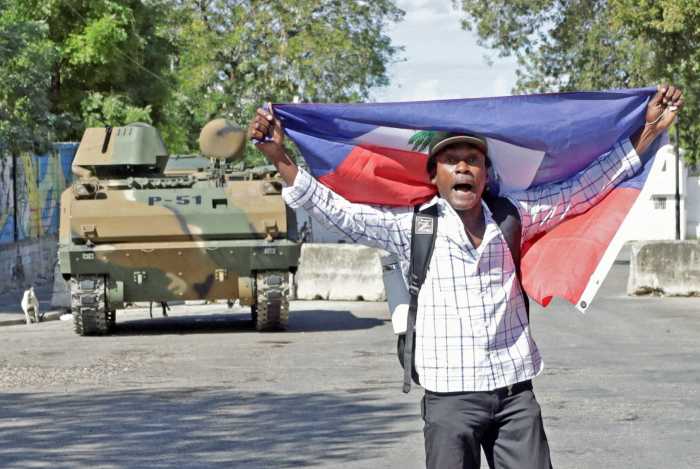
Haiti is moving towards holding its first presidential election since 2016, after the country’s transitional government adopted the long-awaited electoral law that political commentators say will set in motion the process for restoring democratic rule in the Caribbean Community (CARICOM) country.
The nine-member TPC, established in April 2024 to govern Haiti until new elections are held, is responsible in appointing a prime minister, forming a government, and guiding the country toward elections, which is scheduled for February 2026.
The council was created in response to a political vacuum and a surge in gang violence, and is tasked with improving security and restoring order.
Some TPC members have been attempting to use the law and its proposed date for elections as leverage to extend their tenure in office beyond February, and to remove Prime Minister Alix Didier Fils-Aimé.
Three of the TPC’s seven voting members were absent from the meeting in what political observers say was designed to prevent the adoption of the law, which now has to be published in the official gazette to be legal.
But despite their absence, the law was adopted anyway.
The last presidential election was held in Haiti in 2016 when Jovenel Moise won, defeating 26 other candidates, but he was assassinated in July 2021.
Political observers say the decision, while clearing a procedural hurdle, still doesn’t offer a clear path to free and fair elections and that it remains full of challenges.
A draft law that was sent by the Provisional Electoral Council ahead of voting was heavily criticized by some human rights advocates over its lack of safeguards on eligibility.
Frinel Joseph, one of the two observers on the Transitional Presidential Council (TPC) posted on social platform X recently saying the adoption of the law by the panel and Council of Ministers “marks a decisive turning point in the transition.”
He added that the TPC and government “are providing the country with the necessary legal and political framework for holding elections that will allow citizens to choose their representatives in accordance with the Constitution, democratic principles, and the Agreement of April 3, 2024.”
Jamaica
Jamaica has secured a comprehensive package of US$6.7 billion over a three-year period to strengthen the country’s recovery and reconstruction efforts following the passage of the recent Hurricane Melissa.
The World Bank said in a statement that after a request from Jamaican Prime Minister Andrew Holness, the Development Bank of Latin America and the Caribbean (CAF), the Caribbean Development Bank (CDB), the Inter-American Development Bank Group (IDB Group), the International Monetary Fund (IMF), and the World Bank Group (WBG) have jointly assembled a comprehensive package for the island.
It said that this coordinated effort reflects a unified commitment to help Jamaica undertake a fiscally responsible, long-term recovery through a combination of emergency preparedness financing, sovereign financing, grant support and private sector investments.
The announcement by the banks comes ahead of Holness meeting with representatives from the international financial institutions to discuss implementation plans.
According to the World Bank, Jamaica’s robust disaster risk financing framework enabled a rapid flow of funds to meet urgent response needs.
The statement said that under the recovery needs and institutional support, with damages estimated at US$8.8 billion, recovery will require significant resources and long-term investments.
“Comprehensive recovery planning is already underway, focusing on critical priorities and reinforcing Jamaica’s resilience, CAF, CDB, IDB Group, IMF and WBG are working closely with the Government of Jamaica and other partners to support this process.”
The World Bank Group, CAF, CDB, IDB Group, and IMF remain committed to ensuring that Jamaica’s recovery is grounded in a comprehensive and collaborative approach that leverages both international partnership and private sector engagement.
The statement said that by integrating robust financial instruments, technical guidance, and a shared commitment to building forward better, Jamaica is well-positioned not only to restore what was lost but also to strengthen its resilience to future disasters.
St Lucia
Last Monday the Saint Lucia Labour Party (SLP) won a convincing second consecutive five-year term in office.
The preliminary results showed that the party won 14 of the 15 seats it had contested.
“First of all I would like to thank the people of St Lucia for conducting what was a very decent election, an election free from violence and this is testimony of the maturity of our people and the maturity of our democracy.”
“I want to thank the members of the Saint Lucia Labour Party, the executive, the cabinet, the men and women in the constituency groups who worked hard, who worked tirelessly that this victory happened,” a jubilant Prime Minister Phillip J Pierre told supporters.
“This victory belongs to them and I really want to thank them,” Pierre said, congratulating the leader of the main opposition United Workers Party (UWP), Allen Chastanet, who appeared to be the lone successful candidate for his party.
Pierre, 71, congratulated the 65-year-old Chastanet “because we think there is a role for the opposition so we could let the fine traditions of democracy prevail.” Chastanet has not made any public statement regarding the outcome of the election.
Pierre was critical of what he described as the “misinformation and propaganda” that had been a hallmark of the opposition politics over the last four and a half years, saying it led to the vilification of people as well as their family and friends “all in the name of politics.
“I wish the era of the last four-and-a-half years never return to St. Lucia politics,” Pierre said, adding that the “misinformation and attacks on people also led to the spoiling of “St. Lucia’s good name abroad and selling of St. Lucia as a waste land. “I hope that never happens again,” he continued.
“Tonight we are happy, I feel relieved,” Pierre said, thanking voters in the Castries East constituency for returning him as their parliamentary representative for a record sixth consecutive time.