Bahamas
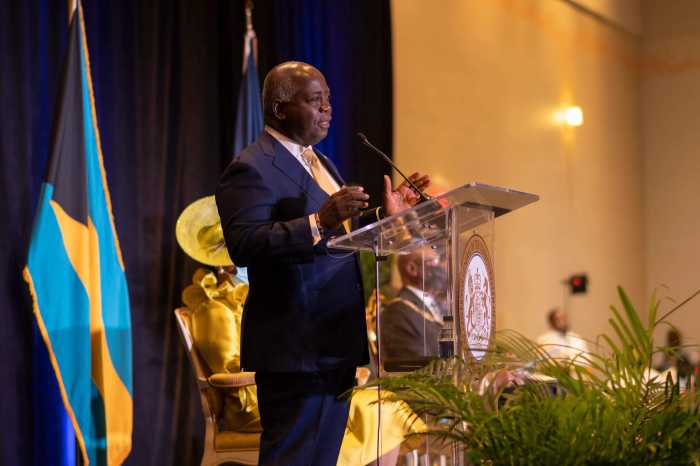
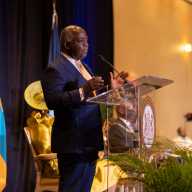
Bahamas Prime Minister Phillip Davis announced the government will remove VAT on foods currently subject to a 5% VAT, effective April 1 this year.
Davis stated, “Last year, we cut VAT on food from 10% to 5%; now, effective April 1, these foods will be VAT-free.”
Also included are fresh fruits and vegetables, baby food, lunch snacks, frozen foods, and other groceries.
“It is a significant step, and one we hope will really help, along with our efforts to reduce costs through energy reform, the addition of new trading partners, and more home-grown food.”
Davis said the government is also expanding property tax relief and that owner-occupied duplexes and triplexes are now eligible for the residential exemption.
He explained that expanded property tax relief and broader first-time homeowner concessions are intended to help more Bahamian families build wealth.
“These new policies across education, trade, taxes, housing, food security, energy, and more together add up to relief and progress. We responded to times of crisis with great strength.”
“Now we are using those same strengths to move forward. After all, we didn’t survive all the tragedy and hard times just to settle for the status quo. The world will keep changing-but so will we, with confidence, and without leaving anyone behind,” Davis added.
He said in 2018, the previous government raised VAT from 7.5% to 12%, which was followed by a massive US$2 billion drop in local consumer spending.
“Unfortunately, that meant our families, our economy, and our fiscal situation were weaker when we faced the terrible tragedy of Dorian, the Category 5 hurricane which followed Joaquin in 2015, Matthew in 2016, and Irma in 2017.”
Barbados
The government of Barbados indicated the possibility of following several other Caribbean Community (CARICOM) countries in signing an agreement with the United States to facilitate the resettlement of third-country refugees, thereby reducing situations in which Washington cannot return these individuals to their state of birth or origin.
Minister of Foreign Affairs Kerrie Symmonds says, while they have not yet been approached by Washington, “I would like to think that we would not be left out.”
Antigua and Barbuda, Dominica, St. Lucia, and St. Kitts and Nevis have all indicated they have signed the agreement with the North American country, while negotiations with Guyana are still ongoing.
Symmonds told an online publication that the United States is going around the Caribbean, and “they have not reached out to us yet, so we will just wait and see.
“It is not something we are looking forward to,” he said, adding that Barbados will “cross that bridge” when the time comes.
Grenada
According to the latest report from the Grenada Authority for the Regulation of Financial Institutions (GARFIN), Grenada recorded a significant inflow of cash through money transfer operators in 2024.
“Based on data reported to GAR-FIN, total remittances flowing into Grenada in 2024 through the money transfer operators amounted to EC$215.7 million (US$79.8 million) while total outflows amounted to EC$59.5 million (US$22 million). There was therefore a net inflow into the country of EC$156.2 million (US$57.8 million),” according to the report.
GARFIN said that the outflow for 2024 is approximately two million dollars less than the previous year.
“Based on data reported to GARFIN, total remittances flowing into Grenada in 2023 through the money transfer operators amounted to EC$57.5 million (US$21.3 million) while total outflows amounted to EC$215.9 million (US$79.8 million). There was therefore a net inflow into the country of EC$158.4 million (US$58.6 million),” said the 2023 annual report.
With the inclusion of remittances for 2024, the data show that over the eight-year period from 2018 to 2024, the total amount of remittances flowing into Grenada was EC$1,162 million (US$430.9 million).
As of Dec. 31, 2024, there were two companies licensed to do money transfer activities in Grenada and seven companies licensed to conduct micro-lending activities. These were all licensed under the Money Services Businesses (MSB) Act, CAP 198A.
Guyana
Investments in Guyana’s tourism sector over the past five years have led to a significant increase in passenger traffic. According to President Dr. Irfaan Ali, it was a 450% increase during this period.
In 2025, he noted that passenger traffic across all ports of entry surpassed 1.2 million.
At the AC Marriott Hotel opening at Ogle, East Coast Demerara (ECD), President Ali noted international arrivals rose by 254% in four years, and aircraft seat capacity surged 400.5%.
“International carriers servicing our market grew by 220%. The number of destinations served by the airport increased by 184%. Those are some numbers that speak for itself.”
“You live in a constantly changing world, and our public policy approach, our development approach, and our business approach must take into consideration the changes that are occurring in our world and our region,” he noted.
According to reports from the Ministry of Public Works, international passenger movements at the Cheddi Jagan International Airport (CJIA) and the Eugene F. Correia International Airport (EFCIA) rose from 205,297 in 2020 to 938,715 in 2024.
Minister of Tourism Susan Rodrigues stated that increased visitor numbers to Guyana demonstrate rising confidence in the country as a destination, which is a positive achievement.
“But we are not stopping there. Our vision is ambitious but achievable. By 2030, we are aiming to welcome one million visitors annually,” she said.
St. Lucia
The executive board of the International Monetary Fund (IMF) says the St Lucian economy has staged a strong performance in recent years and that after recording one of the largest declines in the region in 2020, economic growth rebounded sharply, supported by increased tourism services.
According to the IMF’s executive board, St. Lucia’s economic growth is expected to fall in 2025 due to weaker tourism amid temporary hotel closures and reduced airlift, but to rebound in 2026 as tourism picks up.
It said the external position in 2024 was assessed as broadly consistent with fundamentals and desirable policies, and that fiscal performance has strengthened, supported by three consecutive years of primary surpluses.
“Nonetheless, long-standing challenges remain with income per capita diverging from the United States in the past decades, weak productivity, high public debt stock, and the ever-present risk of natural disasters.”
The IMF executive board said that the overarching fiscal policy priority is to reduce public debt and create room for capital spending through revenue-based measures.
It said under current policies, public debt will fall short of the regional target of 60% of gross domestic product (GDP) by 2035, warning that “without further actions, development resources may shrink, and debt and borrowing costs could increase further during shocks”.
“A growth-friendly and feasible fiscal adjustment would help to decisively reduce public debt to the regional target, lower borrowing costs, and enable resources for higher capital expenditure to address growth bottlenecks.”
Reforming the tax system would boost revenue, improve equity, and reduce distortions.
The IMF executive board said that St. Lucia’s tax system has high tax expenditures, which weaken collection.
Also, the recent increase in pension benefits, amid a rapidly aging population, creates longer-term fiscal risks and requires forward-looking reforms.
Compiled by Devika Ragoonanan