Antigua and Barbuda
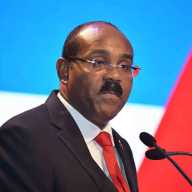
Antigua and Barbuda’s Ambassador to the United States, Sir Ronald Sanders, recently stated that the government is aware of public concern following reports that citizens may be required to post a visa bond when applying for a visitor visa to the United States.
In a statement, Sir Ronald said that it is important to clarify several points, noting that “no bond applies to holders of existing US visas” and that “those visas remain valid on their current terms.”
He said Antigua and Barbuda is included in a US Visa Bond Pilot Programme. This measure applies only to a narrow category of new visa applicants who qualify under limited exceptions, while existing US visa restrictions remain in place.
“The bond does not apply to all travelers, and it does not guarantee or deny the issuance of a visa,” Sir Ronald said, adding that “it is important for the public to understand the context in which this information emerged.”
He added that no government was advised in advance of the announcement by Washington.
“Indeed, the announcement was made without prior notice, even to US embassies accredited to the affected countries. This understandably contributed to uncertainty and concern, which the government is now actively addressing through direct engagement.”
The US State Department stated that only Antigua and Barbuda and Dominica, among CARICOM countries, will require a bond of up to US$15,000 when applying for a US visa. The measure starts from Jan. 21 this year.
CARICOM
The Bureau of the Conference of Heads of Government of the Caribbean Community (CARICOM) leaders has emphasised a call for “peaceful dialogue” to ensure stability in Venezuela following the United States invasion of the country and the detention of its President Nicolas Maduro on Jan. 3.
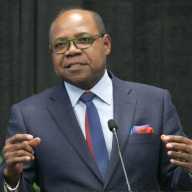
In a statement, the Bureau, which includes St. Kitts and Nevis Prime Minister Dr. Terrance Drew, the Caribbean Community (CARICOM) chairman, Jamaica’s Prime Minister Andrew Holness, and their St. Lucian counterpart, Prime Minister Phillip J. Pierre, stated that they recently met to discuss the situation.
CARICOM had earlier issued a statement in which it said it “is actively monitoring the situation, which is of grave concern to the Region with possible implications for neighbouring countries.
“CARICOM will continue to update the people of the region as more information is received.”
In their statement, the CARICOM Bureau said “CARICOM is firmly committed to the fundamental principles of international law and multilateralism enshrined in the UN Charter, including sovereignty and territorial integrity of States and respect for human dignity.
“The region reiterates its call for peaceful dialogue through diplomatic channels to ensure Venezuela’s stability, good governance, democracy, and prosperity for the people of Venezuela,” the Bureau said, adding that “CARICOM remains ready to support all such efforts, in a spirit of cooperation and mutual respect.
“The Bureau of Heads of Government assures that every effort is being taken to ensure the safety and security of citizens of the Region. The Bureau will continue to monitor the multifaceted impact of this evolving situation and the implications for economic activity within the Community, particularly air travel,” the statement indicated.
Dominica
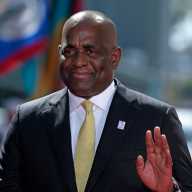
Prime Minister Roosevelt Skerrit announced that Dominica had entered into an agreement with the United States to facilitate the resettlement of third-country refugees, aiming to alleviate scenarios where the United States cannot return these individuals to their state of birth or origin.
“In our discussions with the State Department, there has been careful deliberation of the need to avoid receiving violent individuals or individuals who will compromise the security of Dominica. This has been acknowledged and well received by the State Department.” Prime Minister Skerrit said.
He said given the importance of bilateral relationships between the United States and Dominica, he, as prime minister and head of government, “believes it is important to find key points of agreement and compromise between our countries.”
“This engagement is based on our responsibility to safeguard the well-being of our people, particularly their access to lawful travel, education, employment, and family connections, while strengthening cooperation between our governments.”
“I believe this will further deepen our longstanding relationship and signal clearly that Dominica remains a willing and reliable partner of the United States in the region,” Skerrit said.
Asked to disclose which countries the migrants would be coming to, Skerrit said, “There are details” that he cannot share with the country at this stage.
“But all of the questions you have asked have been considered as part of the discussions and part of the agreement, the MoU between Dominica and the United States,” Skerrit said, adding that Washington “has been very respectful and reasonable and understanding of our concerns.”
“I think they have taken our concerns into very serious consideration, and those concerns are being reflected in the final document agreed between ourselves. But as time goes by, we will know how we operate this agreement,” he added.
Guyana
The main opposition party — We Invest in Nationhood (WIN) has called on the Irfaan Ali government to meaningfully engage the opposition on matters of national security through consultation, cooperation and institutional balance to present a coherent, national response to a regional crisis, in the aftermath of the fall of the government of Venezuela.
“National security is not a party matter. It is not a PPP matter or an opposition matter. It is a Guyana matter,” WIN said.
In a statement, the party has requested that the President convene an immediate meeting to discuss the potential security, humanitarian, and diplomatic implications of recent events in Venezuela.
“Silence, exclusion, and executive control are not strengths. In moments of regional instability, unity is strength, transparency is strength, and constitutional governance is strength.”
WIN also called for an immediate meeting to elect the Opposition Leader, enabling the Parliamentary Oversight Committee on the Security Sector to review our security policy during this critical period.
“A government that excludes half the electorate from discussions on national security weakens the country it claims to defend.” Warning that the United States’ removal of Nicolás Maduro from power could worsen tensions between Guyana and Venezuela.
“Those tensions do not disappear because of regime change; in fact, they may intensify in unpredictable ways. We cannot pretend that the risks to Guyana are not real and immediate, and can include a number of possibilities that can leave Guyana even more susceptible to reduced security,” said WIN.
WIN continued by saying that Guyana could not afford division or democratic paralysis at a time when regional tensions might spill over its borders. “Leadership now requires engagement, not avoidance, consultation, not control, and nationhood, not partisanship.”
St. Kitts and Nevis
The St. Kitts and Nevis government states that the recent military exercises conducted by the People’s Liberation Army (PLA) around the Taiwan Strait “heighten tensions and risk undermining peace, stability, and prosperity.”
“As a nation committed to international law and the peaceful resolution of disputes, St. Kitts and Nevis underscores the importance of dialogue. The Taiwan Strait is a vital corridor for global trade and shipping, and its stability is a matter of international interest,” Basseterre said in a statement.
St. Kitts and Nevis is among a handful of Caribbean Community (CARICOM) countries with diplomatic relations with Taiwan that China regards as a renegade province and has been urging the international Community to adhere to its “One China” principle.
In its statement, the Terrance Drew government said it was calling on “all parties to uphold their responsibilities under the United Nations Charter” with St. Kitts and Nevis reaffirming “its commitment to working with partners to safeguard global peace, stability, and development.”
Taiwanese President William Lai Ching-te said as head of state, his stance has always been clear: “to resolutely defend national sovereignty and strengthen national defence.” Lai has called for a US$40 billion increase in Taiwan’s military spending, but the proposal is stalled in the country’s legislature.
The United States has also called on China to exercise “restraint” and avoid actions that raise tensions.
“The United States supports peace and stability across the Taiwan Strait and opposes unilateral changes to the status quo, including by force or coercion,” said State Department spokesman Tommy Pigott.
Compiled by Devika Ragoonanan