Barbados
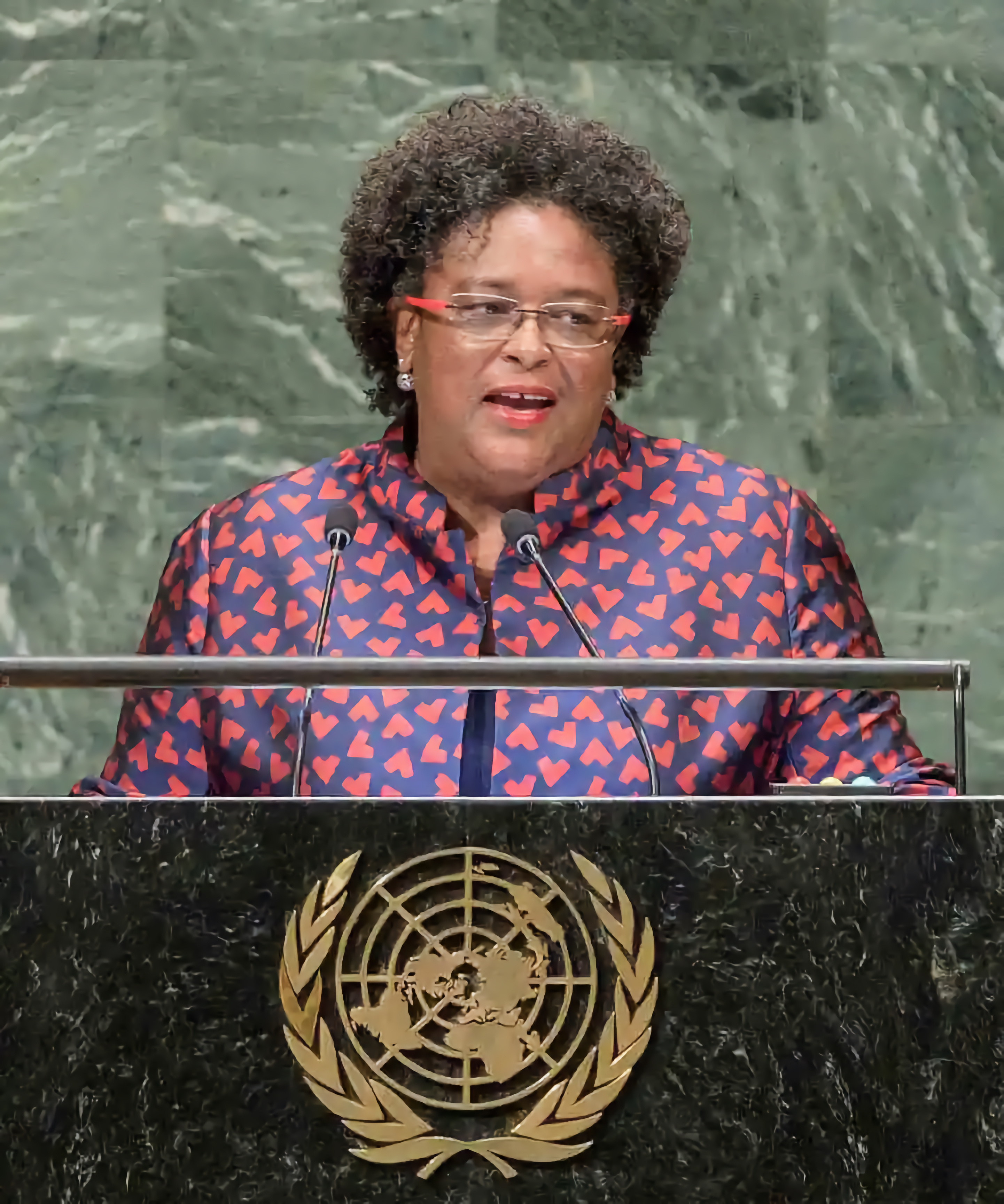
Barbados Prime Minister Mia Mottley recently announced Feb. 11 as the date for a general election in her country, with Nomination Day on Jan. 27. This is the second time she has called a snap election within at least one year of the end of her five-year term in office.
Mottley led the Barbados Labour Party (BLP) to landslide 30-0 victories in both the 2018 and 2022 general elections, defeating the main opposition Democratic Labour Party (DLP), which is led by King’s Counsel Ralph Thorne, who took over the leadership of the party in February 2024, less than a week after he left the ruling BLP government.
Attorney Michael Lashley, who joined the party last year after resigning from the DLP, has now completed the BLP’s slate of 30 candidates.
Speaking at a public meeting of her BLP, Mottley said that in a democracy, “you must come back for a new mandate, and if you want to come back to us for a new mandate, then you must.
“I ask you now to please listen to me carefully. I visited His Excellency, Lieutenant Colonel, the Most Honourable Jeffrey Bostic, the President of Barbados, just after four o’clock this evening, and my colleagues are looking at me with enthusiasm because they too do not know.
“…I advised His Excellency that come Monday, the 19th of January, the Parliament of Barbados shall be dissolved, and I indicated to His Excellency that the writs for elections will be issued, having been written and approved by the Honourable Attorney General, who awaits now only the date,” Mottley told BLP supporters.
However, there had been widespread speculation that Mottley would have been calling a general election ahead of the constitutional deadline, as she seeks a third consecutive term in office.
Grenada
The International Monetary Fund (IMF) recently said that Grenada’s economy continues to navigate elevated global uncertainties effectively despite the effects of Hurricane Beryl, which hit the island on July 1, 2024.
“Economic activity remains robust, with strong investment and construction more than offsetting a moderation in tourism inflows,” the IMF executive board said following the 2025 Article IV consultation with Grenada, endorsing the earlier staff appraisal.
The IMF said Grenada’s economy has proven resilient in the aftermath of Hurricane Beryl, despite elevated global uncertainties. Growth in 2025 is estimated to have accelerated to 4.4%, driven by strong investment and construction activity. Inflation has continued to moderate, reflecting easing global food and fuel prices.
According to the Washington-based financial institution, major public infrastructure projects will sustain buoyant construction over the medium term, extending the gradual moderation in overall growth toward its long-term potential.
The executive board said the current low inflation is expected to gradually normalize by 2028.
“Grenada’s external position in 2024 is assessed as weaker than the level implied by medium-term fundamentals and desirable policies, and the large current account deficit will remain elevated over the medium-term until construction import pressures subside. Notwithstanding near-term fiscal deficits amid reconstruction and other priority spending, the underlying fiscal position remains sound,” it said.
However, the executive board said the downside risks to the outlook persist amidst heightened global economic and geopolitical uncertainties.
Guyana
The government of Guyana has taken another major step toward improving access to clean and reliable water, as it recently secured US$34.45 million (Guy$7.2 billion) concessional loan from the government of Japan to upgrade water treatment infrastructure at Diamond, East Bank of Demerara.
The agreement will co-finance the country’s major Climate Resilient Water and Sanitation Infrastructure Improvement Programme with the Inter-American Development Bank (IDB). It aims to improve water quality and services for many residents in the fast-growing community.
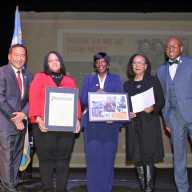
Minister of Foreign Affairs Hugh Todd and Japanese Ambassador to Guyana Akima Umezawa signed and exchanged notes during a ceremony held in the ministry’s conference room.
Todd said Guyana and Japan have enjoyed “cordial relations inter-state” for nearly 60 years. He noted Japan has consistently supported Guyana’s development during that time. He described the loan as another strong signal of Japan’s commitment to supporting smaller and vulnerable states.
He also described Diamond as a growing community that is becoming a major hub within Region Four. He stressed the need for corresponding structure upgrades.
“If the community is growing, then we would have to upgrade the infrastructure. So we are very happy to partner with the Japanese government and the IDB on the loan and signing of these concessional notes, which brings to bear the fact that Guyana is very focused on governing for the people of Guyana,” Todd said.
Umezawa pointed to Guyana’s strong economic performance over recent years and noted that this rapid development must be matched by critical investments in basic services.
“I’m convinced that today marks a historic moment, taking a significant step towards the future of Guyana-Japan relations,” Umezawa said. He stressed that access to safe drinking water is a fundamental human need and a basic human right recognized by the United Nations.
Haiti
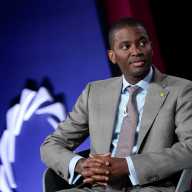
The United Nations Security Council was told on Wednesday that Haitian stakeholders remain divided over the transitional governance architecture that is to lead the country to elections.
The Security Council held an open briefing on Haiti. The Special Representative and Head of the UN Integrated Office in Haiti (BINUH), Carlos Ruiz Massieu, provided an update on recent developments. He noted that the
Transitional Presidential Council (TPC) has been unable to organise elections to complete the political transition before Feb. 7. According to a May 2024 decree, the TPC’s non-renewable mandate expires on that date.
Massieu has acknowledged steps taken by the Haitian authorities to advance this process. For example, on Dec. 1 last year, the TPC approved an electoral decree establishing rules for the general election. On Dec. 23, 2025, the Provisional Electoral Council published the electoral calendar, which sets the first round of presidential and legislative elections for Aug. 30.
But in his report to the Security Council, UN Secretary-General António Guterres notes that Haitian stakeholders “remain divided over the transitional governance architecture that is to lead the country to elections”.
The Secretary General’s report notes that gang violence has expanded beyond the Port-au-Prince metropolitan area. It also highlights the use of high-calibre weapons by gangs in 2025.
The Secretary General’s report describes several steps taken by the UN to establish the UN Support Office in Haiti (UNSOH) by March 31. These include identifying locations, conducting procurement activities, establishing key host-country agreements, and confirming the Gang Suppression Force’s (GSF) operational requirements for UNSOH’s logistical support.
It mentions the delivery of equipment that enabled the GSF to dispatch additional supplies and reinforce patrols.
Massieu encouraged UN member states to support the GSF through personnel, equipment, and financial contributions.
St. Vincent and the Grenadines
The St. Vincent and the Grenadines government says it will accept the position of the sub-regional Organisation of Eastern Caribbean States (OECS) even as the main opposition Unity Labour Party (ULP) encouraged Kingstown to reject a request from the United States to facilitate third-country refugees so as to mitigate scenarios where Washington cannot return these individuals to their state of birth or origin.
So far, Antigua and Barbuda, Dominica, St. Kitts and Nevis, and St. Lucia have said that they have signed a memorandum of understanding (MOU) with Washington regarding the above issue.
“The Prime Minister has indicated that his OECS colleagues, prime ministers, will be meeting as a collective and deciding, with the proper advice from the technocrats, how we will address the State Department on this issue for clarifications and for the appropriate protocols in dealing with the situation,” said Deputy Prime Minister St. Clair Leacock.
“… Let’s take these things in concentric circles. We’re not alone. That’s the CARICOM situation with Venezuela. That’s the CARICOM situation with immigrant situations. You listen to the news; you see what’s around it. The whole world is in crisis. Bigger people than us are trying to come to grips with their relationships,” said Leacock, who is also Minister of National Security and Immigration.
But Opposition Leader Dr. Ralph Gonsalves says St. Vincent and the Grenadines and other CARICOM countries should reject the U.S. proposal to accept refugees and deportees from third countries.
Gonsalves said that, while Leacock said Kingstown will stand by the OECS position, the government should also reach its own conclusion. It should reject Washington’s request.
Compiled by Devika Ragoonanan