Antigua and Barbuda
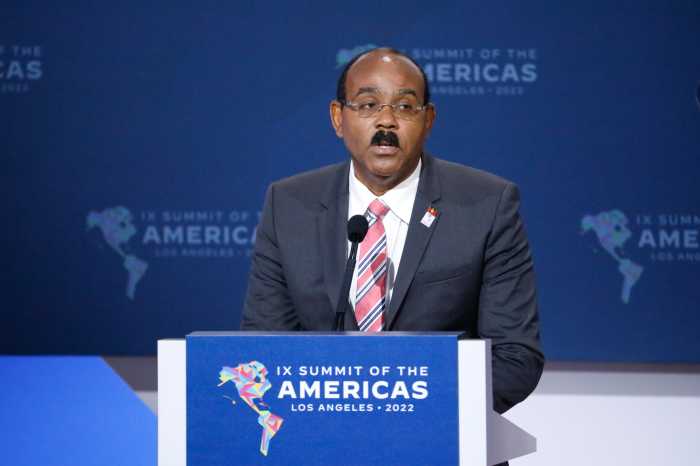
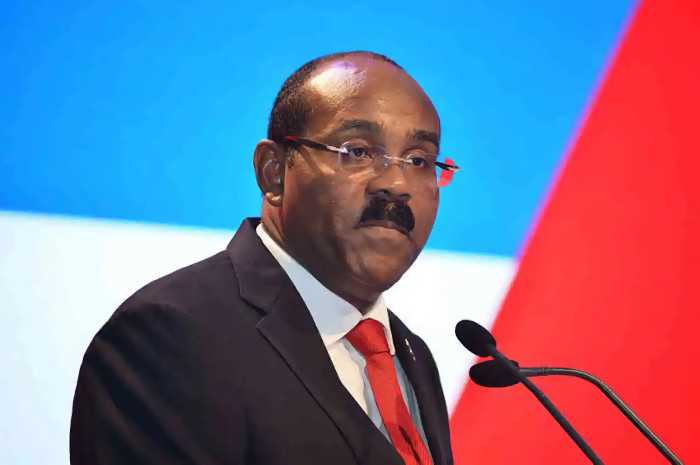
The Antigua and Barbuda government will raise the minimum wage from EC$9 to EC$11.50 per hour, effective April 1, to help workers better afford living expenses. A temporary 0% tax on food and school supplies is planned for April 10–11, 2026, to reduce costs for families as schools reopen after Easter.
Rising global prices continue to impact small island developing states (SIDS) and prompted these measures, which form part of a phased plan to eventually reach EC$13 per hour.
“The measure is designed to improve income security for low-wage earners and ensure a fairer distribution of economic gains.”
The Cabinet also approved an interim 5% salary increase for public servants, effective at the end of March 2026, to enhance employee morale.
“This adjustment is intended to provide immediate relief while negotiations on a broader compensation package continue,” the statement said, adding that “Cabinet emphasized that this increase does not indicate the final total of the increase and is subject to ongoing negotiations, with the expectation that a comprehensive agreement will be reached in due course.”
“Cabinet reiterated these measures reflect the government’s commitment to protecting citizens from global economic shocks and advancing national development goals.”
“The government will monitor global developments and stands ready to implement additional measures if necessary to safeguard the well-being of the people of Antigua and Barbuda,” it added.
The government will allow people who have occupied Crown land for over 10 years to purchase up to a quarter of an acre at a low cost. This initiative aims to increase legal home ownership, provide secure land tenure, improve basic infrastructure and living standards, and stimulate local economies by bringing informal settlements into the formal system.
Bahamas
The Bahamas government says the ongoing conflict in the Middle East involving the United States, Israel, and Iran has disrupted a key global energy transit point. This route normally handles a large portion of the world’s oil and liquefied natural gas shipments.
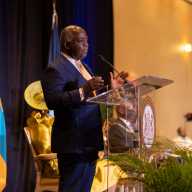
As a result, international oil prices have surged from around US$70 per barrel earlier this year to over US$100, marking one of the sharpest energy price shocks since the Ukraine crisis, according to Prime Minister Phillip Davis. He warned that the spike and ongoing uncertainties are affecting oil, shipping, and global supply chains.
Prime Minister Davis acknowledged that many Bahamians are concerned about the effects of these developments on local living costs. He noted that higher global fuel prices increase electricity, transport, freight, and grocery costs in small island nations like the Bahamas.
He reassured citizens that the government is monitoring the situation, working with energy partners, and planning for various scenarios. Past policy reforms have strengthened the country’s energy resilience by improving efficiency and mitigating risks.
As a result of these reforms, electricity bills, which have already been lowered, are not expected to increase despite the current energy crisis. This measure provides continued financial relief for Bahamian households.
The government’s collaboration with retailers for the April 1 VAT reduction on unprepared food is aimed at making basic groceries more affordable for Bahamian families, improving the day-to-day cost of living.
Davis noted instability may create wider regional pressures, including illegal migration and maritime smuggling. The Royal Bahamas Defense Force remains on alert while the government watches developments in Cuba and the Caribbean.
If you want, I can also create a tighter version under 150 words that still captures all the main points for quick reading. Do you want me to do that?
Caribbean
Top CDB leaders, senior regional officials, and global development finance decision-makers will convene in The Bahamas from June 1–5 for the Bank’s 56th Annual Meeting of its Board of Governors. The theme is “Forging the Caribbean’s Future: Strategic Solutions for Uncertain Times.”
Senator Michael B. Halkitis, CDB governor for The Bahamas, said the event marks renewed discussions on the Caribbean’s shared challenges, aspirations, and partnerships. Hosting in Nassau aims to strengthen regional collaboration and dialogue.
CDB President Daniel Best said the gathering will turn challenges into actionable solutions. Sessions provide practical ideas for governments, private partners, and development institutions.
The agenda focuses on solution-oriented dialogue and the implementation of CDB’s recently launched Strategic Plan 2026–2035, which guides change in the Caribbean over the next decade.
Events include knowledge-sharing forums, technical roundtables, and networking opportunities. Highlights feature “The President’s Chat” with multilateral development bank leaders and the William G. Demas Lecture on international development.
A new feature, the Private Sector Impact Room, will allow entrepreneurs to explore CDB support.
The Bank will also host a two-day Youth Forum, giving young people a platform to help shape the Caribbean’s future.
If you want, I can also condense all three recent Caribbean summaries (Antigua & Barbuda, The Bahamas energy and VAT, and CDB meeting) into one combined 7-paragraph regional update. Would you like me to do that?
Cuba
The Cuban Communist Party has shown remarkable resilience over six decades despite longstanding US hostility and severe economic challenges. However, the current crisis triggered by aggressive US pressure is now one of the gravest threats the island’s leadership has faced.
Under the Trump administration’s strategy to force change, Washington has choked off oil supplies following its capture of Venezuelan President Nicolás Maduro earlier this year. This cut Cuba’s primary fuel imports and crippled trade, deepening the humanitarian and economic crisis.
Shipping data shows that supplies of oil, food, and other essential imports collapsed, with maritime traffic to Cuban ports falling to its lowest level in years. Tankers that were once called monthly were absent in March, strangling the flow of critical goods.
The fuel shortage has paralyzed daily life for Cuba’s 11 million residents, causing frequent blackouts that disrupt homes and businesses, breakdowns in emergency and routine medical care, and strict gasoline rationing affecting transport. The island, producing only a fraction of its own energy, has struggled to keep hospitals, schools, and public services running.
Amid criticism that US actions are starving Cubans, the administration has provided some humanitarian aid, including food and water, and allowed US fuel shipments to the private sector. Critics argue these measures are too limited to ease the crisis.
Recently, the US allowed a sanctioned Russian oil tanker carrying crude for Cuba to proceed, an exception described as humanitarian. This may provide temporary relief, but it does not change the broader pressure strategy.
Despite these developments, uncertainty remains. Critics warn that the blockade’s impact on electricity, healthcare, and transport deepens hardship, and questions remain about whether external aid or geopolitical moves will alter Cuba’s course.
Grenada
The Grenadian government confirmed that the United States lifted its ban on the country’s fish and fish product exports. Officials emphasized that authorities must still enact improvements to comply with international standards.
NOAA imposed the ban under the Marine Mammal Protection Act (MMPA) after Grenada failed to provide a “comparability finding” confirming its fishing does not kill or seriously injure marine mammals more often than US vessels.
This restriction severely impacted the economy, reducing annual exports by over EC$50 million, with Yellowfin tuna suffering the greatest losses. The tuna industry anchors Grenada’s economy by supporting thousands of jobs in the fishing sector and related industries.
Grenadian authorities responded quickly to address the issue by passing the Fisheries (Amendment) Bill 2025, introducing stricter conservation measures and stronger regulatory oversight to better protect marine life.
The new measures aim to meet international requirements, especially those under the MMPA, ensuring Grenada retains access to key export markets like the US.
Officials stressed that while lifting the ban represents a positive development, Grenada must continue improving monitoring and enforcement of fishing practices to protect marine resources, avoid future restrictions, and maintain economic stability in the sector.
The government’s swift response demonstrates its commitment to both environmental sustainability and protecting livelihoods that depend on Grenada’s vital fisheries industry.
Compiled by Devika Ragoonanan