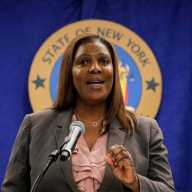
Representatives Yvette D. Clarke (NY-09) and Michael Lawler (NY-17) on Wednesday, Feb. 11, led 98 of their colleagues in a bipartisan, bicameral letter to Secretary of the Department of Homeland Security (DHS) Kristi Noem, urging DHS to grant a health care sector exemption from the new $100,000 fee on employers petitioning for new H-1B visas.
Clarke chairs the Congressional Black Caucus (CBC).
“Worsening workforce shortages across all health care professions are significantly diminishing access to care in rural and urban communities across the nation,” the letter says. “According to the Health Resources and Services Administration, nearly 87 million Americans live in areas federally designated as lacking enough medical professionals to address the community’s health care needs.
“Physician demand could exceed supply by up to 86,000 in the next decade, and clinical laboratory science programs are educating less than half the number of clinical laboratory professionals needed,” the letter adds.
“These shortages cannot be filled by the domestic workforce alone, and projections will worsen if health care employers cannot continue to recruit and retain international health care workers.
“These shortages cannot be filled by the domestic workforce alone, and projections will worsen if health care employers cannot continue to recruit and retain international health care workers.
“Imposing a $100,000 fee for new H-1B visa petitions will exacerbate hospitals’ existing staffing challenges and could push chronically underfunded hospitals to their financial brink,” the letter continues. “If these hospitals cannot petition for new H-1B visas to address their staffing needs without also having to pay this fee, it will further damage their financial viability.”
The lawmakers say that critically needed open positions will simply go unfilled, leaving rural and high-poverty urban areas without adequate access to Care.
The lawmakers say that critically needed open positions will simply go unfilled, leaving rural and high-poverty urban areas without adequate access to Care.
“We strongly urge you to exempt the health care sector from this burdensome fee,” they say in their letter.
Ken Raske, president, Greater New York Hospital Association, said that “New York hospitals have long used the H-1B visa program to ensure they can deliver world-class health care, train the next generation of physicians, and conduct cutting-edge research.
Ken Raske, president, Greater New York Hospital Association, said that “New York hospitals have long used the H-1B visa program to ensure they can deliver world-class health care, train the next generation of physicians, and conduct cutting-edge research.
“The filing fee for H-1B visa petitions poses a grave threat to this critical mission,” he said. “It will further strain hospitals, exacerbate ongoing workforce shortages, and diminish access to care. I thank Representatives Clarke and Lawler for their leadership and advocacy on this important issue.”
Danielle Turnipseed, chief public policy officer of the Association of American Medical Colleges (AAMC), said: “We know the positive impact that H-1 visa holders have in health care – they help fill in the gap in our country’s health care delivery system, providing care where it is needed most and in the face of acute workforce shortages.
“The AAMC knows that restricting access to H1-B visas will worsen the nation’s existing physician shortage, put strains on the health care workforce, and ultimately jeopardize patient access to care, and we simply can’t let any of those things happen,” she added.
Bea Grause, RN, JD, president of the Healthcare Association of New York State (HANYS), said that the H-1B visa program is “a critical lifeline to healthcare organizations statewide, helping to ease existing workforce shortages in underserved communities.
“Additional barriers, such as the new $100,000 fee for each visa applicant, jeopardize access to care and increase costs in areas already struggling to meet demand,” she said. “HANYS applauds Representatives Clarke and Lawler for leading on this important issue and calling on DHS to exempt the healthcare industry from additional undue burden.”
René Bravo, MD, president of the California Medical Association, said that she sees “firsthand how deeply our health care system depends on international medical professionals, especially in rural communities.
René Bravo, MD, president of the California Medical Association, said that she sees “firsthand how deeply our health care system depends on international medical professionals, especially in rural communities.
“A $100,000 fee on H-1B visas is not just excessive, it is a direct threat to patient access to care,” she said. “Exempting the health care sector is squarely in the national interest and essential to protecting the stability of our workforce and the health of millions of patients.”
The letter was signed by 100 Members of Congress and supported by scores of health care organizations and associations across the country.
The letter was signed by 100 Members of Congress and supported by scores of health care organizations and associations across the country.