The Trump administration is pressuring several Caribbean Community nations to accept deportees, as confirmed by ongoing negotiations with multiple governments this week.
Since the start of the workweek, the governments of Guyana, Dominica, and Grenada have all stated that they are in advanced talks with Washington regarding the acceptance of third-country deportees, including those from nations that refuse to accept their own nationals.
The announcements have come in the context of previous statements that the string of small island nations and low-lying mainland countries making up the 15-nation bloc are too small and lack the level of state resources to accommodate new arrivals, such as deportees, especially those with a criminal past, citing already stretched-out law enforcement agencies as one main reason.
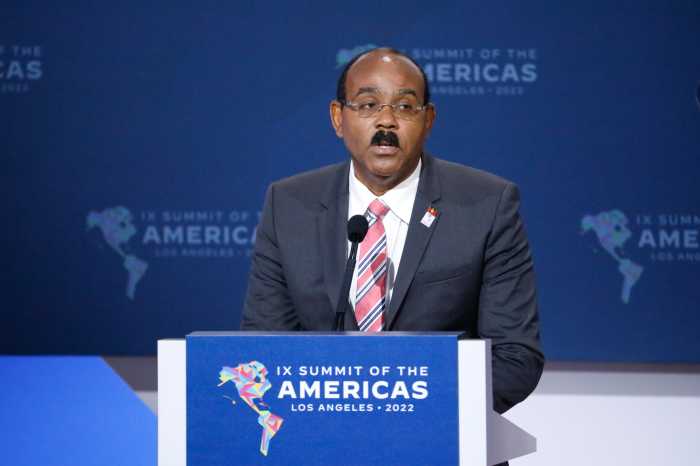
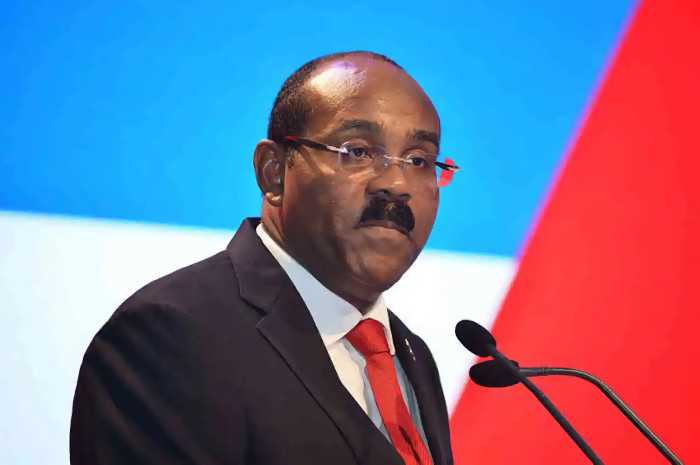
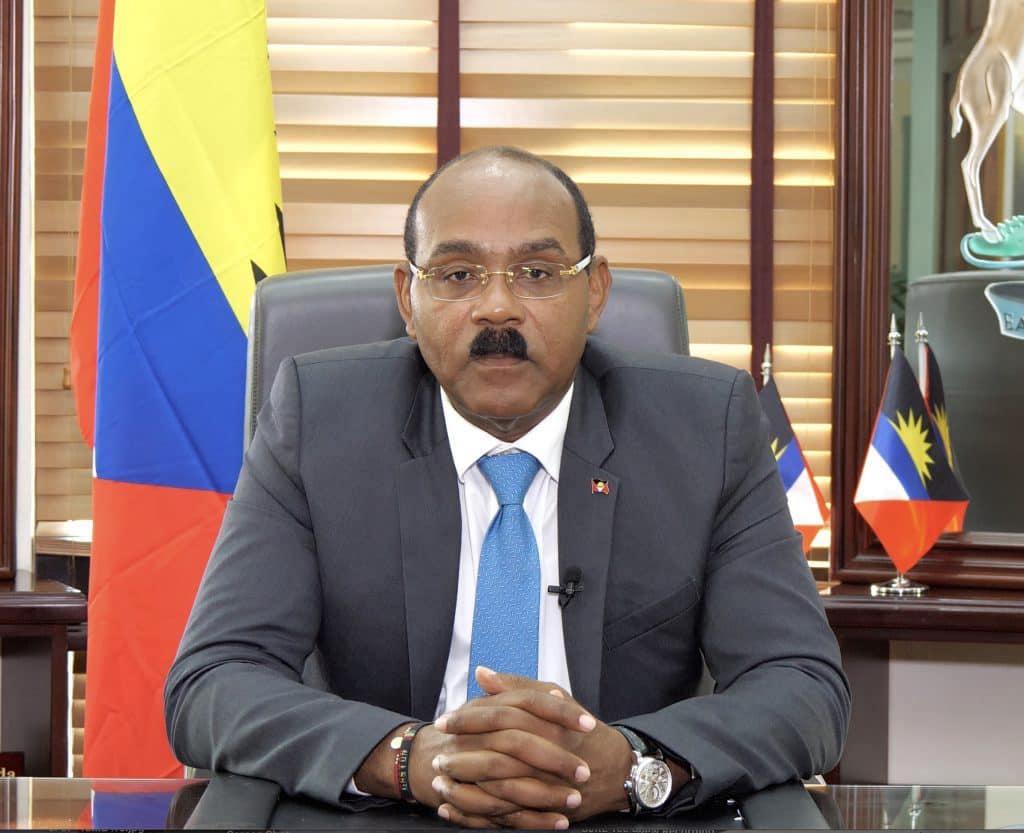
However, since Monday, Guyana, Grenada, and Dominica have followed Antigua’s lead, with the latter having indicated that its federation with Barbuda was among the first to cave in to pressure from the US to accept deportees. Prime Minister Gaston Browne says his cabinet has, however, negotiated a caveat that excludes deportees with felony convictions and other crimes. Most others can possibly be accepted.
“We signed an agreement which gives us the authority, not that we accept whomever, and that the United States will provide intelligence. I am reporting to my people. This is not supposed to remain a secret. We made it abundantly clear. We are not taking the criminal deportees from a third nation. We signed the agreement, which gives us the authority not to accept whomever,” Browne said. “If they have refugees who may be involved in minor matters but have skills that can help us, we gladly take them. However, we made it abundantly clear that we’re not taking the criminal refugees from the third country. We would have written back to the State Department about 90 days ago,” he said
His neighboring colleague, PM Roosevelt Skerrit of Dominica, used a press conference on Monday to make the announcement, sparking immediate criticism from opposition parties. The State Department had placed tough travel restrictions on citizens of Dominica and Antigua late last year. Their acceptance of deportees appears to be a direct reaction to the pressure the visa suspensions have placed on incumbent governments.
“Dominica has been engaged in ongoing dialogue with the US on matters of mutual interest, and an agreement has been reached on one of the primary areas of collaboration,” Skerrit stated. “The US and Dominica have entered into an internal agreement to allow third-country refugees to be sent to Dominica in cases where the United States cannot return these individuals to their country of birth or origin. In our discussions with the State Department, there has been careful deliberation to ensure that Dominica does not receive violent individuals or persons who could compromise national security,” he told reporters.
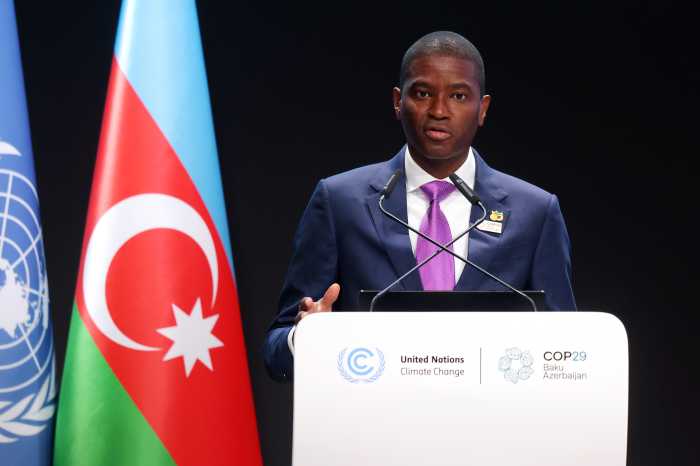
And down in the South Caribbean, Prime Minister Dickon Mitchell also confirmed advanced negotiations with the US.
“For some time now, the US government has approached Caribbean countries, including Grenada, to enter into a memorandum of understanding about third-country nationals. We’ve been in discussions with the US on this. Discussions, along with the texts of the MOU, have been shared. To date, we have not agreed to accept,” he said.
Grenada and the US had been sparring over a request for the island to allow the US military to set up a radar at the main airport but authorities have not publicly indicated any decision.
Former Grenadian Senate President Chester Humphrey argued that CARICOM nations are under pressure from Washington, which has taken actions such as banning fish exports, canceling visas, and issuing various threats. He asserted these measures are calculated efforts by the US to force member nations into compliance.
For its part, Guyana, whose authorities have complained about a growing labor shortage, says it is also in talks with Foreign Secretary Robert Persaud, saying that “Guyana and the USA have been in productive discussions on a framework of understanding which is consistent with our national priorities and needs and supportive of the USA objectives,” he said.