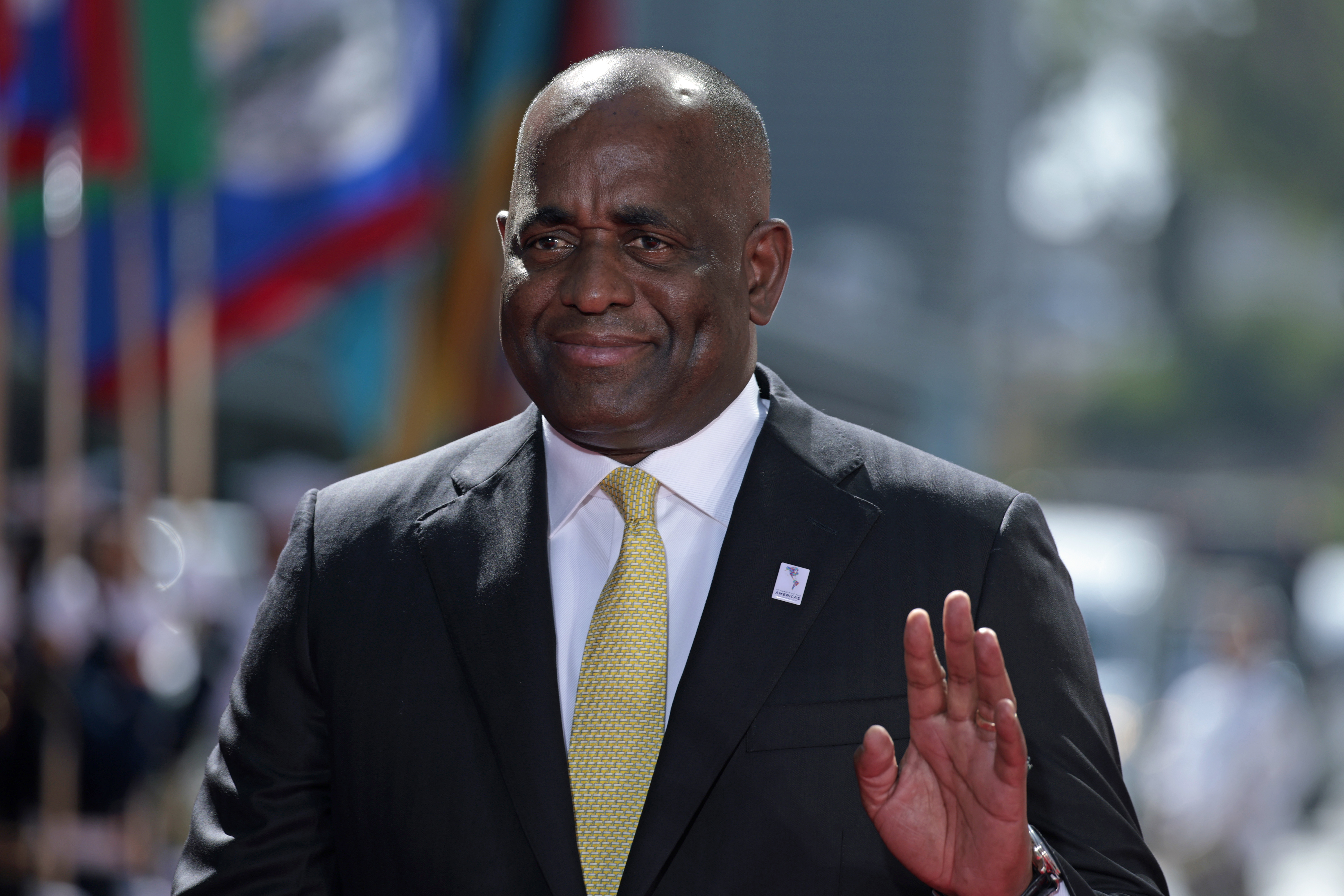
Giving a hint as to how Dominica and some neighboring Eastern Caribbean (OECS) islands will deal with the issue, Prime Minister Roosevelt Skerrit has said that the agreement his administration will sign will allow for a maximum of 28 deportees from the U.S. annually.
Updating the nation following extensive discussions on the issue at last week’s CARICOM leaders summit in St. Kitts, Skerrit said that talks are at an advanced stage, but citizens should not be too anxious as the number of so-called third-country deportees to the country will be relatively low.
In recent months, the Trump administration has been applying enormous pressure on regional member states to accept deportees from the US, claiming that those it is sending are people detained for visa overstays and other minor, non-felony offenses. These should pose no serious security threat for accepting nations, US officials have said, and the numbers are few.
“Seven people per quarter. We have four quarters in a year. So, in a year, there will be 28. Right, no more than 28 persons. So that is the understanding. So, it is not the hundreds or the thousands that people are saying. And the truth is Dominica needs thousands of people more, if you were to ask me,” he told reporters this week.
He said local authorities have approached the International Organization for Migration (IOM) for help in coordinating the program, assisting with logistics and accommodation, among other aspects.
“So, that is the understanding. So, it is not the hundreds that people are saying, or the thousands. And the truth is, Dominica needs thousands of people more. We need some more people in there, but so far as the agreement, and we’re hoping to finalize the agreement for signing this week. So, it’s no more than seven per quarter. So, they may not stay in Dominica permanently. They may want to move back to their country of origin, you understand, and so forth, and, of course, the financial aspect of it is something that we have discussions with so that we’re not out of pocket in respect to this matter.”
So far, approaches have been made to mostly OECS countries, Guyana, and Belize, but there has been no real information about approaches to Jamaica, Trinidad, Suriname, and Barbados, though Barbados says it is bracing for possible talks with the U.S.
Governments have been demanding that the U.S. finance the stay of deportees in full, help arrange accommodation and boarding, among other issues. Antigua and Guyana, for example, have said they would gladly accept deportees with information technology, engineering, and other skills, as there are dire labor shortages to fill, especially in Guyana. Skerrit says he faces similar problems in Dominica.
“The reality is, let us face it, we are a small population. There are a number of skills we need in the country. The more developed you get as a society, jobs which Dominicans did yesterday, they won’t be doing them today. That’s the reality. And many of us who are seeking to employ people in the country, you can’t get the people to work,” he said, noting that some professionals attempt to satisfy five or six clients at a time because of the shortage of skilled labor.
“And so we have to be true to ourselves, and recognize that if we could bring in people who have skills and immerse them in society with those skills, then that would certainly add value for our society. In everything we have to look at the potential positive side of it and not appear to be xenophobic as a society, and our first reaction is to say no,” he said.