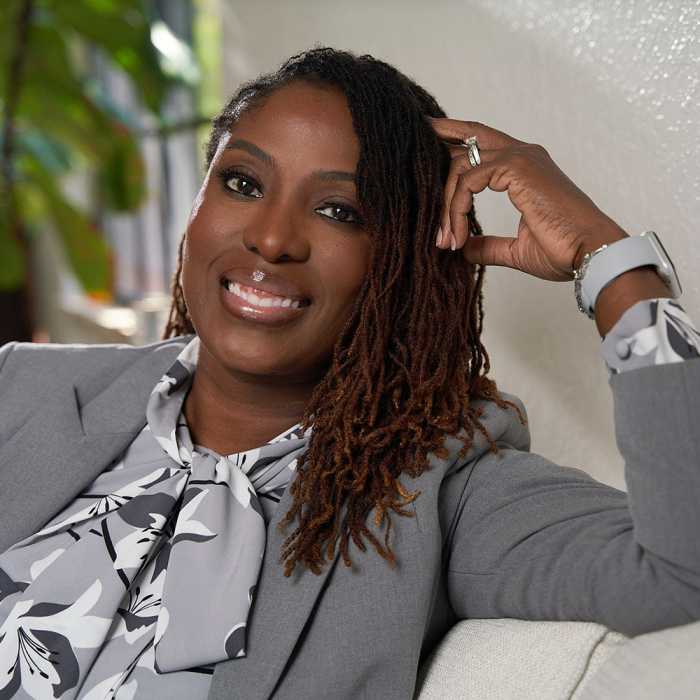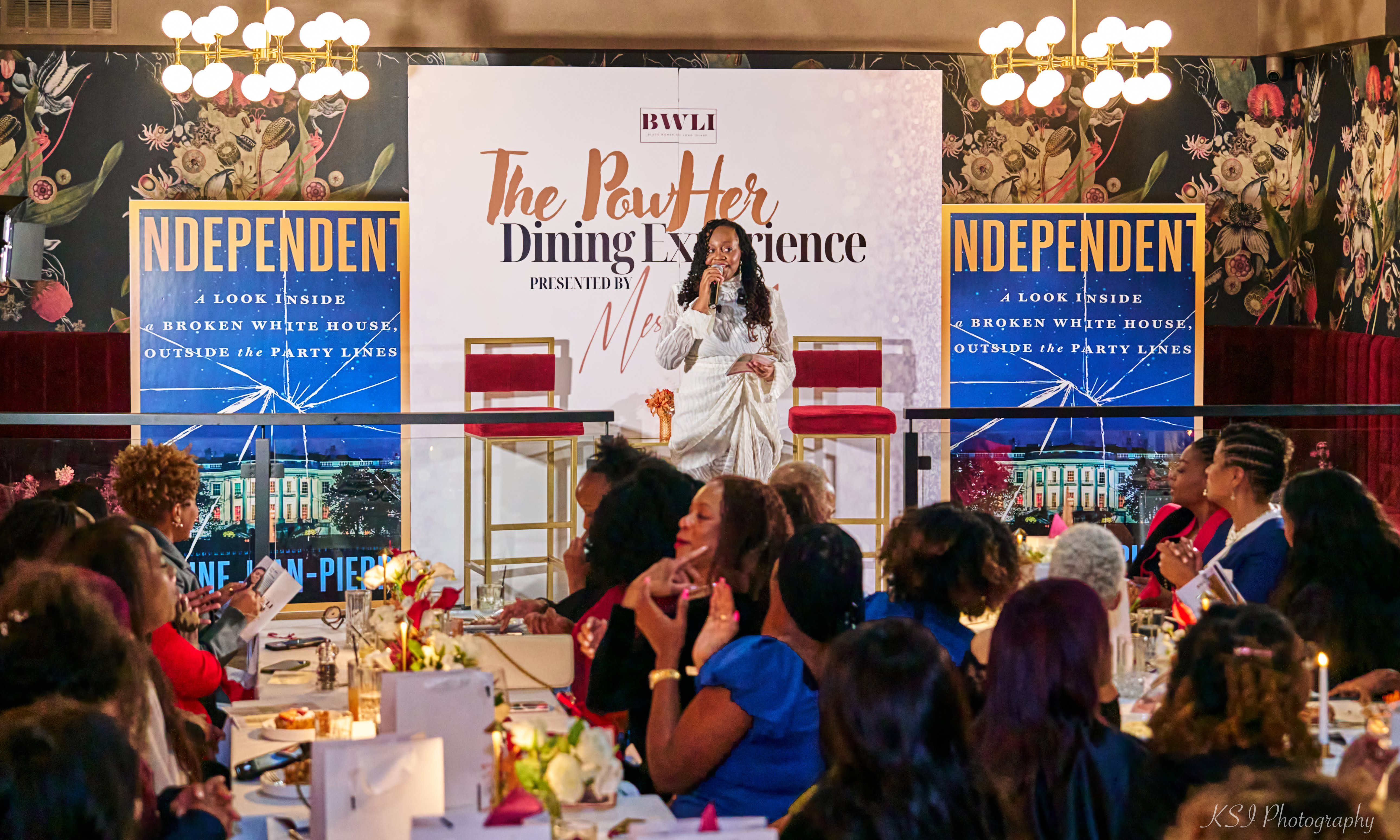
What began as a small digital community of roughly 50 women has grown into one of Long Island’s most dynamic networks for Black women.
Black Women of Long Island (BWLI), founded by Haitian American entrepreneur Judith Jacques, now includes more than 4,600 members and hosts conferences, leadership forums, and award programs that draw thousands of attendees.
The organization has quickly evolved into a cultural and professional anchor for Black women across New York and beyond, which is only one piece of a larger institutional framework Jacques has spent more than two decades building.
BWLI, launched in 2021 after Jacques endured personal loss and a life-threatening childbirth complication, became the regional institution within that broader structure. Its recent PowHer Dining Experience featured former White House Press Secretary Karine Jean-Pierre, underscoring the organization’s ability to attract national-level leadership and to exert cross-sector influence.
“If they won’t give you a seat at the table, you build your own,” Jacques said.
A Long Island native and daughter of a pastor, Jacques has built a portfolio of platforms spanning media, business development, culture, and advocacy. Rather than operating as standalone initiatives, her organizations function as an interconnected ecosystem designed to expand access, visibility, and economic leverage for Black women.
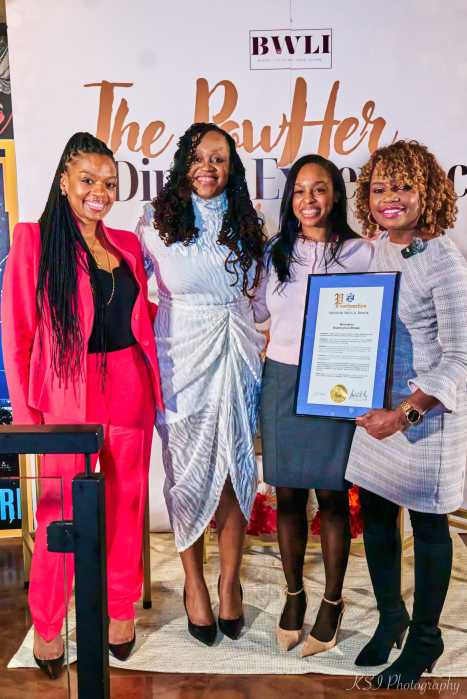
“I didn’t see representation anywhere,” she said. “I was often the only Black woman in the room.”
In the early 2000s, Jacques strategically immersed herself in the wedding and event industry, studying production models, client strategy, and operational systems from the inside. That foundation evolved into Creative Communications + Media Group (CCMG), a strategy and communications firm that now anchors her six-figure productions and cross-industry programming.
From there, she began layering platforms with intention.
She co-founded Bel Tifi, a Haitian Creole phrase meaning “beautiful girl,” to spotlight Haitian women in leadership and media while bridging generational divides. In 2012, she launched Black Celebration Awards, honoring professionals across 28 industries through community nominations. When she saw culinary talent being overlooked, she created Black Culinary Expo.
“We taught the world how to season food,” Jacques said. “But you wouldn’t know it from the cooking shows.”
Her national media authority platform, Black Women in Media, further expanded the ecosystem. Conferences and awards have drawn thousands of attendees and honored hundreds of prominent figures, including Karine Jean-Pierre, Jimmy Jean Louis, Dr. Bernice King, Coco Jones, Deborah Cox, Isaiah Washington, Xscape, Tamron Hall, MC Lyte, and Yolanda Adams.
“We’re not one-dimensional,” she said. “We’re doctors who are journalists, teachers who are writers. Our identities are layered.”
Together, the platforms operate strategically: CCMG serves as the strategy engine; Black Women in Media as the national media authority; BWLI as the regional community institution; and the Long Island Haitian Chamber of Commerce as an economic bridge supporting Haitian-owned businesses.
Jacques acknowledges the structural realities many Black founders navigate. Access to capital and institutional backing remains uneven. Still, her focus remains on building durable systems designed to outlast individual milestones.
“I’m not interested in symbolic progress,” Jacques said. “I’m interested in building institutions that outlive me. The next generation should inherit leverage, not scarcity.”