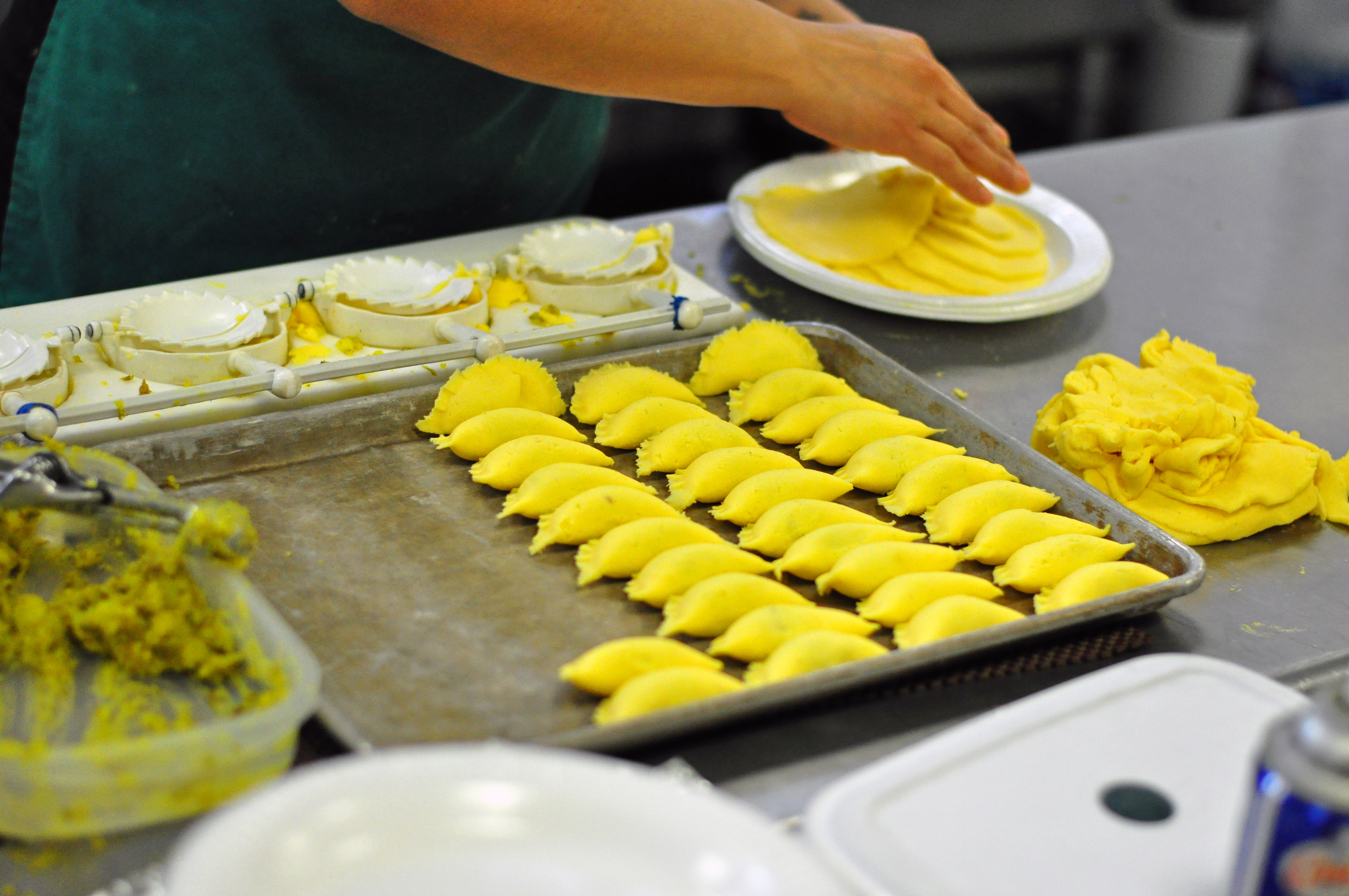
Bronx CookSpace is a newly renovated, shared commercial kitchen and incubator in the South Bronx, owned and operated by WHEDco, a nonprofit that believes everyone deserves healthy, vibrant communities.
Bronx CookSpace supports over 25-member businesses, including caterers, bakers, packaged food and beverage producers, and early-stage restaurateurs — many founded by Caribbean immigrants or first-generation New Yorkers. The incubator is actively seeking new members.
Member benefits include 24/7 kitchen access, semi-private workstations, product storage, security, sanitation, and business consulting on licensing, marketing, product development, and insurance.
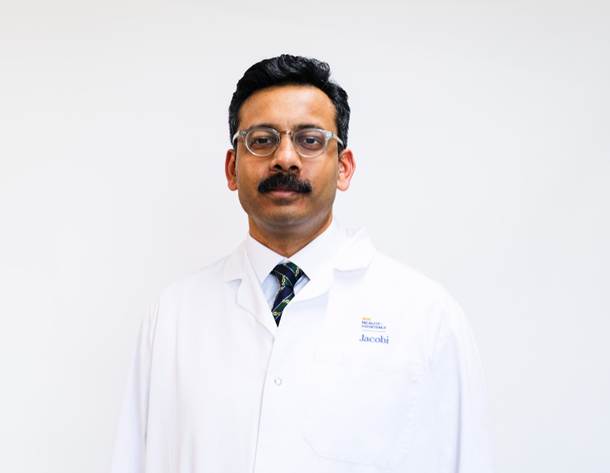
To provide further insight into the Bronx CookSpace, Kitchen Operations Manager Levar Fulmore shared his background and how he became involved with the initiative during an interview with Caribbean Life.
For him, the greatest influence on his career path was his great-grandmother. “Cooking was more than a means of sustenance; it was a way to bring everyone together,” Fulmore said.
Fulmore joined Bronx CookSpace after seeing a kitchen manager ad and has been with WHEDco since March of last year.
When asked about his motivation for supporting business owners at Bronx CookSpace and providing them with essential resources, Fulmore explained, “With the mission of WHEDco and the Bronx CookSpace in mind, I would like to continue to support them. As a small business owner myself, I am aware of the challenges that come with operating a small business.”
On the significance of the work there and its impact on the community, he added that members get opportunities to hone their skills in the kitchen, and the goal is for business owners to grow and operate sustainable businesses.
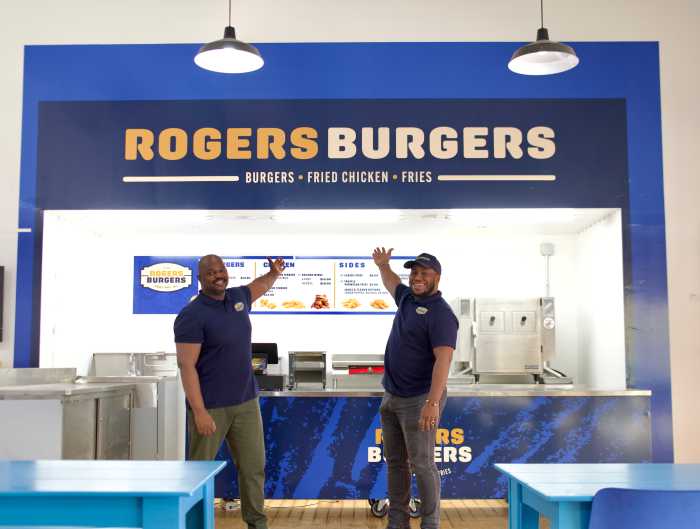
In addition to Fulmore’s insights, two member-entrepreneurs, Julian Forbes — CEO of MK Kitchen / Montego Bay Kitchen & Bakery — and Jamie Randle—founder of Coco Bred—shared their backgrounds, their journeys to launching their ventures, and the ways Bronx CookSpace has contributed to their business growth.
Both had similar upbringings: Forbes, raised in the North Bronx’s “Little Jamaica,” and Randle, born in Jamaica but surrounded by Jamaican culture in the Bronx as a child.
Forbes once aspired to be an artist. In high school, he won the Harlem Week 1998 poster contest for a piece of a saxophonist with flowing locs.
Randle also did not follow a traditional culinary path. “A lot of my skills come from understanding people, culture, and how to communicate through experiences. Food became a language that allowed me to tell stories about culture, identity, and home in a tangible way,” she explained.
Discussing the greatest influences on his career, Forbes stated: “This is twofold. My mother plays a foundational role, along with my two favorite professors, Dr. Leonard Jeffries and Herb Boyd. My deep appreciation for history and culture is a direct result of their influence.”
Randle sees the women in her family, related and chosen, as the greatest influences on her career because they were strong, resourceful Jamaican women who made something out of very little and did it with pride.
Her daughter has also had a profound impact on the path she’s chosen. “After I told her about my idea, she became so invested and excited that I couldn’t let her down. I had to show her what it meant to execute. Coco Bred then became about focus, perseverance, and legacy,” she stated.
Forbes started MK Kitchen to share Jamaican flavors more broadly. After major life changes, Randle was compelled to seek fulfillment beyond safety.
She started her business to do more than practice entrepreneurship; she reclaimed agency and aimed to build something aligned with her identity, culture, and vision for her daughter’s future.
Forbes and Randle agree that accessing authentic products and managing costs are key industry challenges.
“As dishes like oxtail, ackee and saltfish, and jerk items become more popular, it is harder to keep costs down. Oxtail, once easily available, is now expensive, and produce like ackee is becoming difficult to source. I recently traveled to Jamaica to explore white-labeling ackee, but found that even distributors on the island are facing sourcing difficulties,” Forbes explained.
Randle expressed a similar sentiment, saying, “Caribbean food is often loved, but not always respected or properly represented.” She also emphasized that, as an industry, Caribbean business owners need to protect cultural integrity while still allowing innovation and growth.
Forbes wants his business to foster joy and love for Caribbean food and drink in the community.
Randle aims to make her business a platform for jobs, cultural pride, and new opportunities.
Both business owners also reflected on what they wish people knew about their businesses, especially in ways that could improve customers’ lives.
Forbes believes: “It is more than just food; we create a culinary experience. Additionally, we actively work to be a good partner to our neighbors. We recently hosted a holiday toy giveaway and look forward to continuing our efforts to support the community.”
For Randle, her business is built with intention. “Every dish, every decision is rooted in respect for culture, people, and process. I hope it reminds people that food can be nourishing beyond the plate, reconnecting you to heritage, sparking curiosity, and driving you to create.”
Reflecting on the idea of legacy and inspiration, the entrepreneurs shared their thoughts on the mark they hope to leave and how they wish to inspire younger generations.
Discussing legacy, Forbes wants his brand to stand the test of time. “The goal is for Montego Bay Kitchen to be in every city across the United States and Canada. I also want to help others with the ambition to enter the food business, explore their passions as extended partners,” he continued.
Randle wants her legacy to be one of courage and authenticity, and she wants younger generations to see that they don’t have to choose between who they are and what they build.
“You can honor your roots and still innovate. You can create success on your own terms. If my journey helps someone believe that their culture is an asset, not a limitation, then I’ve done something meaningful,” she continued.
For more information on all that Randle and Forbes are doing through Bronx CookSpace, those interested can visit the website at www.bronxcookspace.org or follow them on Instagram at https://www.instagram.com/bronxcookspace/. Those with questions can reach out to Cookspace@whedco.org.