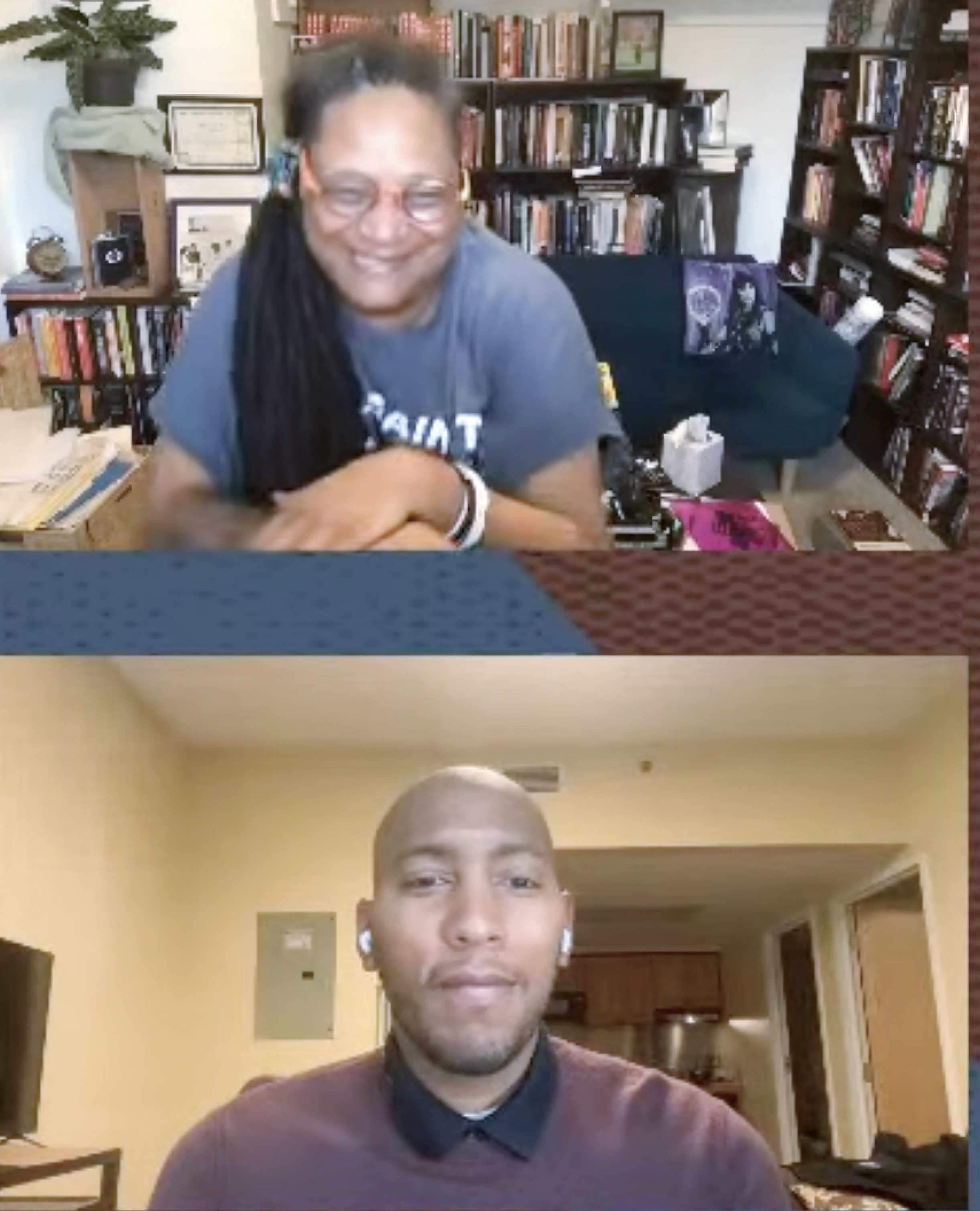
On Feb. 9, Dr. Rebecca Hall discussed the new edition of her father, Harry Haywood’s book “Negro Liberation” (2026), in a hybrid conversation hosted by publishing company Haymarket Books. She wrote the foreword for this version, and Charisse Burden-Stelly wrote the introduction.
Hall is a graduate of Swarthmore College, Berkeley Law, and the University of Santa Cruz. Her most recent book, Wake: The Hidden History of Women-Led Slave Revolts (Simon & Schuster, 2021), has won multiple awards. The conversation was moderated by Kyle Mays, an Afro-Indigenous (Saginaw Chippewa) writer and scholar, who is the professor of African American Studies, American Indian Studies, and History, as well as the Associate Vice Provost of Inclusive Excellence at UCLA.
In 1948, Harry Haywood, who was a leading member of the Communist Party USA, published the original book that laid out his argument that the Black Belt South constituted a distinct nation and an internal colony of U.S. imperialism.
Hall first shared that the experience of bringing Negro Liberation back to life was crazy, since she had only gotten the literary rights for it three years ago, and it was a really profound rediscovery to her, as he explained.
According to Hall, his book analyzes what’s happening in the US in the 1940s, in the South, and makes the argument for hyperexploitation, etc.
“I was always like, ‘I’m not colonized because I’m not from here. I can’t be colonized. That’s like taking somebody else’s identity, and then I realized, actually, yeah, we do live in an internal colony.’ So that’s why I think this book is important. But what immediately came to mind is, where are the indigenous people in this book? How can you be demanding land from the colonizer? What is liberatory about that? So that’s why I want to bring this back because I really believe that black and indigenous unity is probably our only hope,” Hall said.
Hall then discussed her perspective on how, as a society, we can achieve Black liberation through Black Indigenous solidarity, and said she’s still figuring it out.
Discussing the concept of anti-Blackness, which is often perpetuated by white Americans, and sometimes people of color, she stated, “I think literally it’s a structural problem. It’s really not about a psychological issue. It’s a material condition based on hyper exploitation.”
In addition, Hall shared that it was depressing to read her father’s book because the issue is still true today, even though the economics of the South in the 1940s were slightly different.
It’s for this reason that she said, “There needs to be a revolutionary position on the Negro question in order for there to be structural change in the United States. That’s where the revolutionary potential is. That’s what my father saw, that and Black and white people working together.”
Those interested can purchase Negro Liberation (2026) here: https://www.haymarketbooks.org/books/2616-negro-liberation