Before negotiations concluded on Jan. 9, 2026, nurses at seven of 12 hospitals in New York City, as well as three Long Island Hospitals, withdrew their strike notices after reaching tentative bargaining agreements with hospital managements and unions to prevent what is intended to be the biggest nurses’ strike in New York City history.
The New York State Nursing Association (NYSNA) team negotiated and bargained with their unions and management. They focused on safe staffing standards, improved and continued healthcare benefits for frontline nurses, higher wages, and workplace safety for both staff and patients.
The NYSNA bargained with management for most of last week. This led to only three remaining hospitals still at the bargaining table, with the mutual goal of settling their contracts by Friday evening, Jan. 9. However, contract negotiations for these three hospitals were unsuccessful. No agreement was reached, resulting in the conclusion of any further discussions without resolution.
The NYSNA has been bargaining for several months for safe staffing standards, wages, and better benefits for their nurses.
On Sunday evening, Jan. 11, Montefiore Medical Center, Mount Sinai Hospital, and New York Presbyterian Hospital remained as the hospitals that did not rescind and prepared thousands of their nurses to hit the picket fence Monday morning, Jan. 12.
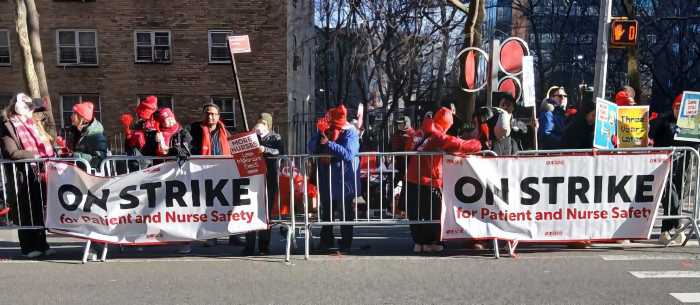
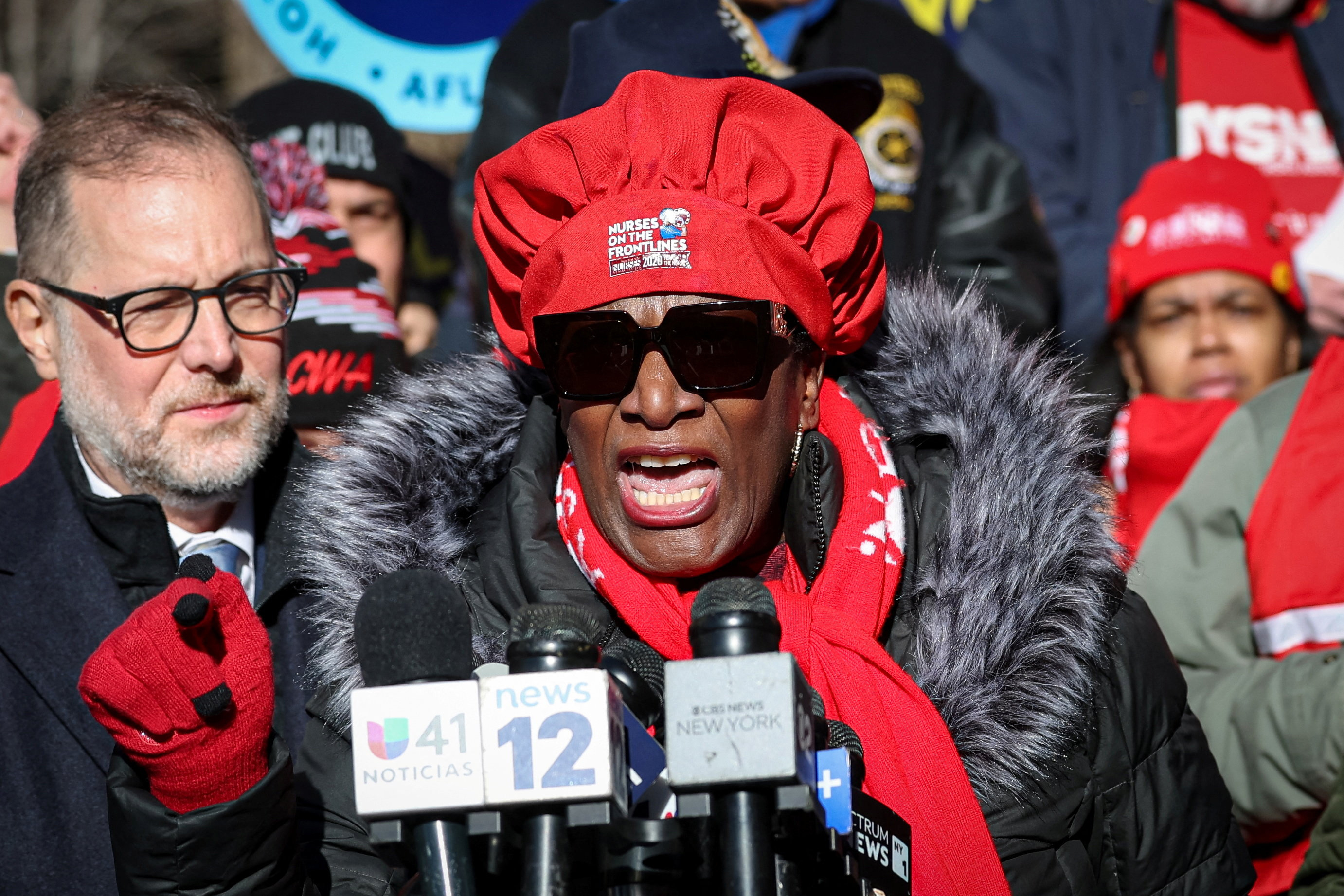
The historic strike has since begun, and according to NYSNA President Nancy Hagan, RN, BSN, and CCRN nurses at these hospitals will continue their strike for better wages, improved medical benefits, and a safer environment for staff and patients. “Striking is always a last resort,” she noted, “…but given the situation, frontline nurses have no other choice.” She emphasized.
Simone Way, a member of the NYSNA executive committee and a nurse at Mount Sinai Morningside Hospital, stated that they served strike notices on Jan. 2, following failed negotiations.
“At the end of the tenth day, we reserve the right to go out on strike, and we will be reserving our care and services from the patients, and will be on the picket lines starting Jan. 12,” she said.
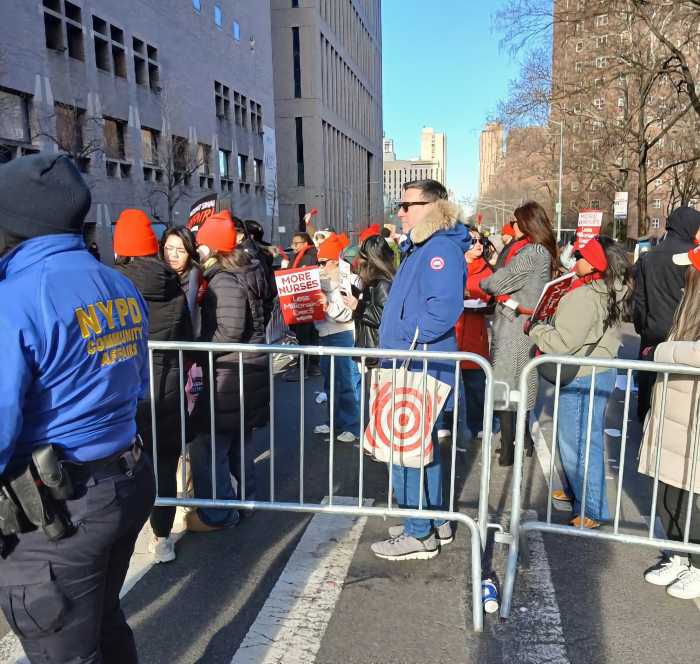
The striking nurses are standing at the picket lines to demand better healthcare benefits for frontline nurses, safe staffing standards, and protection from workplace violence.
“Nurses should have some of the best health care benefits that there are because we take care of the sickest population,” she said.
Nurse Way said that hospitals do not always have enough nurses to allow breaks.
She hopes that management will decide on the situation and reach an agreement soon. She suggested that management take a realistic approach and provide real options, “so we can negotiate across the table,” Way stated.
The NYSNA President and Maimonides Nurse, Nancy Hagans, emphasized by saying that “the safety-net hospitals, that care for New York City’s most vulnerable patients, are doing the right thing by guaranteeing healthcare benefits for nurses and agreeing to stronger safe staffing standards and protections from workplace violence. New York City’s wealthiest hospitals should follow their lead,” nurse Hagans declared.