Jamaican government officials moved on Monday to calm growing excitement about an offshore oil find, telling the nation that a British company is embarking on seismic work rather than actual oil exploration or production.
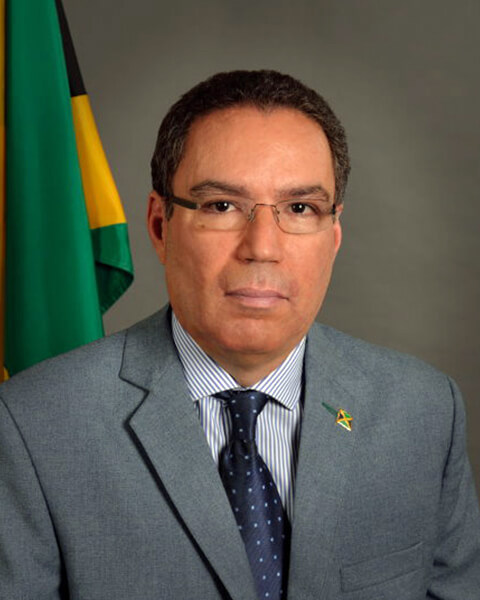
Minister of Energy Daryl Vaz and Brian Larkin, the Chief Executive of UK-based United Oil and Gas both said that the latest round of activity off the island’s south coast has much to do with preparatory scientific work to determine whether there are in fact commercial deposits of oil and gas.
Islanders have been closely following every move by the ministry and United in recent years, a trend that began about eight years ago when Jamaican fishing crews first reported several instances of oil seeps off the coast.
The report sparked interest from both government officials and Tullow Oil, also of the UK, and led quickly to an investigation after experts had dismissed the seeps as waste from passing cruise ships and other vessels. Tullow has since pulled out, creating space for United, which has been stepping up fund raising efforts to finance its Jamaican campaign as there are in fact indications of ‘active, thermogenic oil seeps, suggesting that oil or liquid hydrocarbon deposits may in fact lie below the sea bed.
Speaking during a media tour of a seismic survey ship, CEO Larkin moved to explicitly explain the current activities and how they differ from well exploration and/or production.
“I do want to be very clear on this from the start, because it’s easy for these projects to get misinterpreted: We are not drilling a well. This is data collection, arguably the final piece of the jigsaw before you move towards potential exploration drilling. The purpose of the survey is to help us understand whether there’s an active petroleum system offshore Jamaica,” he told reporters.
Minister Vaz also contributed to the discussion, indicating that the Jamaican campaign is at an embryonic stage. “This activity represents an early-stage, non-intrusive exploration effort aimed at improving our technical understanding of Jamaica’s offshore petroleum potential. It does not authorize drilling or production. It is a data-gathering exercise that supports informed, responsible, evidence-based decision-making.”
The work this time, says Larkin, will involve seabed mapping, measurements of heat flows, the collection of sediment samples, and other material. The exercise aims to determine whether conditions exist for a petroleum formation beneath the seabed. Vaz says if anything breaks, he will be the first to announce it.
“So, I’ve seen the comments every time the whole issue of this exploration comes up, where people get excited and basically think that we have struck the magic oil. We have not. Therefore, I would say to you that the best person to listen to is me, and if you don’t hear me say it, then you know it’s not on,” he said.
Caribbean Community countries like Grenada and Barbados, for example, have in recent years stepped up activities, encouraged by humungous offshore finds offshore fellow regional bloc members Guyana and Suriname in the past 11 years.
Guyana is now the world’s highest per capita daily producer at around 900,000 barrels, while actual production is set to begin in Suriname early next year as the two move to exploit and benefit from the so-called golden lane in the Guyana-Suriname Basin.