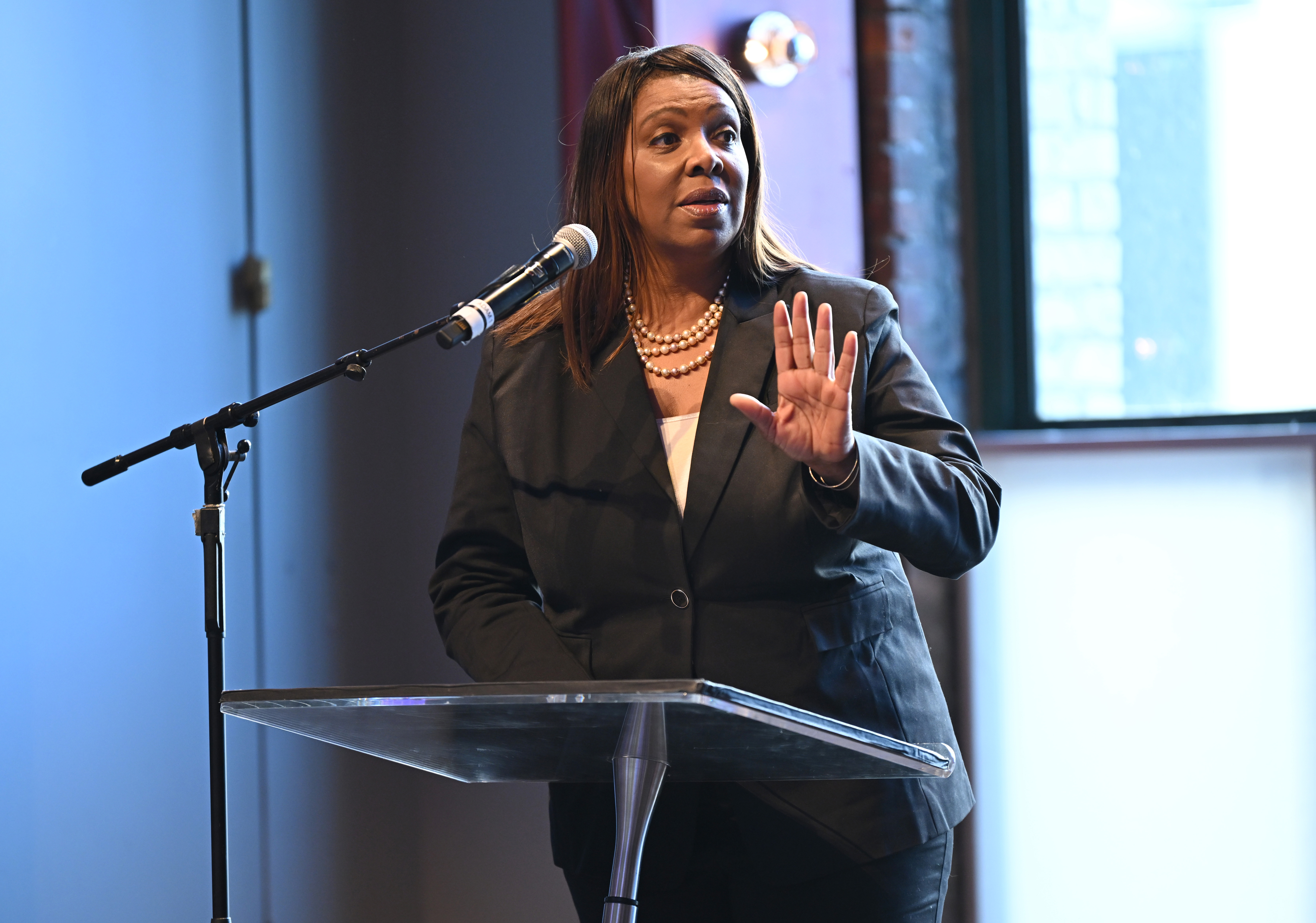
New York Attorney General Letitia James, together with New Jersey Acting Attorney General Jennifer Davenport, on Tuesday, Feb. 3, sued the Trump administration over its unlawful suspension of federal funding for the Hudson Tunnel Project, a critical infrastructure project essential to regional rail service and the national economy.
James noted that on Sept. 30, the Trump administration announced an abrupt, indefinite freeze on federal funding for the project, halting millions of dollars in reimbursements that Congress had already approved.
After months of covering costs with limited state funds, both states warn that construction could be forced to shut down by Feb. 6 unless federal funding resumes.
New York and New Jersey seek emergency relief to keep construction moving.
“Allowing this project to stop would put one of the country’s most heavily used transit corridors at risk,” said Attorney General James. “Our tunnels are already under strain, and losing this project could be disastrous for commuters, workers, and our regional economy.
“We are taking the administration to court to prevent a shutdown that would ripple far beyond New York and New Jersey,” she added.
James said the Hudson Tunnel Project is the central component of the Gateway Program, a long-planned effort to revitalize rail travel along the Hudson River.
She said the project will repair the old North River tunnel and build a new one under the Hudson River.
The New York Attorney General said the tunnel was severely damaged during Superstorm Sandy and continues to deteriorate, causing frequent service disruptions and emergency maintenance that impact hundreds of thousands of commuters.
Construction began in 2023 and is active at multiple sites in both states.
New York, New Jersey, and the federal government have invested billions in the project through grants and loans.
However, after years of planning, the U.S. Department of Transportation abruptly halted funding on Sept. 30, 2025.
In response, she said project administrators promptly addressed every issue raised by the federal government and repeatedly certified full compliance with all applicable requirements.
“Nevertheless, DOT has refused to resume funding,” James said. “As a result, without court intervention, work on the project will be forced to stop as early as Feb. 6, 2026, placing one of the most important infrastructure projects in the country in jeopardy.
“A shutdown of the Hudson Tunnel Project would have immediate and far-reaching consequences for New Yorkers and the entire region,” she added. “Thousands of workers across New York and New Jersey could lose their jobs, and the states would face monumental new costs if forced to temporarily shut down construction sites or permanently terminate them.
“Any stoppage and restart of work on a project of this scale would dramatically raise costs and risk wasting years of planning and hundreds of millions of dollars already invested,” the New York Attorney General continued.
She said a prolonged shutdown also threatens the project’s future, noting that infrastructure projects of this magnitude depend on continuous construction, specialized equipment, and a skilled workforce.
“Extended delays increase the risk that work cannot be efficiently restarted, threatening the entire project,” James said. “Commuters would face some of the most dangerous impacts.”
She said that each weekday, more than 200,000 passengers rely on rail service across the Hudson River to travel to work, school, and essential services.
Without completion of the Hudson Tunnel Project, she warned riders would have to continue to depend on the aging, storm-damaged North River Tunnel, which remains vulnerable to major service failures.
James said disruptions to this corridor would reverberate throughout the Northeast Corridor, the busiest passenger rail line in the country, and threaten a major transportation artery that supports approximately 20 % of the nation’s economic output.
Attorney General James asserts that the funding freeze is not based on any legitimate compliance concern but instead reflects an “unlawful, politically motivated decision.
“In public statements, including statements made by the president himself, the administration has been explicit that the suspension of funding is a brazen act of political retribution,” she says.
The attorneys general argue that this violates federal law because the government cannot withhold funding without a valid legal basis, proper procedures, or a reasoned explanation.
Attorney General James and Acting Attorney General Davenport are asking the court to declare the funding suspension unlawful and order the immediate resumption of payments so construction can continue without interruption.