If for nothing else, the year 2025 will be remembered for a string of major regional and geopolitical events, including American threats to invade Venezuela, a dozen peacefully held elections in the Caribbean, a massive reduction of violent crime, and continuing annual calls from devastating mega hurricanes.
As a tumultuous year comes to a close, there are increasing mumblings about alleged cracks in Caribbean Community unity brought about by Trinidad and Tobago’s unrelenting support for the American military presence in the South Caribbean, deadly attacks on alleged narco-fetching boats and frustration in the Trinidad cabinet because the remainder of the 15-nation bloc is not as strident in their support for the US against Venezuela.
Labelling the bloc as “dysfunctional and self-destructive” Prime Minister Kamla Persad Bissessar basically dismissed the community as a waste of time, contending that instead of supporting the US, CARICOM has chosen to disparage “our greatest ally, the United States lending support to the Maduro narco-government headed by a dictator who has imprisoned and killed thousands of civilians and opposition members as well as threatened two CARICOM members.”
Colleague leaders were quick to take her on, led by Prime Minister Gaston Browne of Antigua who denied that leaders or governments have “bad-mouthed the US. No evidence has been offered because none exists,” Browne said in a spirited reply to the T&T head of government. And if there are widening fissures, Barbadian Foreign Minister Kerrie Symmonds says the answer is simply for leaders to “meet behind closed doors to discuss concerns on all sides.”
As tensions linger, the bloc is celebrating what is perhaps a record-breaking year for general elections, hosting 12 races, sometimes two in one week, as governments that won consecutive terms, such as those in Bermuda, St. Lucia, and Guyana, among others, did so handsomely. And some of those that lost, like Prime Minister Ralph Gonsalves’ United Labor Party (ULP), suffered humiliating defeats as the ULP took home only Gonsalves’ seat from the late November race. The ULP had been in power since 2021 but voters appeared to end the Gonsalves’ era with a decisive mandate for new PM Godwin Friday.
But as the region prepares for the new year, governments in many regional jurisdictions like Jamaica, Trinidad, Guyana, and The Turks and Caicos are all reporting significant reductions in violent crimes, such as murders with Jamaica leading the way.
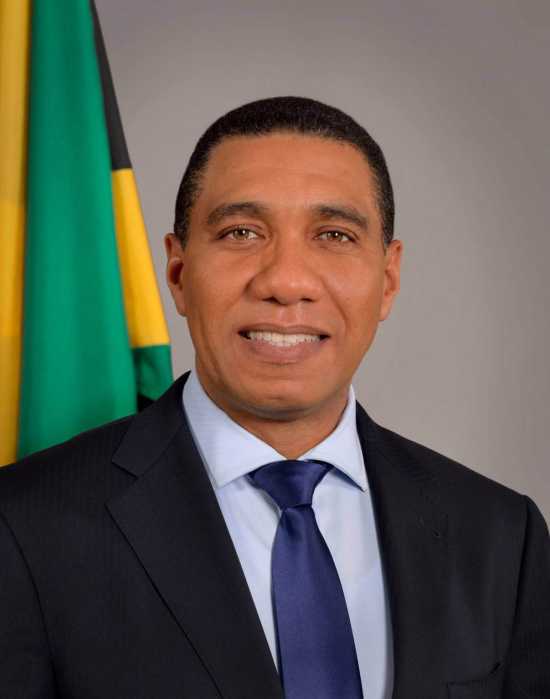
For example, Prime Minister Andrew Holness, who won a third term in elections in September, has wasted little time in bragging that the island will record no more than 700 murders this year for the first time in 30 years. The projected figure will be at least a 40 % reduction in annual figures that had averaged around 1,300 murders per year.
“It happened because the government made an investment and gave confidence and support in policy and direction to our security forces, and we are now reaping the benefits of that,” he declared. As a result of that, the murder rate is now down 42 % this year, 21 % last year, and seven % the year before. So now we can, for the first time in over 30, almost 40 years, look for a murder rate that is below 700,” he stated.
In Trinidad, Deputy Police Chief Junior Benjamin told Newsday newspaper that “we are now in one of the lowest years in terms of homicides. The police service is judged by one thing: the murder rate. We set the groundwork, so the mistakes of 2024 were not repeated in 2025.” Murders are expected to decrease to under 400, compared to an average of 600 in recent years.
Others enjoying felony crime reductions include the Turks and Caicos Islands (TCI), with an overall drop of 40 % compared to 2024 when gangsters were on the rampage. In Guyana, Police Chief Clifton Hicken says his force has recorded a 26 % decrease in serious crimes, while Police in Barbados, The Bahamas, and Suriname, among others, continue to take action against gangs.
Meanwhile, superstorm Melissa killed at least 32 people in north and western Jamaica as it came ashore in late October, destroying homes, hospitals, police stations, and the infrastructure, including utility poles and road networks.
As officials struggle to repair and help communities recover from the devastation, a consortium of multilateral financial agencies including the Development Bank of Latin America and the Caribbean (CAF), the Caribbean Development Bank (CDB), the Inter-American Development Bank (IDB), the International Monetary Fund (IMF) and the World Bank Group is working to raise $3.6 billion in loans and grants to help recovery efforts. Officials estimate damage to be around $9 billion. Haiti and Cuba were also hurt by Hurricane Melissa.
Officials say that Jamaica’s misfortune is all the more compelling because Hurricane Beryl, another mega storm, had also caused severe damage to the country in July of 2024. Damage from Beryl and Melissa, Dorian in The Bahamas in 2019, and Irma and Maria in 2017 caused terrible damage to Dominica and neighboring islands. Leaders argue that the increasing power of these storms is evidence that developed nations, whose actions persistently trigger these violent changes in weather patterns, should be held accountable for their actions.
And in late December, the Trump administration cited its distrust of the due diligence abilities of some regional governments to properly administer the citizenship by investment program (CIP) as the reason for suspending visa access to Dominicans and Antiguans. The issue has since been resolved, with holders of existing visas being allowed to travel, but new applicants face an uncertain future and extensive background checks. Under the CIP, local passports and citizenship are offered to foreigners for as low as US$100,000, along with investments in development sectors.
Neighbors like Grenada, St. Lucia, and St. Kitts say they are closely monitoring developments, but the new administration in St. Vincent has announced plans to implement its own CIP scheme, despite local fears of being penalized by the US.
Regional civil society leaders like Chester Humphrey, a former Grenadian senate president, say the US is simply bullying and pressuring CARICOM nations to do its bidding, like allowing it to set up military radars on Caribbean soil and use countries as jumping off points for military action against Venezuela, as it has done in both Trinidad and Tobago. The US has recently set up a radar in Tobago while awaiting a decision from Grenada regarding similar facilities.
As Trinidad rallies behind the US, Venezuela has made it clear that it will attack the republic if military incursions are launched against it from the federation. It has also thrown similar shade against neighboring Guyana, which is also supporting America’s alleged war on drugs in the area. “We have always lived in peace, but if Trinidad lends its territory to attack Venezuela, we must respond with maximum popular military police fusion,” said Vice President Diosdado Cabello Rondó in response to joint military exercises in Trinidad. Antigua has already said no radar or military facilities will be allowed in the federation as the US moves to reclaim hegemony over its so-called Third Border or hemispheric backyard.
Influential local commentators in Trinidad, like Rodney Charles, a former lawmaker in the Trinidad PM’s party, say foreign policy making is headed in the wrong direction.
“I think that we are going down a very, very dangerous path. We do not have a well-thought-out and/or nuanced foreign policy that serves our interests. The US is not Trump. We might very well find post-midterms US elections in November 2026 that we positioned ourselves on the wrong side of even their foreign policy realities,” he said in a late December social media post.