For the second time in one month, the United States and Israel are in concert with an unpopular worldview against oppression.
Initially displayed last month when they joined forces to launch an assault on Tehran, Iran, the two nations reaffirmed their alliance recently on March 25, the Day of Remembrance.
Initially displayed last month when they joined forces to launch an assault on Tehran, Iran, the two nations reaffirmed their alliance recently on March 25, the Day of Remembrance.
It was during a General Assembly session at the United Nations that the two countries distanced themselves from the global majority.
Reportedly, the two countries partnered by rejecting formal recognition of the atrocities associated with the Transatlantic Slave Trade.
Their votes proved a shocking reality of their shared perspectives.
Reportedly, the two countries partnered by rejecting formal recognition of the atrocities associated with the Transatlantic Slave Trade.
Their votes proved a shocking reality of their shared perspectives.
Along with Argentina, the longtime allies formed a triumvirate unwilling to adopt a resolution declaring the reprehensible profit-making practice of buying and selling humans; “the gravest crime against humanity.”
Nations voting in favor of the resolution totaled 123.
Nations voting in favor of the resolution totaled 123.
“It is understandable that the South American country Nazis and fascists flocked to seek refuge would vote that way,” an observer of the proceeding commented, “it is also obvious that with America’s refusal to acknowledge their worst stain,” he continued, “no one should be shocked.
However, the conclusion from the opinionated, unidentified observer seemed concerning when he attempted to exclude from past accusations of aggression.
After contemplating his own interpretation of Israel’s vote, he paused, adding, “Then again, they sided with South Africa on apartheid.”
His opinion seemed prevalent.
After contemplating his own interpretation of Israel’s vote, he paused, adding, “Then again, they sided with South Africa on apartheid.”
His opinion seemed prevalent.
Israel’s collaboration with the US to strike the oil-rich, Middle Eastern nation on Feb. 28, 2026, triggered murmurs of global concern.
However, this latest activity confirmed a controversial alliance that aligns the pair as endorsers of exploitation.
However, this latest activity confirmed a controversial alliance that aligns the pair as endorsers of exploitation.
Since then, their controversial decision has created an abyss separating warmongers, religious fanatics, capitalists, and independent individuals from nationalists, constitutionalists, and political party advocates.
Here, President Donald Trump’s approval rating has worsened to an incomparable historic low of 36%.
Ironically, Iran voted with the majority, choosing to denounce the heinous slave trade.
Ironically, Iran voted with the majority, choosing to denounce the heinous slave trade.
In defense of an incursion with that nation, President Trump stated he was not coerced by his European ally to bomb.
Instead, he advanced the need for a “regime change” in the authoritarian Middle Eastern nation as the prime motivation for his action.
Instead, he advanced the need for a “regime change” in the authoritarian Middle Eastern nation as the prime motivation for his action.
Critics argue the seemingly impulsive act should have included input from the elected Congress.
Meanwhile, Prime Minister Benjamin Netanyahu maintains a 58 % unfavorable rating in his own embattled territory.
According to reports, a polarized society exists there with little support for his actions, while a majority wants Netanyahu’s resignation.
With the recent UN vote, it seems the entire continent of Africa, as well as diasporans, are taking a closer look at policies — past and present — generated by the partnership.
With the recent UN vote, it seems the entire continent of Africa, as well as diasporans, are taking a closer look at policies — past and present — generated by the partnership.
Public opinion, social media, and the recent “No Kings” protests worldwide and nationwide firmly demonstrate disdain for unilateral decision-making.
“It is blatant disdain for people of color that propels bad behavior,” another critic conceded.
After the vote, Ghana’s President John Dramani Mahama placed a white, floral wreath at the Ark of Return monument at the UN.
“I lay this breath in memory of our ancestors who suffered the indignity of enslavement,” the African leader said, “Today marks a restoration of their indignity and humanity.”
After the vote, Ghana’s President John Dramani Mahama placed a white, floral wreath at the Ark of Return monument at the UN.
“I lay this breath in memory of our ancestors who suffered the indignity of enslavement,” the African leader said, “Today marks a restoration of their indignity and humanity.”
One day before the reparatory day of justice, he joined Mayor Zohran Mamdani and others at the African Burial Ground in lower Manhattan, where he performed a similar ritual.
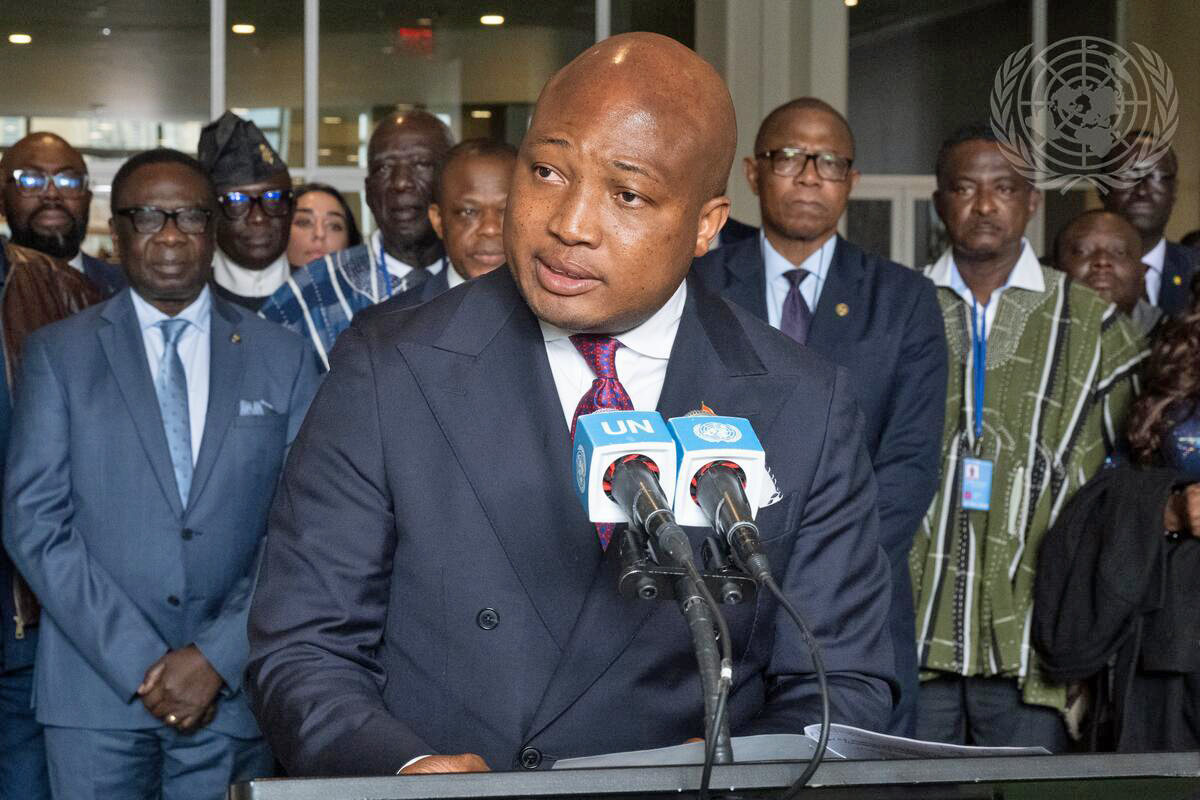
Back at the UN, Ghana’s Foreign Minister, Samuel Okudzeto Ablakwa, represented the entire African delegation.
In a statement, he also punctuated the victory of the resolution, which acknowledges the trafficking of enslaved Africans.
“The international community has taken a significant, considerate, and historic step forward by adopting the landmark resolution declaring” the atrocities of chattel slavery.
In a statement, he also punctuated the victory of the resolution, which acknowledges the trafficking of enslaved Africans.
“The international community has taken a significant, considerate, and historic step forward by adopting the landmark resolution declaring” the atrocities of chattel slavery.
His statement resonated with poignancy because just two months ago, his country deported three Israeli citizens from its African territory.
The bold response was in retaliation for Israel’s detention of seven Ghanaians.
Israel later apologized.
The bold response was in retaliation for Israel’s detention of seven Ghanaians.
Israel later apologized.
The diplomat made no reference to that unprecedented event.
However, the foreign minister said that the resolution’s approval “deepens our collective awareness.”
“We chose remembrance over silence, dignity over erasure and shared humanity over division…”
The African spokesperson told the BBC he found the US/Israel opposition to the resolution “very disappointing.”
“We will leave it to their conscience,” he added.
His main consolation is that the resolution successfully passed.
However, the foreign minister said that the resolution’s approval “deepens our collective awareness.”
“We chose remembrance over silence, dignity over erasure and shared humanity over division…”
The African spokesperson told the BBC he found the US/Israel opposition to the resolution “very disappointing.”
“We will leave it to their conscience,” he added.
His main consolation is that the resolution successfully passed.
About America’s rejection, he said they missed “an opportunity for reckoning” and a chance to show “they are regretful” and are “contrite and willing to move forward.”
“They know their role.”
“They know their role.”
The Ghanaian diplomat also issued a pointed message: “You missed a golden opportunity.”
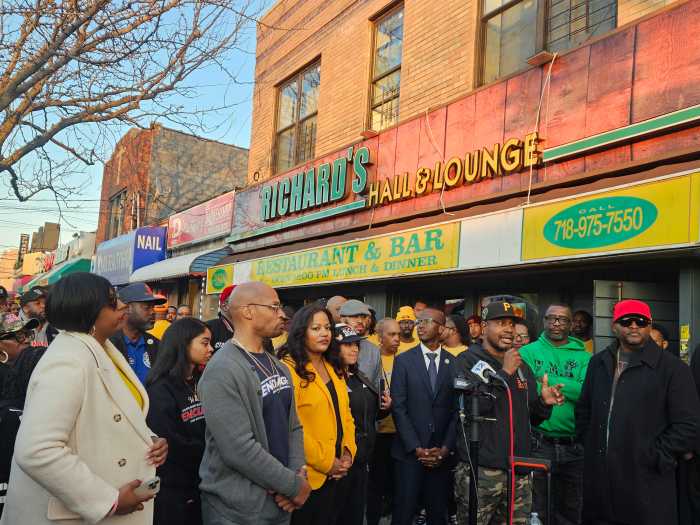
Rev. Alfred Sharpton also spoke at the East Side location.
“America is running from its past.”
Rev. Alfred Sharpton also spoke at the East Side location.
“America is running from its past.”
The outspoken founder of the National Action Network said America should represent the bastion of historic advancements.
“Instead, they want to rewrite the past and change education in schools.”
Reportedly, due to various reasons, 52 nations abstained from voting.Catch you On the Inside!
“Instead, they want to rewrite the past and change education in schools.”
Reportedly, due to various reasons, 52 nations abstained from voting.Catch you On the Inside!