
The World Bank says its Board of Executive Directors has approved a new program to lay the foundation for more and better jobs in Barbados by strengthening foundational learning skills in pre-primary and primary education and improving access to a climate-resilient and inclusive learning environment.
The Washington-based financial institution said on Monday, March 23, that the US$50 million operation for the Barbados Education Sector Transformation program will be implemented by the Ministry of Education Transformation.
“Barbados has long demonstrated a robust national commitment to boosting jobs by investing in education and maintaining high enrollment and attainment rates,” the World Bank said. “The government consistently allocates approximately 4.9% of its Gross Domestic Product to the sector, a level of investment comparable to high-income countries and well above regional averages.
“Despite these achievements, the education sector faces critical challenges in translating high spending into learning outcomes,” it added. “Foundational learning deficits in numeracy and literacy emerge as early as primary school, with 2023 data showing that 30% of students scored below acceptable levels in mathematics on end-of-primary national exams.”
The World Bank said the system’s reliance on high-stakes exams often leads to “a focus on higher-performing students, leaving others without adequate support.”
The bank said the new program addresses these challenges through targeted literacy and numeracy initiatives, strengthened teacher training and classroom practices, and the introduction of improved assessment systems to better track student progress and inform instruction.
The program will also expand access to and the quality of early childhood education and learning environments, the World Bank said.
In parallel, it said the program will invest in upgrading school infrastructure to make it more climate resilient, more energy efficient, and better equipped with digital connectivity, while also ensuring that schools are accessible to students with special educational needs.
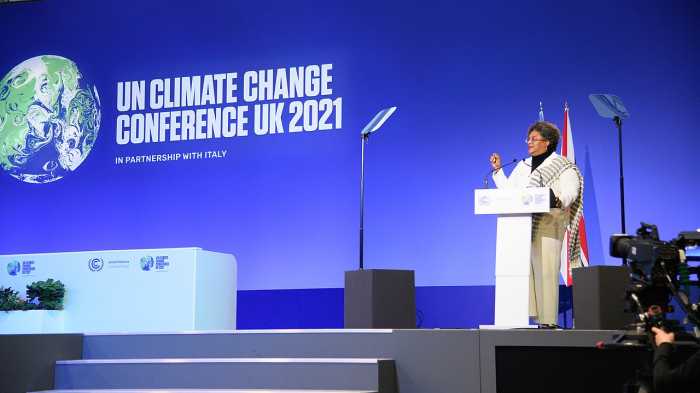
“This program aims to ensure that a child’s starting point in life does not determine their finish line,” said Prime Minister Mia Mottley. “We want to provide every Barbadian with the tools to not only participate in the global economy and human civilization, but to lead it.”
The World Bank said about 23,000 students in public nursery and primary schools are expected to benefit directly from the program, along with over 1,300 teachers and school leaders who will receive professional development opportunities.
“When children have access to quality education early on, they are better prepared to adapt, innovate, and succeed in today’s rapidly changing job market,” said Lilia Burunciuc, World Bank Director for the Caribbean. “This is key for strengthening Barbados’ resilience and long-term economic prospects.”