Bahamas
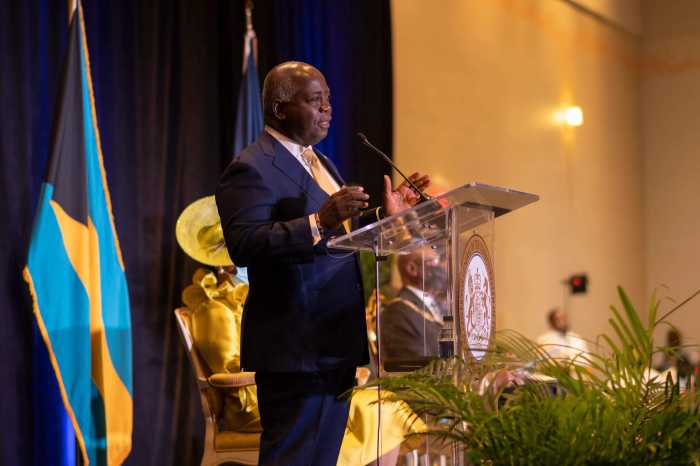
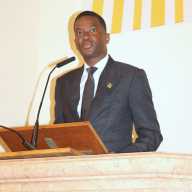
A document circulating on social media alleging that Deputy Prime Minister of the Bahamas Chester Cooper has previously met with and received a campaign contribution from the late convicted United States sex offender Jeffrey Epstein has been denied and described as “completely fake” by Cooper.
“Let me state unequivocally, I have never met Jeffrey Epstein or anyone who claimed to be associated with him. I have never communicated with him or anyone who claimed to be associated with him. I have never received any campaign contribution directly or indirectly from him or anyone acting on his behalf,” Cooper said in a statement.
Epstein died in a New York prison cell on August 10, 2019, awaiting his trial on sex trafficking charges, without the chance of bail. He is known to have kept a number of other high-profile friends.
In his statement, Cooper said he had received a “press inquiry regarding claims circulating online referencing what is purported to be an email exchange connected to the so-called Epstein files, alleging that I met with Jeffrey Epstein and received a campaign contribution from him”.
Cooper insisted the “document being circulated contains basic factual errors that call its authenticity into question,” adding “the fake email is dated Tuesday, March 14, 2016, when March 14, 2016 was in fact a Monday. The other is dated ‘Monday, March 20, 2016, when March 20, 2016 was a Sunday.”
“When a document cannot correctly identify something as simple and independently verifiable as calendar dates, it raises serious concerns about its reliability,” he said.
Cooper, who is contesting the upcoming general election on behalf of the ruling Progressive Liberal Party (PLP), said as the campaign heats up, voters should be cautious regarding online posts.
“We are living in a time when AI-generated documents, manipulated screenshots, and fabricated images can be created and circulated within minutes. Not everything that appears formatted or official is authentic.”
“My public record and campaign disclosures are transparent and available for review. I categorically reject any attempt to associate my name with Mr. Epstein or his activities and remain focused on serving the people of The Exumas and Ragged Island and The Bahamas,” Cooper added.
Cuba
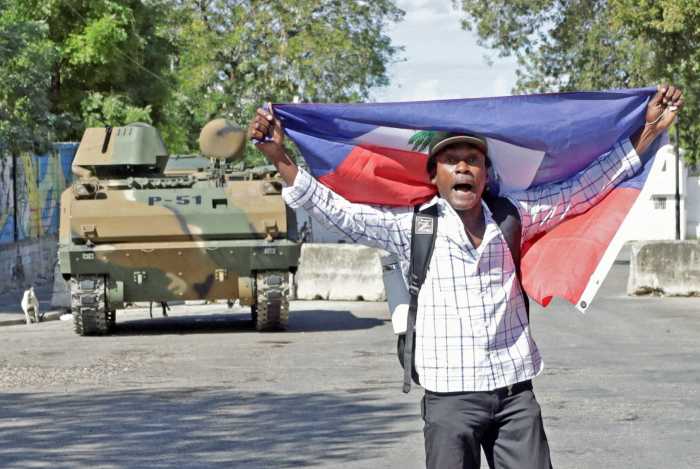
Canada recently announced that it is working on an aid package for Cuba as it faces blackouts and severe fuel shortages worsened by a U.S. oil embargo.
Minister of Foreign Affairs Anita Anand said, “We are preparing a plan to assist. We are not prepared at this point to provide any details of the announcement.”
Cuba is facing a devastating energy crisis that has increased in recent weeks after oil shipments from its main oil supplier, Venezuela, ceased when the US attacked the
South American country in early January and arrested its leader. Mexico, another major supplier, then also suspended oil shipments under US pressure.
Air Canada and other airlines have cancelled flights to the Caribbean island because of a shortage of aviation fuel on the island.
Canadian tourism is crucial to Cuba’s economy. The country would be joining Mexico in providing aid to Cuba.
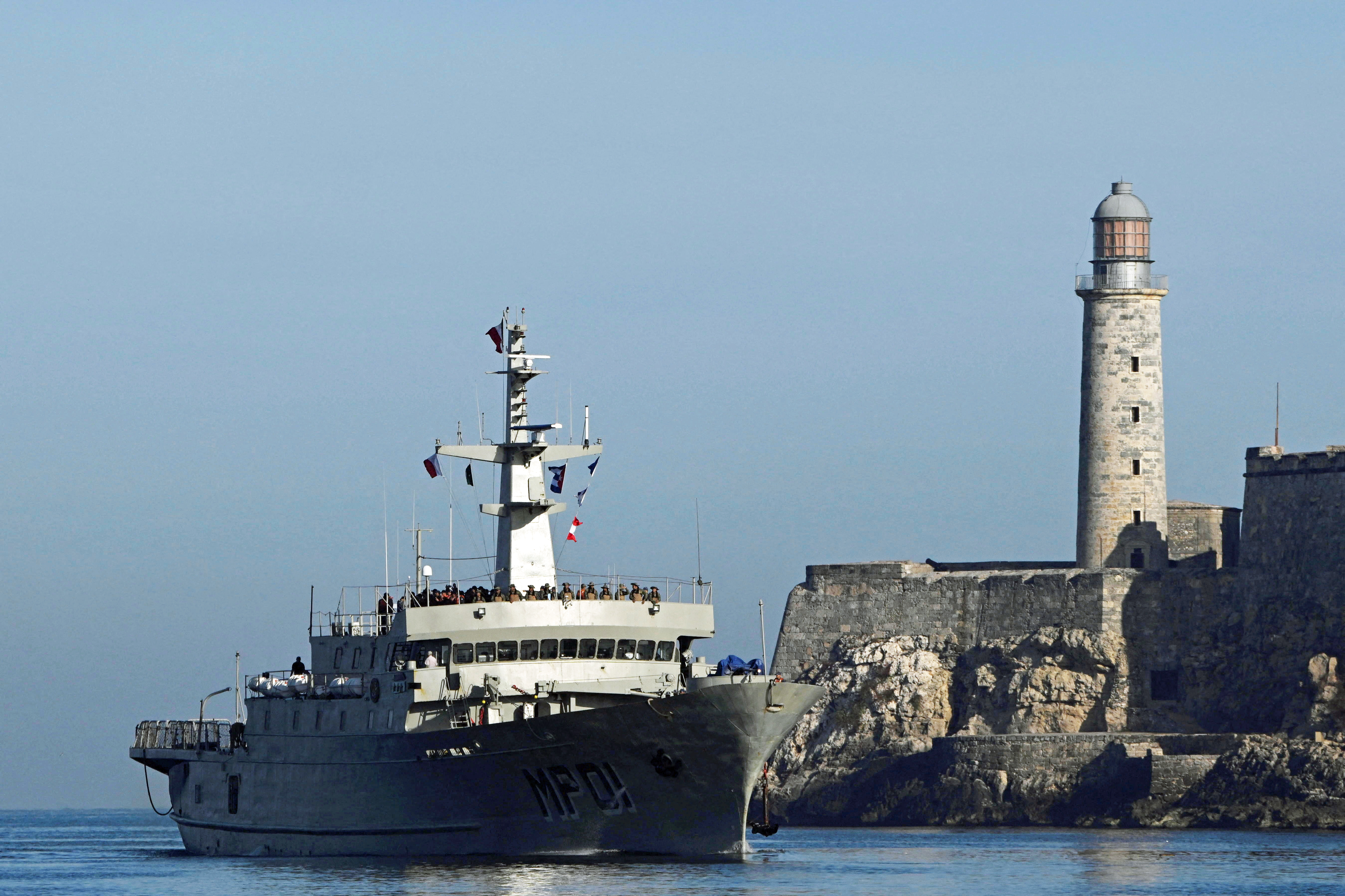
Earlier this month, two Mexican Navy ships loaded with humanitarian aid docked in Cuba, two weeks after U.S. President Donald Trump threatened to impose tariffs on countries that sell oil to the island, escalating the severe economic and energy crisis of an already struggling island. The ships brought about 800 tons of goods, and another 1,500 tons of powdered milk and beans.
The economic crisis affecting Cuba since 2020 has been compounded by intensified US sanctions aimed at forcing a change in the island’s political model. These pressures led to critical shortages and severe blackouts that peaked in early 2026.
Guyana
The Guyana government said it is leveraging its expanding oil and gas sectors for socio-economic development, as well as investing in measures that will optimise long-term opportunities for the country.
Addressing the fifth Guyana Energy Conference & Supply Chain Expo that was held under the theme “Building Tomorrow’s Future Today,” President Irfaan Ali told delegates from the region and the wider global community that his country is working with various international stakeholders, including Saudi Arabia, the United Arab Emirates (UAE), Qatar, the United States, on establishing “the most transformative infrastructure for tomorrow’s future.”
He told the conference organized by the Guyana Energy Conference & Supply Chain Expo Secretariat that has brought together industry leaders, policymakers, and stakeholders to explore developments and opportunities in energy and supply chains that, by itself, “creates an ecosystem that generates high-paying jobs that lead to industrialization, manufacturing, and accelerates the productive sector.
He said Guyana is blessed with resources that allow for the development of an economy and the acceleration of our own productive capacity, with bauxite as a major resource.
“But are we satisfied, because the future requires us to export raw bauxite, or do we channel the energy to create value, and this is the part we prefer to take, utilising the energy advantage to create value that will enhance the economy, diversify the economy, and integrate our economy with the rest of the global system.
“That is where we are channeling our energy,” he said, noting that the government is moving towards strengthening national energy security, which includes not only the energy risks but also generating energy for export.
He said Guyana is now building and completing its first plant, finalizing construction of another, and launching the expression of interest for the 165-megawatt Amalia Falls Hydroelectric project.
“We are working with our partners to leverage our gas and our petroleum to become an energy exporter in the region. Exporter in terms of infrastructure and logistics,” he said, adding, “so our national security must lead to regional energy security and allow us to be more structurally integrated in the rest of the region.”
Ali said Guyana is also seeking to leverage its energy sector to build resilient food production and has partnered with the U.S.-based Blumberg Grain to enhance regional food security.
St. Lucia
The St. Lucia government had reaffirmed the country’s full compliance with the European Union (EU) tax good-governance standards, emphasizing a reform process that has increased transparency, modernized the tax framework, and reinforced St. Lucia’s standing as a responsible and cooperative international financial jurisdiction.
“St. Lucia has demonstrated that small states can meet the highest international standards while safeguarding their economic sovereignty. Our removal from the EU lists was not incidental,” Prime Minister Phillip J Pierre said.
“It was the result of deliberate, responsible legislative action and sustained engagement. We remain firmly committed to transparency, fairness, and cooperation within the global financial system,” he added.
St. Lucia was initially placed on the European Union’s list of non-cooperative jurisdictions in December 2017 and was moved to the EU’s state-of-play (Annex II) list in March 2018.
In February 2021, St. Lucia was officially removed from all EU tax-related lists following the implementation of comprehensive legislative and regulatory reforms.
“Since that time, St. Lucia has maintained its cooperative status through successive bi-annual reviews conducted by the EU Council,” the Phillip J Pierre government said in a statement.
The statement said the government also undertook the enhancement of transparency measures, including full participation in the OECD’s Common Reporting Standard for automatic exchange of financial account information and compliance with Global Forum standards on exchange of information upon request as well as the alignment with Organization for Economic Co-operation and Development (OECD) Base Erosion and Profit Shifting (BEPS) minimum standards, including transfer pricing rules and anti-abuse measures.
“These reforms were implemented in close collaboration with international partners and in keeping with evolving global standards on tax fairness and transparency.”
The government said that the successful completion of these reforms has reinforced St Lucia’s credibility among international partners, financial institutions, and investors.
St. Vincent and the Grenadines
Prime Minister Dr. Godwin Friday said the recent United States military action against alleged illegal drug traffickers in the Caribbean Sea that killed at least three people, believed to be St. Lucian nationals, is of “concern” to St. Vincent and the Grenadines.
In an interview, Friday said the Minister of National Security, St. Clair Leacock, was to address the nation on the matter.
“We have no official confirmation of this from any source other than there was a strike, there were casualties,” Friday said, adding, “a lot of the information we have received is not official, but you know we can see what has happened, and we heard the unofficial report and it is a matter that is very concerning to us.”
“It is a very worrying situation for persons to operate in these waters; fishermen they go out and so forth and there is always the risk to them,” Friday said, adding that the police have since issued a notice “essentially cautioning people, but saying you can’t stop doing your business… and we will seek to find more concrete in-formation from the sources who would have those answers.”
St. Lucia Prime Minister Phillip J. Pierre recently said his administration is “actively engaging through established diplomatic and security channels” after confirming that “people lost their lives” in the latest U.S. military strike against what Washington says are illegal drug dealers in the Caribbean Sea.
“I can confirm that people lost their lives, and to the circumstances I have got no official notification on the circumstances surrounding their deaths,” Pierre told reporters.
“The issue is being investigated by the powers responsible for investigations,” he said.
Compiled by Devika Ragoonanan