The annual New York City African Diaspora International Film Festival (ADIFF-NY) is hosting its annual Women’s History Month film series March 27-29 at Teachers College and The Forum at Columbia University.
This year’s edition places a special focus on African American stories and filmmaker conversations, complemented by an expanded virtual festival accessible across the United States and Canada.
One film being spotlighted on Sat., March 28, includes “A Life in Arts Through the Eyes of Dr. Leslie King,” a documentary profiling renowned art historian and curator Dr. Leslie King Hammond, whose work has helped champion generations of artists of color in museums and academia. Following this film, there will be a Q&A with film co-director Ben Baker-Lee.
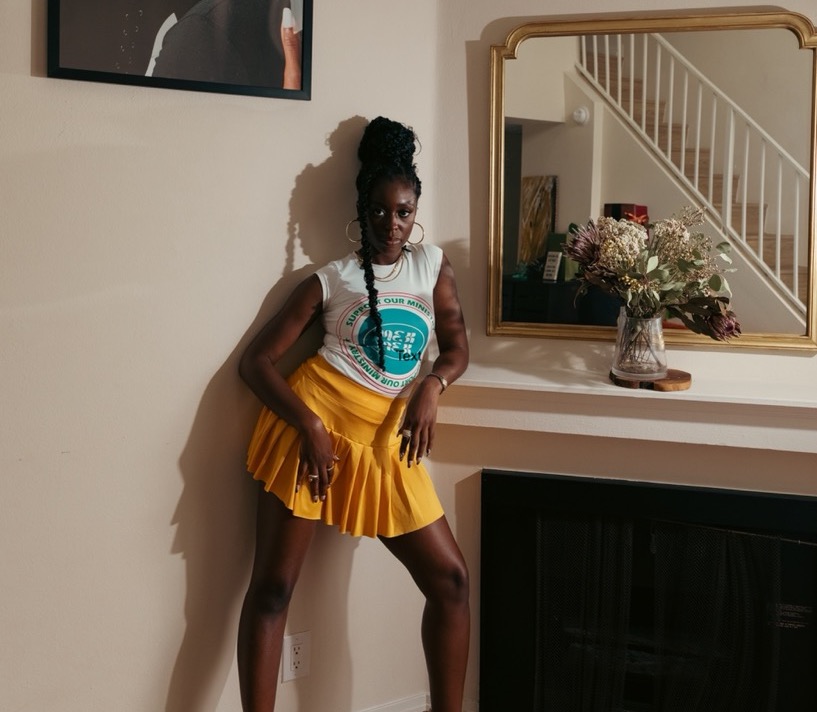
Another one being spotlighted on Sunday, March 29, is “She Island” (2025), directed by Sira Marissa Lewis and Raven Irabor. This is a short experimental film that blends Caribbean folklore and history, following a mother and daughter’s mystical journey to break a curse and reclaim their community’s cultural memory and identity.
It premiered during the film festival last year. For this series, this film will be premiering with Village Keeper (2024), directed by Karen Chapman. Irabor and Chapman will be doing a joint Q+A following it.
Another one being spotlighted on this day is Seeds (2026), the closing film to the festival that is directed by Brittany Shyne and shortlisted for the 2026 Academy Awards. The film offers an intimate look at Black generational farmers and the ongoing struggle to preserve land, legacy, and independence in rural America.
Irabor spoke with Caribbean Life in December 2025 about the life experiences that led her into filmmaking. Irabor grew up in NYC, in particular the Bronx, where she was surrounded by so many cultures, images, and forms of art.
“I was raised by a Nigerian father and a Trinidadian mother, so the African Diaspora was my foundation before I even had the language for it. My family also traveled a lot, so from an early age I was exposed to different countries, communities, and creative traditions across Europe, Africa, and the Caribbean. I grew up dancing too, which definitely shows up in my work.” Irabor said.
Prior to filmmaking, she got into broadcast communications and journalism in high school, where she learned about Newhouse School of Public Communications at Syracuse University, and felt like communications was the right path. Filmmaking eventually became the space where everything clicked, and it lets her bring together her passion for fashion, movement, culture, and visual storytelling in one medium.
Irabor’s journey towards creating this film began in 2021, and she stated that the focus of it comes from her own understanding of Caribbean womanhood and the stories she grew up around.
During a month-long stay in Trinidad with her grandmother, Irabor became really interested in the folklore character LaDiabless, who is usually portrayed as a dangerous or “evil” figure. However, the more she learned, the more Irabor saw her as a protector of women, and this interpretation shaped the film’s point of view.
Since folklore in Caribbean communities is also rooted in oral storytelling, she wanted to honor that tradition by having the story told through the character of the Witty Old Bush Woman.
“Working with the cast and crew in Trinidad was such a special experience. It feels like we’re forever written into each other’s stories and if you understand what that means you know how profound and touching that feels. We had a predominantly female team across different ages and backgrounds, and the process felt very communal.” she explained.
Irabor shared that it means a lot to her to have her film premiere during ADIFF NYC this year because she loves Caribbean people, and everything she creates is really for them to see themselves in all their nuance and complexity across the Diaspora.
“I consider myself a Pan-African image maker and curator, so my work is rooted in creating art that can help unify, liberate, and unite the African Diaspora. Art opens doors. It helps people understand each other, talk to each other, and hopefully move toward action. So having this film shown in a space that celebrates global Black stories feels meaningful, and I’m grateful it can live in a festival that honors the Diaspora in such an intentional way,” she added.
Irabor wants this film to inspire other Caribbean filmmakers and become something they can look to as a reference.
She explained that, “When we were doing our research, we didn’t see many Caribbean films with this style or approach, so a lot of our references came from African cinema, South American films, and Black American films. It would mean a lot for “She Island” to be a film that future Caribbean directors can pull from the way we pulled from others.”
Beyond filmmakers, she says that Caribbean women are really at the heart of this story, and this film is for all of them, and for the whole Caribbean at large, including women who love their culture who are trying to understand themselves and how their identity and purpose fit within it; young girls coming of age and figuring out their bodies, their opinions, their voices; older women who guide the next generation and help them navigate the world.
In addition to the value of oral storytelling and the perspective shift about LaDiabless, Irabor wants two other things to stick with people while they’re watching her film: one, the Caribbean is built on a blend of cultures, with African, East Asian, Native, and European influences; and two, the role of Caribbean women who preserve culture through lived experience and oral tradition.
Find information on all films premiering in person and virtually during the weekend, and how to buy passes, here: https://adiffwomenshistorymonth.eventive.org/welcome. To stay updated on ADIFF-NY and its work, those interested can also follow the team on Facebook, on Twitter, or on Instagram.