“I think we all wear some kind of mask. There are masks that shield us from others, but there are masks that embolden us, and you see that in carnival. The shiest child puts on a mask and can do anything and be anybody,” said acclaimed Haitian American author Edwidge Danticat in her book “After the Dance: A Walk Through Jacmel Carnival, “reflecting on the transformative power of masquerade in Haiti’s most celebrated cultural tradition.
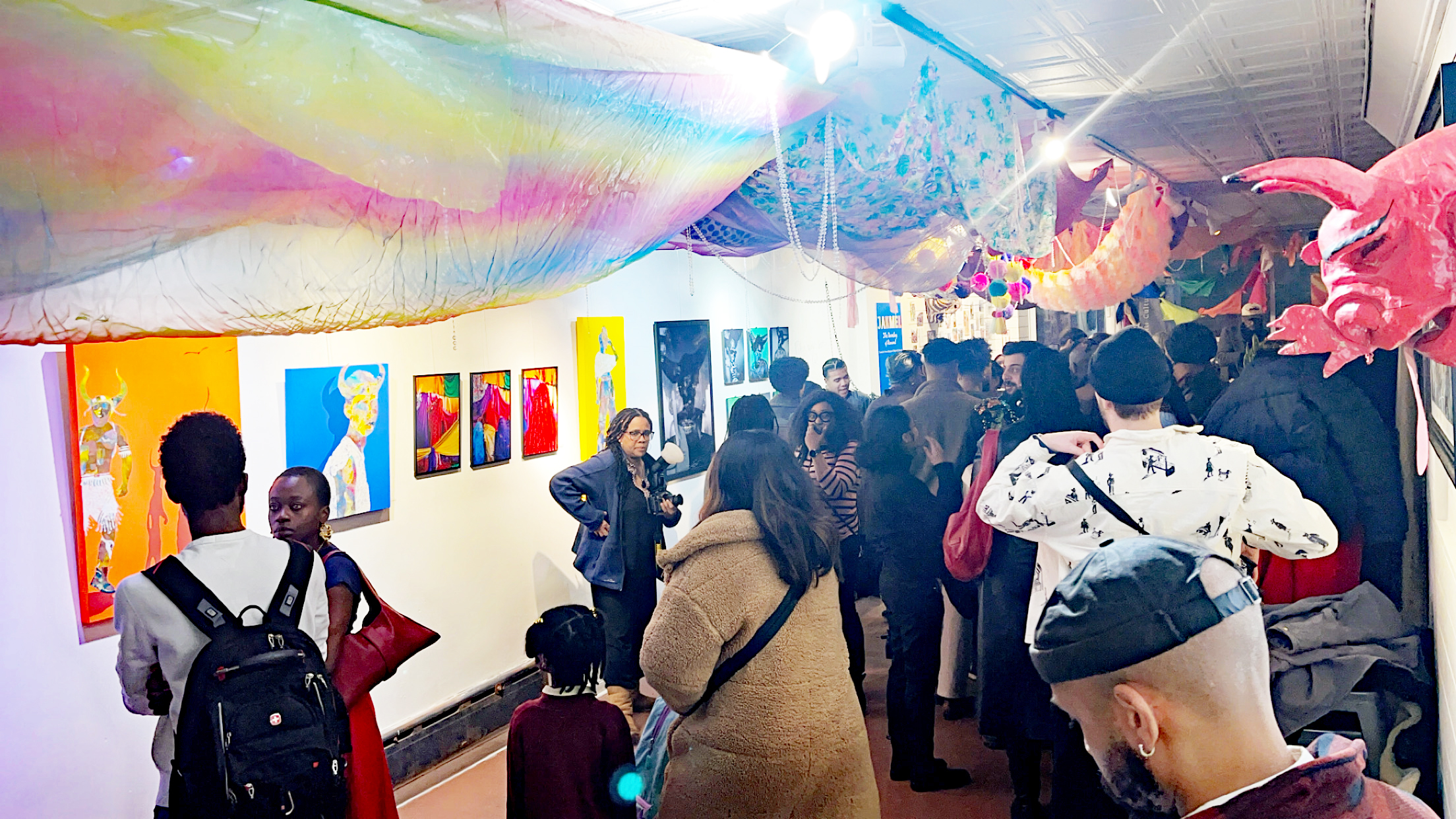
This month in Brooklyn, that transformative spirit takes center stage. Haiti Cultural Exchange (HCX), through Vizyon Atistik, presents “JAKMÈL | The Unveiling of Kanaval,” an exhibition exploring the historical, artistic and cultural significance of Jacmel’s Carnival in Haiti. The exhibition which opened on Thursday, Feb. 12, ends on March 29 at HCX’s gallery space at 35 Lafayette Ave. in Downtown, Brooklyn.
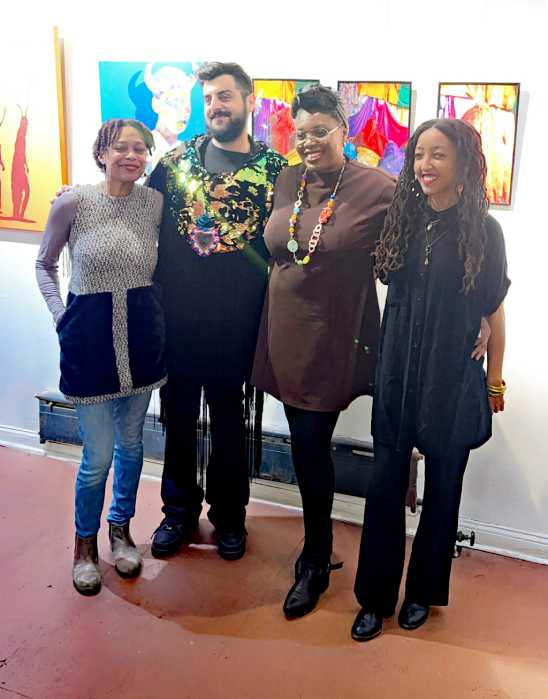
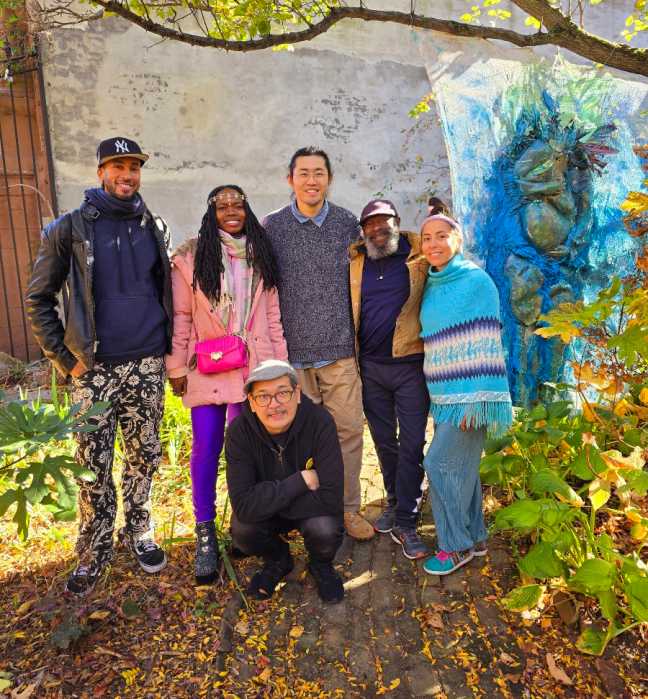
From left, Executive Director Régine M. Roumain; artist, photographer, and creative director Steven Baboun; curator Yvena Despagne; and conceptual artist, cultural producer, and writer Tania L. Balan-Gaubert. Photo by Orlande Fleury
Curated by HCX inaugural fellow Yvena Despagne alongside Executive Director Régine M. Roumain, the exhibition examines Haitian Carnival as both cultural expression and living history, particularly for members of the Haitian diaspora seeking to reconnect with their roots.
Renowned worldwide for its intricate papier-mâché masks, biting political satire, and community-driven artistry.
Get the latest news and updates delivered to your inbox.
Thank you for subscribing!
Jacmel’s Carnival is held annually in the southern coastal city of Jacmel. It is widely regarded as one of the most distinctive in Haiti. Alongside celebrations in Port-au-Prince, Jacmel’s carnival stands out for its handcrafted costumes and symbolic characters, each rooted in Haiti’s political history and collective survival.
Roumain holds Jacmel close to her heart, saying bringing the exhibition to Brooklyn, which is home to one of the largest Haitian communities outside of Haiti, feels especially meaningful.
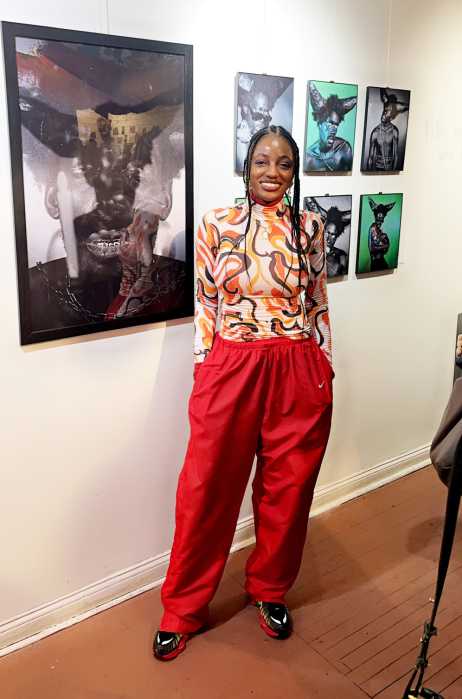
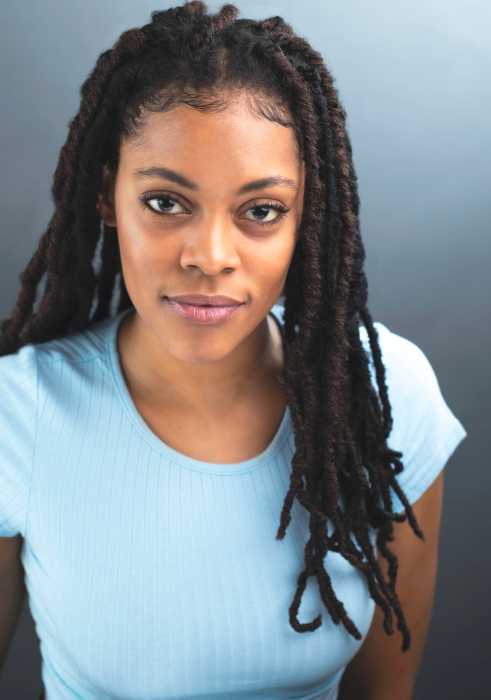
Amsterdam-based visual artist and photographer Christina Rateau stands in front of her exhibition, “Lanse Kod.” Rateau traveled from Amsterdam to Brooklyn to attend the opening of the exhibition. Photo by Orlande Fleury
“I am excited to welcome Yvena Despagne as our HCX inaugural curatorial fellow and work alongside her to shine a bright light on the various aspects of Jacmel Carnival,” Roumain said. “I’ve been captivated by the music, gyrating dances, food, costumes, political satire, and revelry. It’s a pleasure to bring some of those traditions to Brooklyn, which is the heartbeat of NYC’s Haitian diaspora.”
More than a festive display, “JAKMÈL | The Unveiling of Kanaval” is described as a living archive, one that documents survival stories, memory, and self-expression born from Haiti’s revolutionary past and shaped by generations of artisans.
Through paintings, sculpture, archival materials, and contemporary interpretations, the exhibition bridges past and present, demonstrating how Jacmel’s Carnival continues to influence global art and political expression while remaining deeply grounded in local community traditions.
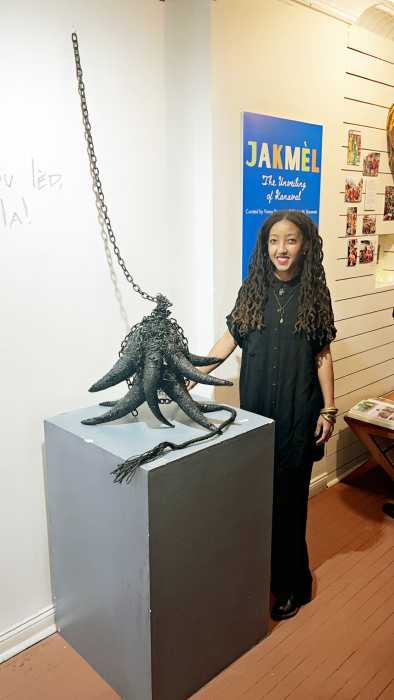
Tania L. Balan-Gaubert stands in front of her piece, featuring a cow horn. Photo by Orlande Fleury
For Curator Yvena Despagne, the show is also deeply personal. “There are a few different cities that have carnival in Haiti. I know for sure Jacmel is the most popular one and the one in Port-au-Prince, the capital of Haiti as well,” she said. “What makes Jacmel Carnival stand out more than the rest is the costume. Every character that you see walking down the street has a meaning tied to political history and the survival of the Haitian people,” said Despagne
Despagne, who has not returned to Haiti since she was 9, said researching the exhibition underscored how much of Haiti’s cultural history can be lost across generations in the diaspora.
“Just understanding that history is so important. Me learning this type of history now at my age, I can imagine how much the diaspora does not know about Haiti’s culture and history in general,” she said. “I wanted to target Jacmel Carnival specifically for these reasons, for its characters, history, and to ensure that the diaspora knows who they are.”
Despagne was asked how the exhibition helps audiences understand Carnival as a legacy of survival and self-expression. Despagne emphasized the power of symbolism.
“I believe in understanding the different characters in the carnival, you kind of weave into this black hole of unleashing the history of each of these characters,” she said. “From there, you begin understanding what happened to our people in the past and how that is expressed today through these characters. In understanding who these characters are, you are understanding what your history is.”
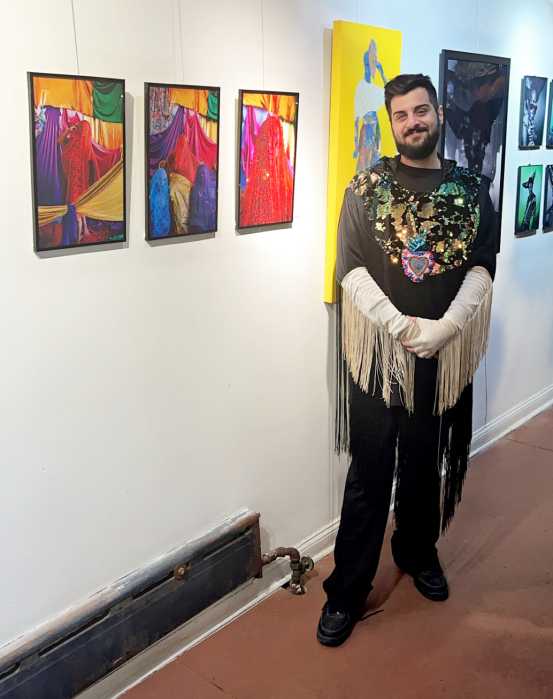
Steven Baboun stands in front of his vibrant, color-inspired exhibition, reflecting the playful use of color during carnival celebrations.Photo by Orlande Fleury
Featured artists include Steven Baboun, Tania L. Balan-Gaubert, Bacheler Jean-Pierre, Charles Jean-Pierre, Lori Martineau, Christina Rateau, and Kedler St. Hilaire, with sculptural works provided by the Tequila Minsky Private Collection.
In addition to the opening reception on Thursday, Feb. 12, from 6 to 9 p.m., the exhibition includes panel discussions and community workshops exploring the cultural significance of the Jacmel Carnival and its relevance to today’s global Haitian community.
“Jakmèl is a magical place of creativity and artistry,” Roumain said. “The Unveiling of Kanaval introduces the characters, songs, political satire, and traditions of carnival while celebrating Haitians’ joy, power, and resistance.”
For Brooklyn’s Haitian diaspora, the exhibition is not just a celebration — it is a call to remember, reclaim, and pass forward a legacy carried in masks, music, and memory.