Jamaicans appear to be so upbeat about recent offshore seismic work that officials have been forced to issue statements reminding locals that seismic work does not immediately mean a commercial oil and or gas find.
United Oil and Gas Plc of the United Kingdom recently completed work in the Walton-Morant Bay offshore area linked largely to echo sounder works, heat flow probing data analysis, and piston core sampling of more than 40 seabed locations. For some locals who are anxious for the island to benefit from a windfall, like fellow CARICOM bloc member Guyana and Suriname in 2028, that they have mistaken the surveying work for actual exploration for oil and even exploitation.
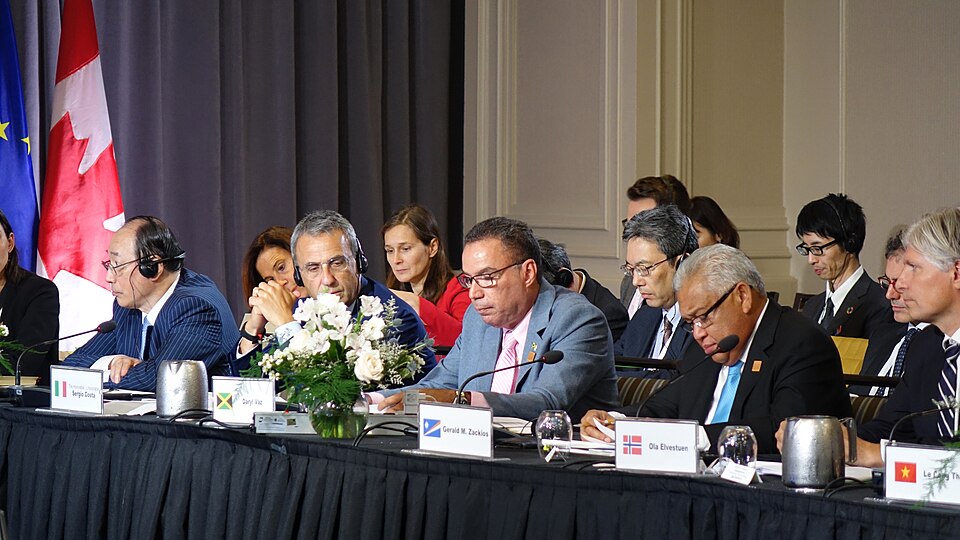
So, Energy Minister Daryl Vaz and other top officials have felt compelled to ask Jamaicans to have patience as the country is still a ways from determining whether commercial quantities lie below the seabed off waters to the south of the island.
“So, once again, I caution everybody to be patient and calm and to listen to the government on this very sensitive matter. It will be two to three months before we hear anything, positive or negative, so we don’t expect to hear any rumors circulating about the discovery of oil or gas,” the minister said. “This is simply not a technical exercise. It is a meaningful step towards understanding the geological potential of offshore Jamaica. The data collected was state-of-the-art and will inform evidence-based decision making about the country’s energy future.”
Core and other samples have been sent to an American laboratory for processing and determination, but national excitement still abounds. Vaz says it will be at least three months before results are available.
Of the 15 nations in the grouping, Jamaica is the one that is most actively pursuing efforts to determine whether it has such a resource that could spur the kind of runaway development that Guyana has seen since US supermajor ExxonMobil and consortium partners Hess Oil/Chevron and China’s CNOOC first announced a “world class” commercial and gas find back in mid-2015. The oil producers in the bloc are Barbados, Guyana, Trinidad, Suriname, and Belize, with only Guyana producing and exporting large quantities of oil to international markets. Grenadian officials say that they recently dusted off files with seismic studies over the decades in the hope of attracting the major oil companies as the island neighboring oil producing Trinidad.
The recent shout about oil and gas has a bit to do with local fishermen reporting sea surface seeps that were initially dismissed as discarded engine oils from small vessels or waste which had been illegally dumped in Jamaican waters, possibly by cruise and merchant ships.
Persistent reporting by fishermen led to a deep dive that had attracted Tullow Oil of the UK, but it abandoned the project in 2020 after completing 3D seismic and other surveys. In stepped United and while it has struggled to raise funds internationally, the company has shown faith with Jamaica and now awaits the laboratory results from core and other samplings.
United Chief Executive Brian Larkin has tried to hide his excitement about Jamaica, but says the firm is pressing ahead.
“The recovery of seabed sediment cores at all 42 selected locations is a fantastic achievement,” he said, describing the latest developments as “a potentially transformational exploration drilling phase for Jamaica.”