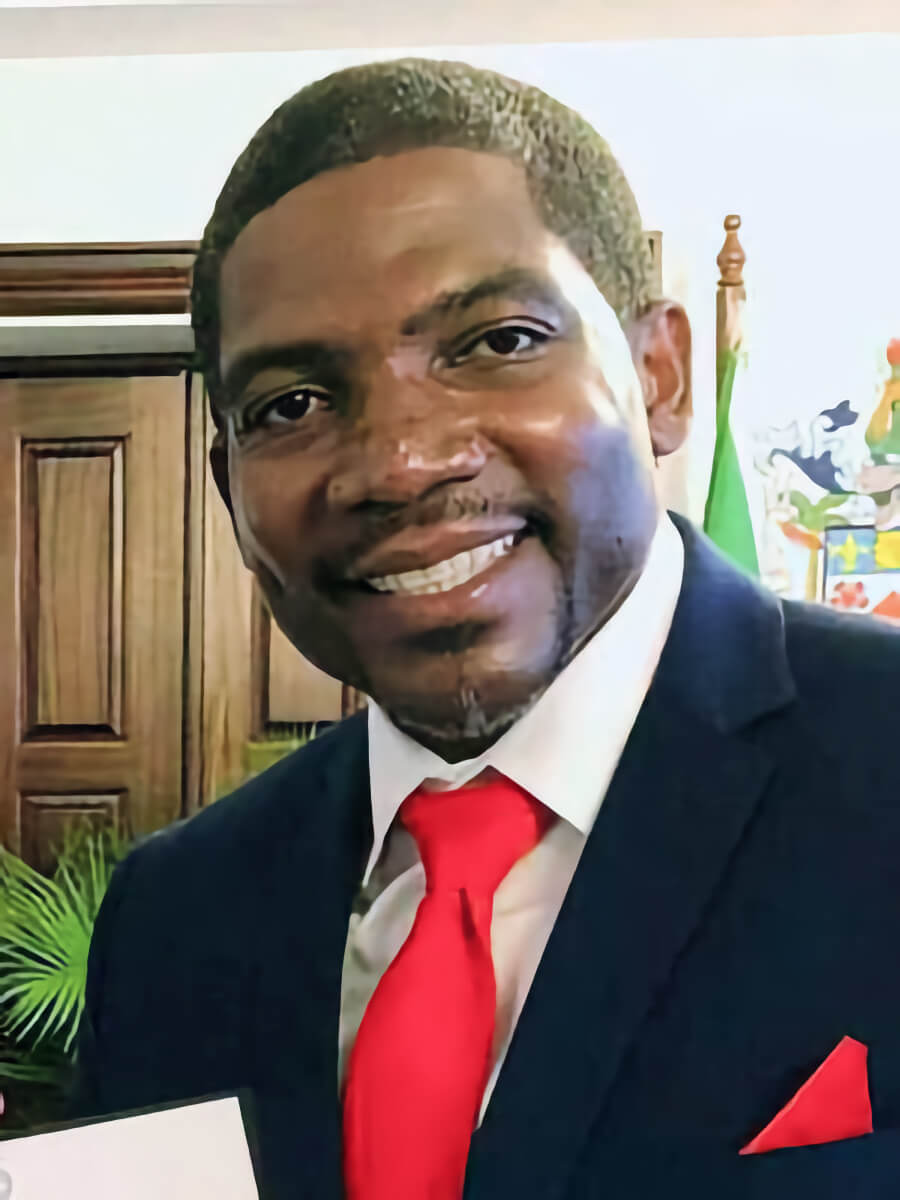
On March 31, 2026, the Prime Minister of St. Kitts and Nevis declared in the National Assembly official recognition of Rastafari “livity” and “ways of life’ as a bona fide religion. In paying tribute to Dr. Terrance Drew, this article highlights several countries that have officially recognized the religious qualities of Rastafari.
Additionally, this month marks the 100th anniversary of the late Count Ossie, the leader of the Mystic Revelation of Rastafari (MRR). Against this background, the article highlights a significant speech by Prime Minister Michael Manley on June 1, 1977, at the opening of the MRR Cultural Center.
In the speech “The reality of the struggle,” he proclaimed Rastafari as “the tap root of Jamaican culture,” and that “over the years this country was psychologically incapable of recognizing Rastafari as a bona fide religion.” Keith Noel in “Rastafari: Ja’s greatest legacy to the world” (The Gleaner, Feb. 9, 2012) provides a brief history of police brutality against members of the Rastafari movement in the public space without eliciting public outrage, helping to define the nature of pre-1970s attitude of the police against the members of the Rastafari community.
Respect due Dr. Drew
The movement of Rastafari began to take on global importance in the late 1970s, partly through the rise of reggae music, and spread to the Eastern Caribbean, where it took on radical cultural, social, and political qualities that militated against neocolonial and reactionary settings, especially in St. Vincent and Grenada. The members of the movement were critical to the Maurice Bishop-led New Jewel Movement revolution in 1979.
Dr. Drew noted in his March 31st declaration that his country was the first in the region to have accorded the members of the Rastafarian community official legitimacy of their “livity” and “ways of life.” Additionally, he said it was a “deliberate effort to uphold the constitutional rights and promote inclusivity,” and noted that this constitutional act was a long overdue affirmation of a community that has long been a part of the social and cultural fabric of the Federation.
Rastafari to the world
Noel in “Rastafari: Ja’s greatest legacy to the world” (The Gleaner, Feb. 9, 2012) writes about the history of victimization against the adherents of Rastafari, and how reggae music and the leading artistes were important in taking the movement beyond the Jamaican boundary. He makes an important point in the article that “They (the Rastafarians) gave the generation of the 1970s the base on which to build a ‘new worldview’ that was not a mirror of that of the metropolis.”
The movement grew globally during the late 1970s and the 1980s. Rasta began its global impact. The case of Australia is interesting. The country has no state religion, thereby protecting freedom of religion. In 1980, the state officially recognized the movement and enacted laws to protect Rastafarian followers. Rastafari was officially recognized as a bona fide religion in New Zealand in 1999.
While Rastafari is not recognized as a religion in Jamaica, under the Freedom of Religion Act, it is recognized as a religion in the United States of America, where it is described as a politico-religious movement. Similarly, the movement is officially recognized in Canada under the Canadian Freedom of Religion Act. Great Britain in the 1980s gave official recognition to Rastafari as a religious movement and a “way of life” in that country.
In Africa, there has been a significant rise in the idea and movement on that continent. The 2018 Cannabis legislation in South Africa was followed by the 2025-2026 era, with the official recognition of Rastafari as a religion, its “livity” and its “ways of life.” In 2019, the High Court of Kenya ruled that “Rastafarianism” is a bona fide religion. Why has Jamaica, where the idea and movement originated, not given official recognition?
Politics and Rastafari in Jamaica
There is the claim that Jamaica is a secular democracy; that is, it has no state religion, but the National Anthem is a Christian prayer, and the National Pledge is a Christian prayer. Prayers are used to open parliament, sporting events, and even political meetings of all sorts. Members of Christian denominations were instrumental in the establishment of the Ganja laws in the first quarter of the 20th century, and they were also part of a collaborative group that called for and supported the arrest, trial, and imprisonment of Leonard P. Howell, the founder of early Rastafari in late 1933, on the charge of sedition.
In April 1933, Howell announced that His Imperial Majesty Haile Selassie the new King and Messiah for black people in Jamaica. The colonial authority, the police, and some church leaders were unable to kill the movement in its infancy.
The 2015 Ganja Amendment recognizes the use of ganja by members of the Rastafarian community as a “sacrament,” meaning a practice associated with religious rites but not with the religious qualities, the “livity” and “ways of life” of the movement. It was in the 1970s that Rastafari received tacit recognition from Prime Minister Michael Manley during the 1972 political campaign.
Prime Minister Michael Manley on June 1, 1977, at the opening of the MRR Cultural Centre. In the speech “The reality of the struggle,” he proclaimed Rastafari as “the tap root of Jamaican culture,” and that slavery and colonialism made conscious attempts to destroy the consciousness of Africans.
He told them that the cultural displacement was the gravest of all consequences of slavery, and that Rastafari was the tap root of Jamaican culture that is critical to a complete recovery of ourselves by way of the path of discovering our African roots. Indeed, he saw the movement in terms of its role in “debriefing” the slave mentality in Jamaica. Manley is the only political leader in Jamaica to have recognized Rastafari as a bona fide religion.
Louis E.A. Moyston, PhD