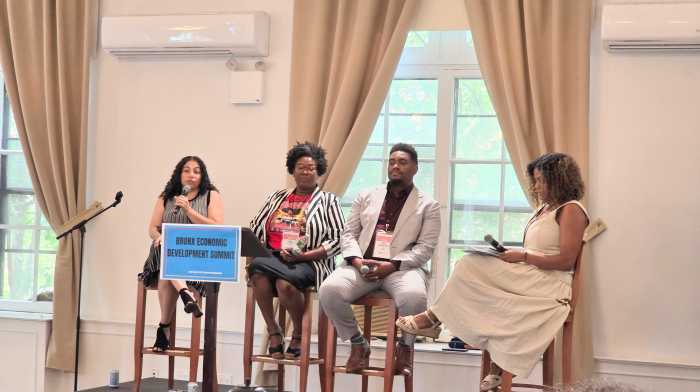
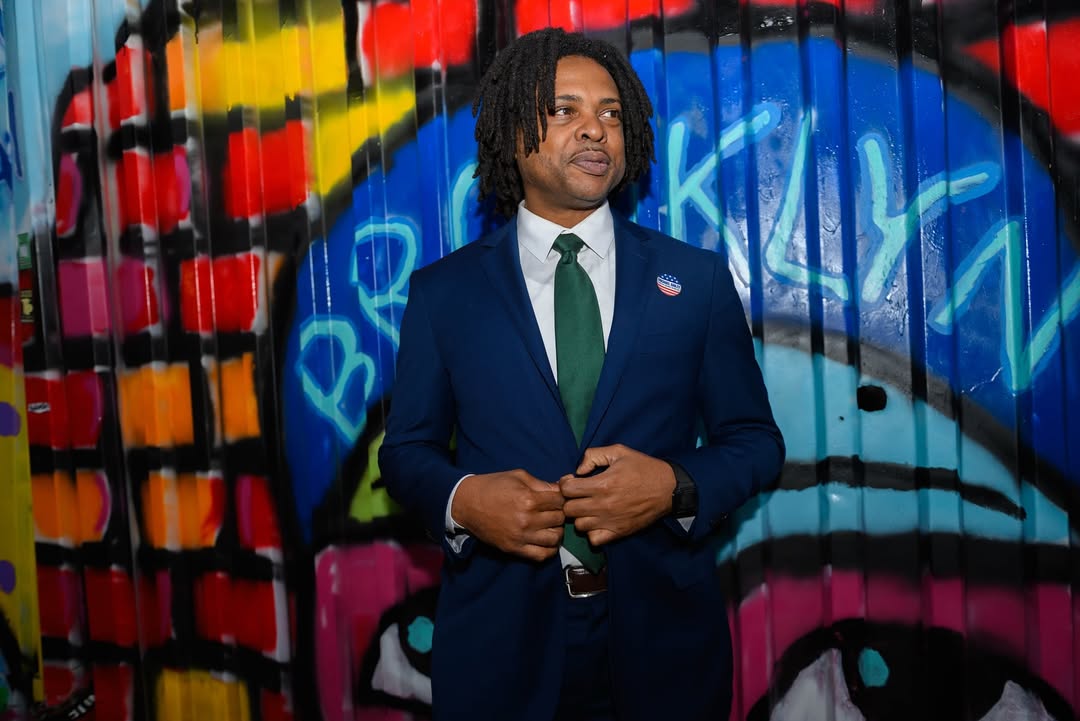
On the heels of a May 30 candidate debate at the Magnolia Tree Earth Center in Bedford-Stuyvesant, Democratic Assembly candidate Michael Bailey has unveiled a Neighborhood Business Preservation Plan aimed at helping longtime businesses survive rising costs, access government resources, and remain rooted in Central Brooklyn.
Bailey told Caribbean Life on Wednesday, June 3, that his plan aims to keep Black, Caribbean and immigrant-owned businesses in the community.
Saturday’s community forum featured candidates seeking to represent two overlapping Brooklyn districts. Bailey debated incumbent Assemblymember Stefani Zinerman and Eon Huntley in the Democratic primary for Assembly District 56, which encompasses Bedford-Stuyvesant and portions of Crown Heights. State Senator Jabari Brisport also debated Democratic challenger Marlon Rice in the State Senate District 25 race.
Bailey, a lifelong Bed-Stuy resident, real estate attorney and former construction company owner, said that preserving Central Brooklyn requires more than addressing housing costs.
He said it also means protecting the small businesses that have long served as economic anchors and gathering places for the area’s Black, Caribbean, and broader immigrant communities.
“Residents see the displacement happening in real time,” Bailey said. “A longtime business closes, a storefront sits vacant, another family leaves the neighborhood.
“If we want to preserve the character of Black Brooklyn, we have to preserve the local businesses, economic opportunities and community institutions that make these neighborhoods worth staying in,” he added.
Bailey’s proposal comes ahead of the June 23 Democratic primary, in which Bailey is challenging Zinerman. Huntley, a DSA-aligned candidate who challenged Zinerman in 2024, is also seeking the seat once again.
The race is unfolding amid growing concern about the future of historically Black neighborhoods in Central Brooklyn.
Bailey said rising housing costs, deed theft, unemployment, and commercial displacement are placing pressure on longtime residents and neighborhood businesses alike.
He said Bed-Stuy’s Black population declined from roughly 75 percent in 2000 to about 40 percent in 2023.
Bailey said similar pressures are increasingly affecting Caribbean and immigrant families and entrepreneurs who have helped sustain the neighborhood’s commercial corridors.
“Too often, support exists on paper, but small business owners do not have the time, staffing, or connections to navigate complicated government programs,” he said. “Government should be helping neighborhood businesses access opportunities, not burying them in bureaucracy.”
As an advisor to Minority- and Women-Owned Business Enterprises, Bailey said he has seen how difficult it can be for entrepreneurs to identify and access available resources.
He said his plan includes three components: Central Brooklyn Small Business Navigator Initiative, Commercial Vacancy Reduction Initiative and Neighborhood Business Preservation Initiative.
On Central Brooklyn Small Business Navigator Initiative, Bailey is proposing a “dedicated effort” to connect neighborhood businesses with existing city and state resources, including MWBE certification, grants, financing programs, procurement opportunities and technical assistance.
He said the initiative would focus on helping entrepreneurs navigate programs that are often difficult to access without professional guidance or dedicated staff.
On Commercial Vacancy Reduction Initiative, Bailey is calling for a review of long-term commercial vacancies and new incentives to bring empty storefronts back into use.
He said the proposal would prioritize locally owned businesses, first-time entrepreneurs and businesses with strong community ties.
“Every vacant storefront represents lost economic activity, lost jobs, and lost opportunity,” Bailey said. “We need policies that encourage investment while giving local entrepreneurs a fair opportunity to grow.”
On Neighborhood Business Preservation Initiative, Bailey’s plan would also establish targeted support for longstanding businesses facing displacement pressures, rising operating costs and changing neighborhood conditions.
“When a neighborhood loses a business that has served residents for 20 or 30 years, we lose more than a store,” Bailey said. “We lose jobs, relationships, local knowledge, and a piece of the neighborhood’s identity.”
He said the plan expands on remarks he made during Saturday’s debate, and reflects his commitment to deliver “results, rather than rhetoric.
“Regardless of politics, communities need affordable food options, safe commercial corridors, and policies that help neighborhood businesses survive,” Bailey said. “Politics should be about solving problems people can see on their own block.”
The proposal complements Bailey’s broader campaign agenda focused on housing affordability, deed theft prevention, homeowner protection and economic opportunity.