Antigua and Barbuda
The Antigua and Barbuda government has approved a 5% increase in pension payments, as part of measures aimed at easing the impact of rising living costs and improving financial support for citizens.
This follows a recent announcement of a similar 5% salary increase for public servants.
The increase will also be extended more broadly across parts of the public service, including participants in the Work Experience Program and some contract workers, as part of the government’s commitment to fairness and inclusiveness.
Cabinet also received an update on retroactive salary payments for 2018–2023, with about EC$28.716 million already disbursed. This includes payments to established and non-established workers, weekly-paid employees, pensioners, and separated employees.
The Treasury has set caps on payments depending on employment category and eligibility, and has excluded groups such as parliamentarians, ministers, judges, and some contract officers.
It also noted numerous challenges slowing down payments, including missing banking details for some pensioners and former workers, errors in submitted data, and the need to reconcile recent disbursements.
CARICOM
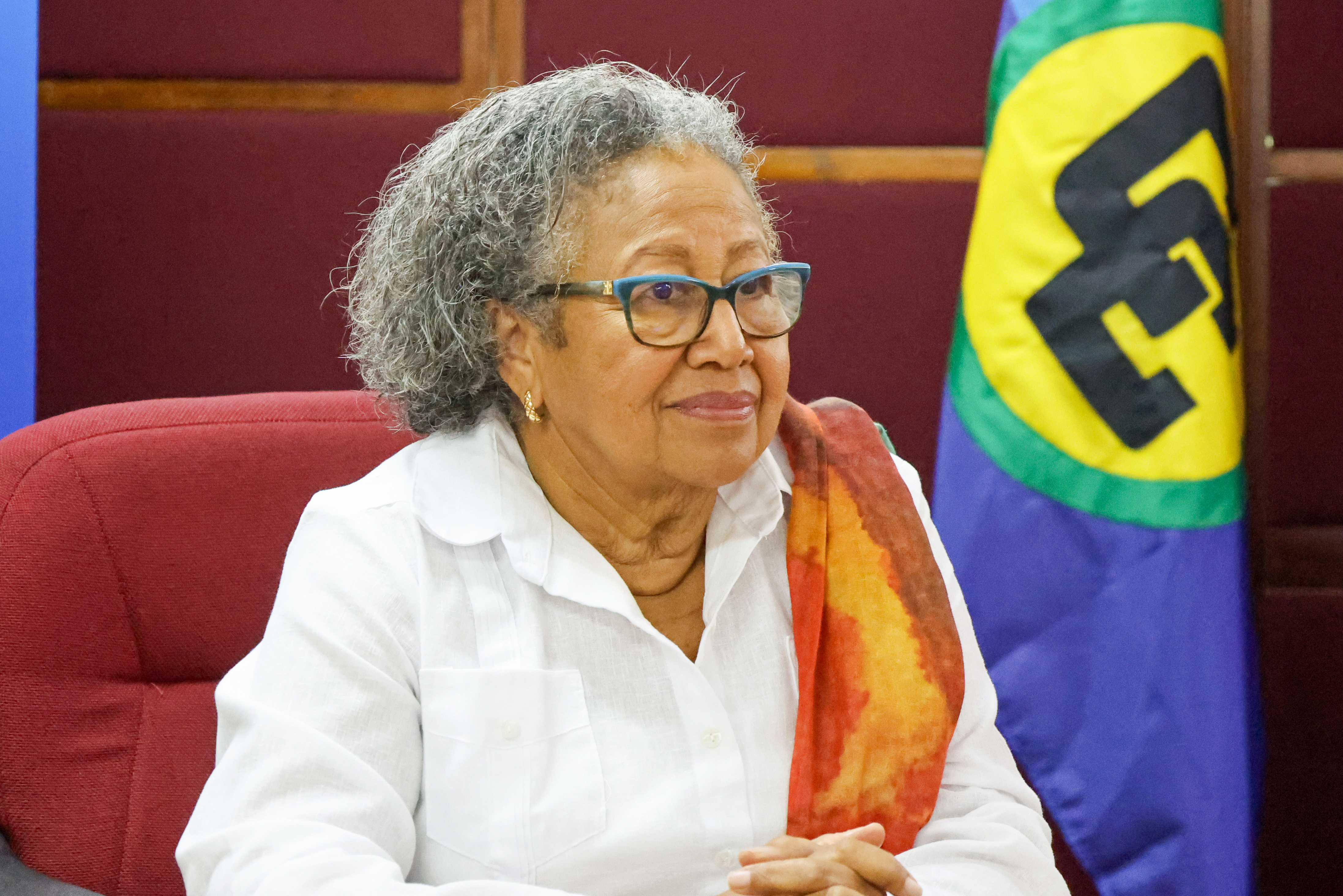
Former CARICOM assistant secretary-general Joseph Cox has questioned the reappointment of Dr. Carla Barnett as CARICOM Secretary-General, raising concerns about process, transparency, and lack of consensus among member states.
Cox argued that in CARICOM, leadership depends on consensus and trust, and without it, even a legally valid decision can face operational difficulties and weaken institutional credibility.
His comments came after a brief statement from CARICOM chairman Prime Minister Dr. Terrance Drew, who said Barnett secured the required majority from the regional leaders to be reappointed for a new term.
However, Trinidad and Tobago has strongly objected, claiming it was not invited to the meeting where the decision was made, and similar concerns have been raised by Antigua and Barbuda and The Bahamas.
T&T’s Prime Minister Kamla Persad-Bissessar has since threatened to withdraw funding for CARICOM.
Trinidad and Tobago’s CARICOM and Foreign Affairs Minister Sean Sobers also said the issue was not properly placed on the formal agenda or recorded in the official communiqué, suggesting procedural irregularities.
Cox added that reports indicate several member states, including Haiti and Montserrat, may also have been absent from key discussions, further raising questions about inclusiveness and representation within the decision-making process.
Jamaica
The UN Food and Agriculture Organization (FAO) has announced its support for a US$50 million Green Climate Fund project to strengthen the climate resilience of small farmers in Jamaica.
The project, “ADAPT Jamaica: Enhancing climate change resilience of vulnerable smallholders in Central Jamaica,” was recently approved during the 44th Meeting of the GCF Board in Songdo, South Korea.
“The project focuses on areas where climate risks and food security challenges are most severe due to an increased frequency of hurricanes, longer droughts, and progressively erratic rainfall-hazards that are already lowering yields, increasing food loss, and threatening rural livelihoods nationwide,” said the FAO.
It is the first single-country climate investment Jamaica has received from the GCF and will be implemented in central Jamaica, covering areas that produce about 70% of the country’s food. More than 700,000 people, including many women farmers, are expected to benefit.
The initiative is co-financed by several Jamaican institutions, including the Jamaica Social Investment Fund, Jamaica’s Ministry of Agriculture, Fisheries and Mining, the Development Bank of Jamaica, and the FAO, and aims to improve farming methods, infrastructure, and access to climate-smart technology to strengthen food security.
Jamaica’s agriculture minister said the project is a key step in shifting from reacting to climate disasters to building long-term resilience in the country’s food system.
St. Kitts and Nevis
St. Kitts and Nevis Prime Minister Dr. Terrance Drew said the first Afri-Caribbean Investment Summit in Nigeria was a success and described his country’s participation as “deliberate, strategic and results-driven.”
Among some of the outcomes, we witnessed the signing of a Memorandum of Understanding that will bring an international film production to St. Kitts and Nevis in June 2026, positioning our Federation as a hub for the creative economy. This is a tangible outcome for our creatives to benefit,” Prime Minister Drew told a news conference.
“We also became the first country to formally engage the $2 billion Creative Industries Fund, opening access for our creatives to financing, training, and global opportunities,” Drew said
Drew also pointed to broader diplomatic and cultural milestones, including a UN resolution recognizing the transatlantic slave trade as a crime against humanity, which St. Kitts and Nevis supported, and a historic charter flight from the Caribbean to Africa as a symbol of renewed ties.
He said the summit helped strengthen Africa-Caribbean relations and open new opportunities for trade, investment, and cultural exchange, adding that future efforts will expand across the OECS region to deepen engagement with Africa, which will be beneficial to all.
Trinidad & Tobago
The Caribbean Development Bank (CDB) has approved a US$10 million line of credit for Trinidad and Tobago to expand financing for small and medium-sized enterprises (SMEs).
The funds, provided through a program with Development Finance Limited (DFL), will support businesses in sectors such as agriculture, manufacturing, tourism, and energy efficiency. A small grant of US$126,000 is also included to strengthen DFL’s institutional capacity.
The initiative aims to close financing gaps for SMEs, boost job creation, and support business expansion, while also promoting inclusive and sustainable growth, including support for women-owned businesses.
Part of the funding will be used for training and policy development in areas such as environmental and social risk management and gender equality.
The CDB said the project aligns with its long-term strategy to strengthen private sector development, improve climate resilience, and help diversify Trinidad and Tobago’s economy beyond the energy sector.
It added that DFL has demonstrated strong financial performance and governance and will be responsible for executing the project, with oversight from the CDB through ongoing monitoring and evaluation.
Compiled by Devika Ragoonanan