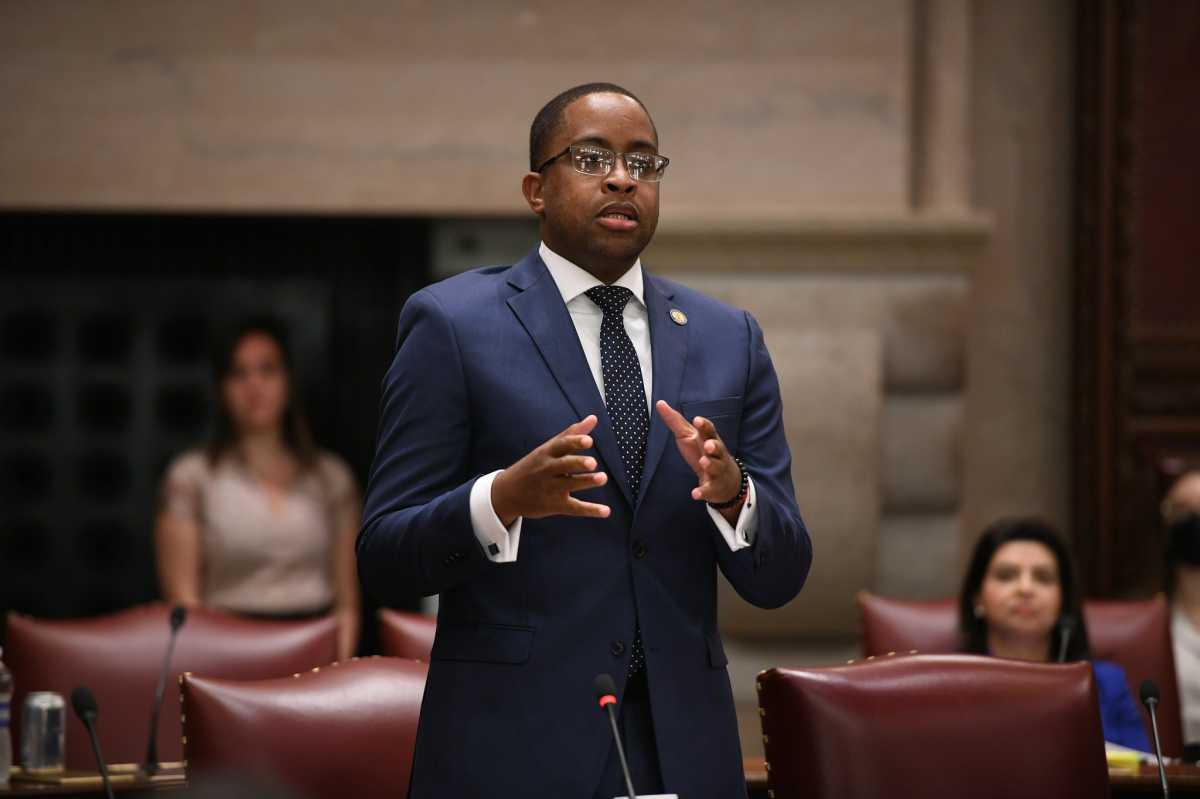
The New York State Senate has passed voting rights legislation that would enable Haitian Creole speakers eligible for language assistance under the John R. Lewis Voting Rights Act of New York.
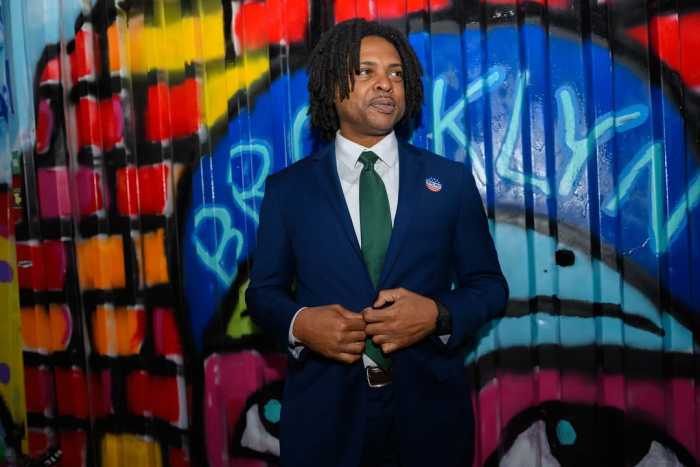
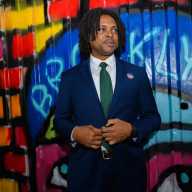
The measure, sponsored by Caribbean-American Democratic New York State Senator Zellnor Myrie, also includes New Yorkers of Middle Eastern and North African heritage.
Myrie, whose grandmother hailed from Jamaica, authored the 2022 John R. Lewis Voting Rights Act of New York.
He said that law “contains the strongest voter protections of any state law in the country.”
On passage of the latest legislation in New York State Senate, Myrie told Caribbean Life on Thursday, April 30, that, while voting rights are under attack across America, “New York is fighting back.
“This important bill builds on New York’s landmark Voting Rights Act (NYVRA) by adding new protections for speakers of Haitian Creole and New Yorkers of Middle Eastern and North African descent,” said the representative for the 20th Senate District in Central Brooklyn.
“I’m grateful to my Senate colleagues for continuing to step up and expand voting rights in New York,” added Myrie, stating that, among other provisions, New York’s Voting Rights Act creates protected classes of voters who are eligible to challenge instances of voter suppression or dilution in court.
He noted that the NYVRA has been upheld by the New York Court of Appeals, and was most recently used by Latino voters in the Town of Newburgh in Upstate New York to force procedural changes that will ensure the Town Board “more fairly reflect the voices of previously underrepresented voters.”
Myrie said over 170,000 speakers of Haitian Creole live in New York State, and over 300,000 New Yorkers report Middle Eastern and North African ancestry.
He said the bill now moves to New York State Assembly, where it is sponsored by Haitian-American Assembly Member Clyde Vanel, Democrat of Queens.
Myrie previously served as Elections Committee Chair in the New York State Senate and authored dozens of bills to expand voter access for New Yorkers, including establishing early voting, electronic poll books and increased access to absentee ballots.
In addition, he has held statewide hearings and authored a landmark report in 2021 making over 50 recommendations to improve the voting experience in New York.
Passage of Myrie’s Haitian Creole voter protections in New York State Senate comes as Caribbean-American Democratic Congresswoman Yvette D. Clarke, chair of the Congressional Black Caucus (CBC), and Caribbean immigration advocates on Wednesday strongly condemned a ruling by the Supreme Court of the United States (SCOTUS) on the Voting Rights Act (VRA) of 1965.
In a 6-3 ruling in Louisiana v. Callais, SCOTUS struck down a majority-Black congressional district in Louisiana, holding that, while the Voting Rights Act could provide a compelling reason to engage in race-based redistricting, it could do so only if plaintiffs can show intentional racial discrimination in the way districts are drawn.
The implications of this ruling include gutting Section 2 of the Voting Rights Act and allowing states to redraw their congressional district maps to eliminate majority-Black and brown districts previously protected by the VRA, putting them at risk.
“With the stroke of a pen, this rogue, unaccountable Court has effectively signed the death certificate of the Voting Rights Act, undoing decades of Black progress,” Clarke, the daughter of Jamaican immigrants, who represents the 9th Congressional District in Brooklyn, told Caribbean Life.
“Without the protections of the VRA, Republicans now have the ability to move forward with a nationwide scheme to rig congressional maps in their favor — to manufacture more districts for themselves by eliminating majority-Black districts, while stripping away the ability to challenge those racist, anti-Black maps in court,” she added. “This decision undermines the clear intent of Congress, which established that fair and equal representation is a cornerstone of our democracy, and could open the door for sweeping redistricting changes in the South. Instead, your representatives in Congress can be chosen by the state and imposed on you.
“Not since Jim Crow (laws in the Southern United States) have we seen this level of systematic disenfranchisement of Black voters,” Clarke continued. “The legitimacy of the Supreme Court has been deeply undermined by this decision. At its best, the Court has worked to expand our fundamental rights, but this ruling reflects a malignant impulse to reshape American society — one governed not by liberty or law, but by ideology imposed from the bench.
“It is beyond dismay that the Court once led by Thurgood Marshall, which helped define the meaning of constitutional liberty through decisions like Brown v. Board of Education, which dismantled ‘separate but equal’; Miranda v. Arizona, which protected the rights of the accused; and New York Times Co. v. Sullivan, which fortified freedom of speech and the press, has now laid to rest the foundation on which our representative democracy stands: the promise that the power to choose one’s representatives lies with the people,” she said.
Clarke said the CBC is left with no choice but to bring a legislative solution to the floor of the House of Representatives to protect Black voters around the country from “this extremist effort to diminish Black voices and access to fair representation.
“We are demanding a vote on the John Lewis Voting Rights Act without delay,” the congresswoman said. “Our nation’s highest court has been compromised. The CBC will make it our mission to aggressively advance Supreme Court reform. We will work to establish term limits for justices to help restore independence, neutrality, and legitimacy to the Court.
“We must do all in our power to protect voters from race-based discrimination and set minimum standards that ensure all Americans can participate in free and fair elections,” she added. “To be clear: It is not just on Black communities to carry the burden of an extremist, right-wing government that sees our rights, humanity, and belonging in democracy as optional at best, and disposable at worst.
“We will organize, litigate, and mobilize until the promise of this democracy is not just defended, but fully realized for everyone,” Clarke pledged.
In the SCOTUS ruling, the conservative majority found that the Louisiana district represented by Democrat Cleo Fields relied too heavily on race.
Chief Justice John Roberts described the 6th Congressional District as a “snake” that stretches more than 200 miles in linking parts of Shreveport, Alexandria, Lafayette, and Baton Rouge.
“That map is an unconstitutional gerrymander,” wrote Justice Samuel Alito for the six conservative justices.
Murad Awawdeh, president and CEO of the New York Immigration Coalition (NYIC), an umbrella policy and advocacy organization that represents over 200 immigrant and refugee rights groups throughout New York, said that Wednesday’s “decision from Justice Roberts’ Court is a dangerous step backward for our democracy, weakening what remains of the Voting Rights Act and signaling a retreat from protecting communities that have fought for generations to be heard.
“By imposing a higher burden to prove intentional discrimination, this ruling weakens federal protections for fair representation and opens the door for states to dilute the political power of historically marginalized communities and deny them fair representation,” said Awawdeh, urging New York to “take immediate action to reinforce New York’s protections against racial discrimination in redistricting and invest in robust enforcement at the state level.
“Without meaningful safeguards, majority-Black, brown, and Asian districts face an increased threat of being divided and weakened,” he continued, stating that “New York has a clear and responsible path forward.
“We look forward to working with our partners in the civil rights and racial justice movement, as well as our state Legislature, to advance the most protective measure possible, so New York can level the playing field and ensure all New Yorkers are fairly represented in Congress,” Awawdeh said.
In 1965, when US President Lyndon Johnson signed the Civil Rights Act into law, he described it as “a triumph for freedom as huge as any victory on any battlefield.”
But, on Wednesday, Justice Elena Kagan, writing in her dissent, for the court’s three liberal justices, lamented that the “gutting of Section 2 puts that achievement in peril.”
Fields said in a statement that SCOTUS conservative majority decision’s “practical effect is to make it far harder for minority communities to challenge redistricting maps that dilute their political voice.”