Barbados
The Inter-American Commission on Human Rights (IACHR) is urging Barbados to abolish the death penalty, noting that there has been no executions since 1984.
The IACHR said that there has been no progress in removing it from the law and, according to updated information, as of May 2023, six individuals remained on death row.
Despite this concern, the IACHR said that Barbados has made improvements in parliamentary reform and has taken steps to reduce the backlog of cases in its judicial system.
“Moreover, the Commission notes the landmark passage of the Rights of Persons with Disabilities Act, which strengthens legal protections for persons with disabilities. The Commission also highlights a reduction in homicides and further efforts by the State to reduce crime and the introduction statutory paternity leave for the first time.”
The IACHR expressed concern about increasing reports of abuse and neglect against children.
“Furthermore, the IACHR highlights that discriminatory provisions restricting women’s ability to transfer nationality to their children remained in force,” it said.
The IACHR noted that Barbados has an Office of the Ombudsman, which is part of regional and international organisations supporting human rights institutions.
“According to publicly available information, the Office of the Ombudsman submitted its 2023 Annual Report in May 2025.
The Office said it had received complaints to investigate concerns involving several government agencies, including the Ministry of Health and Wellness, Ministry of Education, and the Barbados Police Service.
The first Human Rights Commissioner was appointed in December. “According to official information, the Human Rights Commission will act as an independent body dedicated to promoting, protecting, and defending human rights in Barbados. This Commission will be empowered to investigate human rights complaints, develop educational campaigns to raise awareness of human right and monitor Barbados’ compliance with international human rights treaties and national legislation.”
Caribbean
The Caribbean Development Bank (CDB) reported that economic growth in the Caribbean subdued in 2025 due to global uncertainty, climate impacts, and domestic structural challenges.
“While the Caribbean continues to demonstrate resilience, the region’s growth prospects remain constrained by external uncertainty, climate-related shocks, and longstanding structural challenges,” said Christine Dawson, CDB’s acting director of economics.
“Strengthening institutions, accelerating reforms, and improving project execution will be critical to unlocking higher, more inclusive, and more sustainable growth across the region.”
The CDB reported that regional economic growth in 2025, excluding Guyana, dropped to 0.6% from 1.4% in 2024. Including Guyana, growth was 4.7%, down from 8.3%, with Guyana remaining the main driver.
The slowdown was caused by global uncertainty, weaker demand, climate disruptions, and trade challenges. Tourism continued to support economies but at a slower rate, while commodity-exporting countries had mixed results.
Some countries, like Suriname, had moderate growth, while Trinidad and Tobago experienced little to no growth. Jamaica and Haiti were affected by climate events, and Haiti’s economy continued to decline due to ongoing insecurity.
Despite slower growth, unemployment generally decreased, but youth and gender inequalities and labour shortages remained. Inflation eased but remained above pre-pandemic levels, and overall government finances were mixed, with reduced budget surpluses due to slower revenue growth and higher spending pressures.
Guyana
Guyana has commissioned a new multi-million US dollar 172-room hotel, with President Irfaan Ali stating that the country aims to become a leading destination for hosting events in the region.
“We are now positioning Guyana to be a premier hosting destination because we now have greater capacity and capability, and the confidence of the private sector is igniting greater confidence at the policy level to the extent that we are going after larger opportunities,” Ali said at the opening ceremony of the Four Points by Sheraton Georgetown.
The hotel blends international standards with Guyanese culture, featuring Amerindian craftwork throughout its design. It includes a restaurant inspired by local cuisine and spices, as well as conference and event facilities, all designed to highlight the country’s people, traditions and heritage.
“When you go in the rooms, you will see black shades that represent Guyana, represent nature, forest, represent sustainability, resilience… You will find in every section of the hotel…pieces of Guyana that inspires you and makes you…feel a sense of pride as a Guyanese,” Ali told the ceremony, expressing gratitude to the investors for choosing Guyana as an investment destination.
The president said the hotel is important as Guyana prepares to host many upcoming conferences and sporting events, with strong booking demand already.
He noted that the project created jobs during construction across many industries and will continue to provide permanent employment now that it is complete.
He also highlighted that the hotel will boost the economy, support other sectors, and enhance Guyana’s global reputation.
Haiti
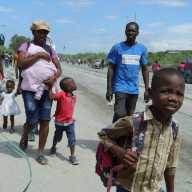
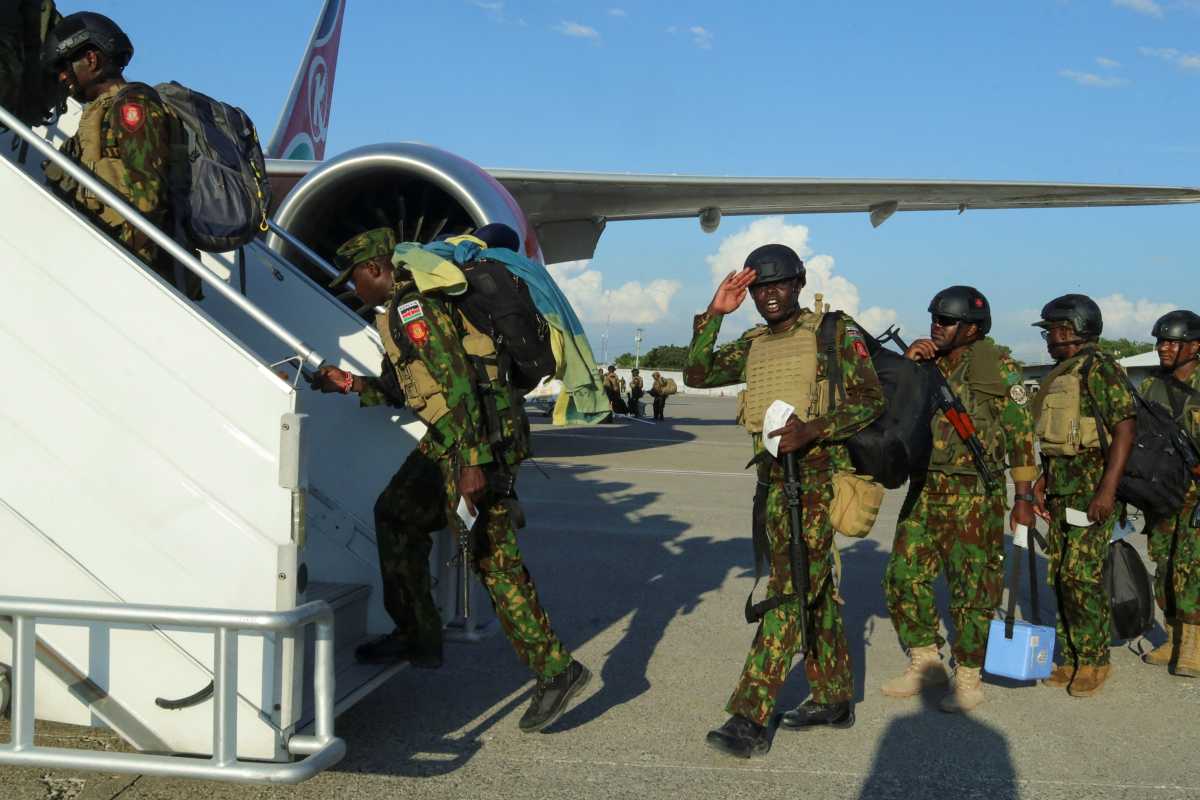
Haiti’s already fragile security environment is entering a new phase as nearly 500 Kenyan police officers withdraw, leaving the Haitian National Police (PNH) and Armed Forces struggling to fill critical gaps.
Speaking at the 6th Conference of the Sectoral Security Table, Police Chief Vladi Vladimir Paraison, director general of the PNH, said the force is at a turning point, noting that the loss of Kenyan personnel weakens positions once stabilised through joint operations in areas like Croix-des-Bouquets, Delmas, and downtown Port-au-Prince.
He described their departure as stripping the police of a “second line of defence,” while Mayor Massillon Jean warned residents fear renewed gang incursions without the Kenyan presence.
The Kenyan contingent had been deployed since June 2024 under a multinational framework, but delays in establishing Haiti’s planned Gang Repression Force (GRF) have complicated the transition. Authorities say timelines for the GRF remain uncertain, even as the government expands the Armed Forces of Haiti, aiming for about 400 troops tasked to reclaimed areas while police lead front-line operations. Defence Minister Mario Andrésol also announced plans to train 1,200 new recruits.
The withdrawal coincides with the rollout of a new UN-approved Gang Suppression Force, led by Chadian forces, with South African official Jack Christofides appointed Special Representative, succeeding Kenya’s Godfrey Otunge. The first Chadian officers have already arrived.
Despite some successes, the Kenyan mission suffered casualties, with at least three officers killed in the line of duty.
St Lucia
The government of St Lucia says it remains focused on strengthening its Citizenship by Investment (CBI) programme, with an emphasis on improving its due-diligence systems to ensure the programme operates with high levels of transparency, security, and credibility.
Under the CBI programme, foreign investors are able to obtain St Lucian citizenship in exchange for making significant financial contributions to the country’s socio-economic development, intended to support national growth, infrastructure, and public sector needs.
Prime Minister Philip J Pierre highlighted the programme’s performance while presenting the EC$2.1 billion (approximately US$778 million) tax-free national budget in Parliament. He reported that between April 24, 2025, and March 21 this year, a total of EC$65 million (around US$24 million) was transferred directly to the Central Government as a result of the CBI programme. He also noted that additional funds generated through the programme are still being held in approved accounts.
The prime minister described this performance as a sign of continued stability and value, while reinforcing the government’s commitment to ensuring that the CBI is monitored and aligned with national development goals.