CARICOM Private Sector Organisation CEO Dr. Patrick Antoine said the Caribbean should expand trade relations with other global countries beyond its traditional reliance on the United States, but this would require several regional initiatives.
Speaking at a World Bank Group webinar on regional integration, titled “Rethinking Regional Integration for Resilient and Inclusive Growth in the Caribbean,” Antoine highlighted ongoing collaboration between the CPSO and the CARICOM Secretariat, particularly on strengthening the Caricom Single Market and Economy (CSME) which allows for the free movement of goods, skills and labour across the CARICOM’s 15 member states.
Antoine also stressed that, in light of “America First” policies, the region should use the CSME to secure more affordable and reliable imports that are important for both citizens’ livelihoods and the tourism industry.
“The tourism sector, you know, has a high import content and a lot of those imports we will see come from the United States,” he said, noting that his presentation will be to operationalize the opportunities to source from alternative markets based on the country product combinations.
Dr. Patrick Antoine said the Caribbean could save up to US$2.4 billion, or 44% of its import spending, based on 2024–2025 figures.
“But I think the second message is that we really do have to focus to benefit from this in a true sense on trade facilitation and on what we call ‘behind the board’ measures,” he said, “and also the commercial arrangements that will need to be put in place if we are ready to engage these opportunities.”
Dominica
The Dominica government says it is committed to protecting consumers from the full impact of rising fuel costs caused by the ongoing conflict involving the Middle East, the US, Israel, and Iran.
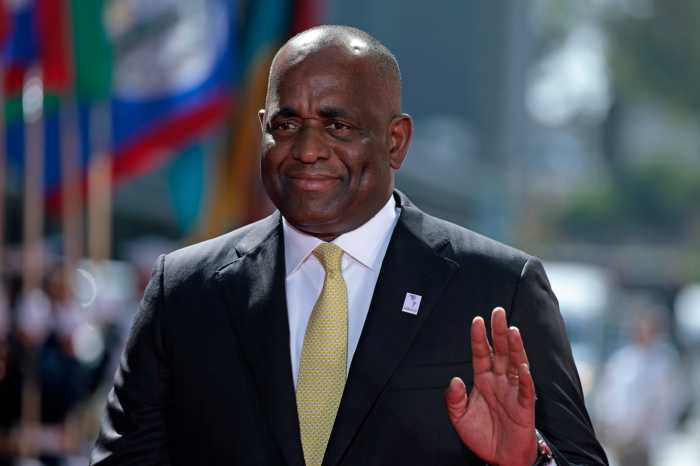
Prime Minister Roosevelt Skerrit said global crude oil prices had risen sharply, surging over 30%, causing local gasoline prices to increase from EC$14.96 to EC$17.98 per gallon and diesel from EC$13.84 to EC$20.53 per gallon.
He added that if fuel prices continue to rise, his government will introduce a subsidy of EC$1.50 to EC$2.00 per gallon through reduced fuel taxes to help cushion the burden on consumers.
“While these subsidies, at a cost of over half a million dollars monthly, will provide critical relief to households, bus operators, fishermen, and businesses, they also carry significant implications for government’s revenue/expenditure performance.
“Every dollar of subsidy is revenue foregone at a time when government’s expenditure is rising due to higher operating costs for schools, hospitals, public services, and ongoing recovery efforts following the April floods in the East and Northeast,” Skerrit told a news conference.
He said diesel prices have risen by 48% since February, and with global crude oil prices expected to remain high in 2026, fuel subsidies are placing increasing pressure on the Treasury, limiting the government’s spending on health, education, infrastructure, and disaster recovery.
“Government will continue to review fuel pricing monthly to balance consumer protection with responsible fiscal management,” Skerrit said, adding that Dominica’s long-term energy security relies on speeding up the shift to renewable energy.
He said geothermal energy, which is now supplying more electricity through Dominica Electricity Services Ltd., is an important step in reducing Dominica’s dependence on imported fuel and protecting the country from rising global oil prices.
“The government thanks the public for its understanding as we navigate these extraordinary global conditions together,” he added.
Guyana
Trade between Guyana and Brazil has grown rapidly over the past four years, increasing from approximately US$58 million in 2020 to roughly US$1 billion in 2026, according to Brazilian Ambassador Maria Cristina de Castro Martins.
She said the sharp increase reflects stronger economic cooperation and closer ties between the two neighbouring countries as they move to strengthen investment, trade, and regional integration through closer engagement with MERCOSUR.
Speaking on local radio recently, Castro Martins explained that the growth has been fueled mainly by the energy, mining, and infrastructure sectors.
She noted that Guyana’s exports to Brazil are heavily focused on crude oil, which makes up roughly 98% of shipments, while Brazil exports mainly machinery and industrial equipment used in construction, mining, oil production, and extractive industries.
“The trade relations between both countries have expanded significantly in recent years. The trade flow, which was around US$58 million in 2020, has now reached US$1 billion,” the ambassador said.
A business forum hosted by the World Trade Centre Georgetown and the Embassy of Brazil will be held soon to discuss trade and investment opportunities.
The event will also focus on strengthening Guyana’s involvement with MERCOSUR.
A Brazilian delegation is expected to attend to promote stronger relations and future trade discussions between Guyana and the regional bloc.
Haiti
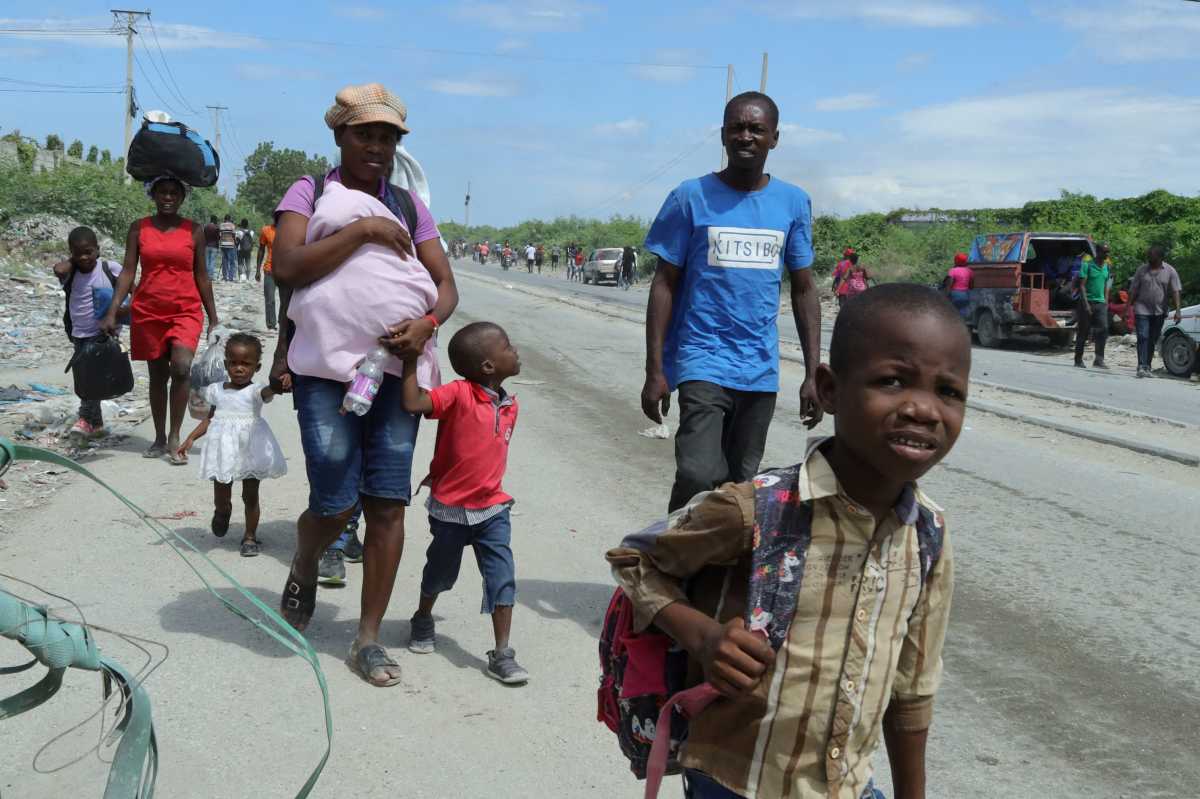
The Inter-American Commission on Human Rights has expressed concern over the worsening gang violence in Haiti and reports that some law enforcement anti-gang operations involving drones and private support have resulted in civilian deaths, including children.
According to the Office of the United Nations High Commissioner for Human Rights (OHCHR), between March 2025 and January 2026 at least 5,519 people were killed and 2,608 injured, mostly in the capital city of Port-au-Prince.
The report states that over 1,400 deaths and almost 800 injured were caused by gang violence, while nearly 3,500 deaths and about 1,750 injuries occurred during security force operations against gangs. Hundreds more were killed and injured in attacks carried out by civilian “self-defence groups.”
The violence has continued to escalate, with gang attacks in the Artibonite region in late March leaving at least 70 people dead and around 30 injured. Reports also highlighted the kidnapping and killing of journalists Junior Célestin and Osnel Espérance, along with an armed attack on journalist Marvel Dandin.
The IACHR said that operations using drones and helicopter fire have reportedly caused at least 60 civilian deaths and 49 injuries, including several children.
An OHCHR report also claimed that some drone strikes were conducted by Haitian law enforcement with assistance from a foreign private military contractor.
While criticising the impact on civilians, the IACHR acknowledged the Haitian government’s responsibility to protect citizens from gangs and restore public order.
Haiti stated that these operations target areas controlled by criminal groups and include measures aimed at reducing civilian harm.
Jamaica
The Jamaica Constabulary Force has reported a major reduction in crime in Jamaica, with murders declining by 23% for the period between January and May 2 this year. According to statistics released by the police force, the country recorded 184 murders during the period, compared with 238 murders during the corresponding period last year.
Several police divisions recorded notable improvements, including Westmoreland, Portland, Kingston Western, St. Andrew South, St. Andrew North, and both St. Catherine South and North, all of which saw significant decreases in murders.
However, the report also noted that some areas experienced increases in killings, with Manchester, St. Elizabeth, and Kingston Eastern recording rises of 100% or more.
The JCF said declines were also recorded across all major categories of serious crime. Shootings fell by nearly 33%, while robberies dropped by just over 20%. Break-ins and rape cases also recorded reductions. Up to May 2, there were 108 reported rape cases compared with 125 during the same period in the previous year, while robberies declined from 241 to 192 cases.
Overall, the total number of major crimes committed during the first four months of the year stood at 1,005, down from 1,256 during the same period last year.
The police force highlighted that the improvements continue a positive trend seen in recent years. In 2025, Jamaica recorded 673 murders, representing a historic reduction of approximately 43% compared with 2024 and the lowest homicide figure the country has seen in more than 30 years.