Late next year, Jamaica will celebrate 65 years of independence from Britain, but unless the two main parties can make key political compromises in the coming months, the upstart island nation will not become a republic as leaders have long promised the electorate, officials say.
For more than a decade both the governing Labor Party (JLP) and the main opposition People’s National Congress (PNP) have expressed ambitions for the northern Caribbean state to “complete its independence struggle” by becoming a republic, joining Guyana, (the first, back in 1970), Trinidad (76), Dominica (78) and Barbados in 2021 in this elite group.
The current administration of Prime Minister Andrew Holness has already organized several rounds of public consultations on the issue but there are some serious sticking points upon which neither party is budging.
The JLP, for example, wants to amend the constitution to become a republic, install its own black or brown head of state instead of a British-approved governor general, and amend other colonial era relics. While doing so, The JLP is adamant about retaining the British Privy Council as the island’s final court, a policy decision that is a non-negotiable issue for the PNP.
As a negotiating tool, the PNP has vowed not to help the JLP tally up a two-thirds majority to affect the switch to a republic, as it is solidly sold on Jamaica ditching the British law lords in favor of the Trinidad-based Caribbean Court of Justice (CCJ). Neither side is backing down. The JLP says the CCJ switch can be done later. The PNP thinks it is being made a political fool, as the government would have no incentive to do so because the island would have already become a republic if the PNP supports the effort.
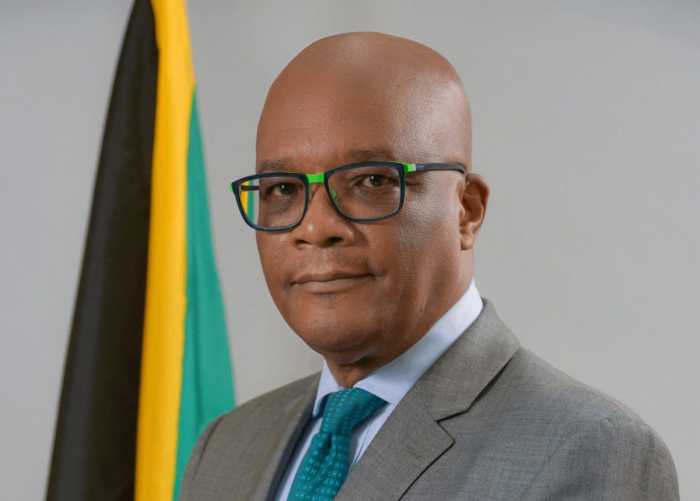
Opposition leader Mark Golding told the Gleaner newspaper at the weekend that there is definitely a political and constitutional stalemate, as local laws should be interpreted by local or regional jurists rather than those far away in London.
“That is an unacceptable anomaly which the opposition will not participate in. Since the government needs the opposition’s support to proceed with constitutional reform, we need to try to resolve this issue. I think the place to start is a discussion. I think the place to start is a discussion by the leaders of the main political parties to try and see if we can reach anywhere,” he said.
The stalemate has been exacerbated by PM Holness’ refusal to sit down with Golding, referring him instead to Justice Minister Delroy Chuck. To many in Jamaica, the rebuff was a mark of serious political disrespect to Golding and appears to have hardened positions. As such, a session “would not achieve anything,” muses Golding.
Minister Chuck says the PNP wants the government to bow to its demands rather than allow for a two-stage process with the switch to a republic initially then for talks about the regional apex court replacing the British judges.
“We can go sequentially by putting in place the republic and once Golding agrees, we can retable another bill that suits both sides,” he said. “Then we would move forward to immediately start discussing what the final court could be. It could well be the CCJ.”