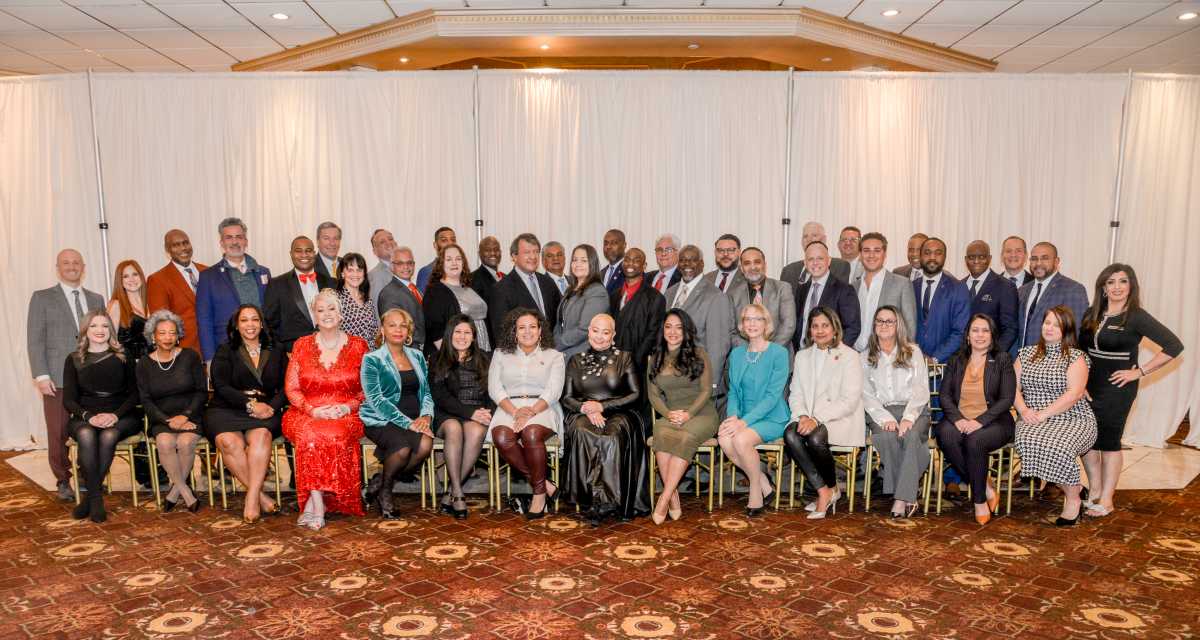

On April 28, the Center for the Independence of the Disabled, New York (CIDNY) sponsored the second part of a forum, held in-person and virtually titled The Future of MOPD (the Mayor’s Office for People with Disabilities).
The forum was convened by CIDNY, as well as the 504 Democratic Club, Art Beyond Sight, Inclusive Futures at Project Access for All, and the organization Wheeling Forward. It began with Warren Shaw, a historian of the disability rights movement in New York City, who shared the history and key figures involved with the agency.
His parents, Julie and Molly Shaw, were among the very first to push for what became MOPD back when he was a kid in the 1960s and 1970s, and his father, Julie Shaw, served as its second director. In 1966, they told City Hall officials that establishing an office like this was necessary to protect disabled citizens in New York City. At that time, it was a partial solution to the federal Civil Rights Act of 1965, which had left out people with disabilities.
“By January 1968, a report on a mayor’s committee on the handicapped was on Mayor John Lindsay’s desk,” Shaw shared. “Activists had been urging that such a committee had to have membership from the disability community itself, and the mayor evidently agreed because on February 26th, 1968, Julie was invited to serve on the Mayor’s Advisory Committee on the Handicapped, or MACH, the first iteration of what is now MOPD.”
Someone who had a huge role to play in the early stages of MOPD was social worker Eunice Fiorito, who was blind. While serving at MACH as coordinator in the 1970s, one of the major things she did happened in the spring 1974 during the OPEC oil embargo. At the time, New York State had adopted a gasoline rationing program that really affected disabled motorists. According to Shaw, this happened not because of hostility, but ignorance.
“When the state refused to reconsider its gas rationing plan, Eunice helped coordinate a massive demonstration in front of Governor Malcolm Wilson’s offices at 52nd Street and 6th Avenue,” Shaw said. “The protesters went out into the street and blocked 6th Avenue for hours in the middle of a workday without a permit. But Mayor Abraham Beame, who was having plenty of political troubles all apart from this, was furious with Eunice, and that didn’t mean anything good for the agency that she headed. In fact, given the fiscal crisis, the city’s 1970s brush with bankruptcy, the fiscal crisis, Eunice had to rally the community just to stop MOH from being defunded and dissolved.”
Alex Elegudin, who works at Advocates for Children NY, was one of the attendees. He shared a brief recap of a few key issues that were discussed during the first part of the forum, with feedback from the community, on April 14. One of those issues is housing, specifically with landlords refusing to accept vouchers from disabled people applying for housing despite meeting legal requirements.
“There was a law passed several years ago that they must [accept the vouchers], but we all know from trying to apply for housing, this continues to be a major issue,” Elegudin said. “Landlords find ways of wiggling out, from whether it’s Section 8 vouchers to other disability-specific vouchers or other things. Getting housing vouchers is very difficult. The NYCHA waiting list is very long and has no disability priority, and the NHCD and Homestead vouchers are very limited in quantity and scope.”
Transportation was the second issue discussed on April 14 that he shared in his recap, specifically with Access-A-Ride and the e-hail program. Elegudin added that there is a lot of unhappiness with Access-A-Ride, and an issue that came up most was with the requirement to book rides a day in advance, which makes same-day travel impossible.
“The MTA offers very limited forms of same-day taxi authorizations, even though they used to do it before,” he continued. “And the rides and routing that Access-A-Ride uses is too long, and the term tour of the boroughs metaphor saying remains true in 2026. The next topic was e-hail on demand. As you all know, the e-hail program is limited to 3,600 participants. As you know, there’s over 100,000 registered Access-A-Ride users. So the fact that the e-hail program has not been expanded is inequitable, is a major problem. If you can’t make it on 60 bucks for the subsidy within one borough, you’re certainly not going into a borough. So the subsidy still has people with disabilities coming out of their pocket too much and too often.”
Additionally, CIDNY executive director Sharon McLennon-Wier said she believes the agency’s future mission and identity could and should be as a community partner, working with disability organizations including CIDNY, as well as disability advocates, to make sure the lives of disabled people are better.
On how to do this, McLennon-Wier stated, “We can’t do that alone. We need money. And in order for any nonprofit to survive, we need to have funding, and it’s important for MOPD to become a funder where they can dispense funding to all nonprofits that have the specialization in disability. We will then hire the staff and provide the services that will improve your life. We can’t make everything better. We can only remove some barriers based on funding. However, in order to really be a true community partner, there has to be money that’s given to the community.”
Mike Schweinsburg, the president of 504 Democratic Club, explained that MOPD is the next-lowest-funded agency, with a current budget of $704,000, which he said is an insult to the community of over two million New Yorkers. He expressed a similar sentiment to McLennon-Wier, and said this is why he wants everyone to help by reaching out to their council members and demanding a $10 million budget for MOPD.
Jose Hernandez, another disability advocate, stated, “We need MOPD to be the voice for people with disabilities, no matter what disability you have, across city agencies. The Buildings Department with the rent freeze, with transportation, MTA. We definitely need inter-agency communications, and we really just need that representation.”