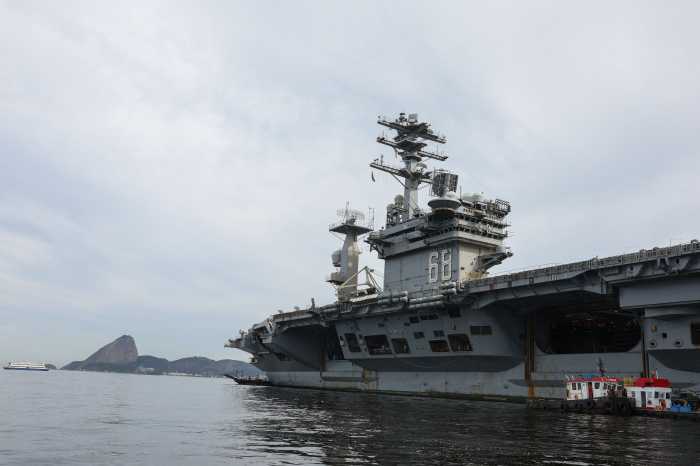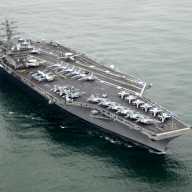
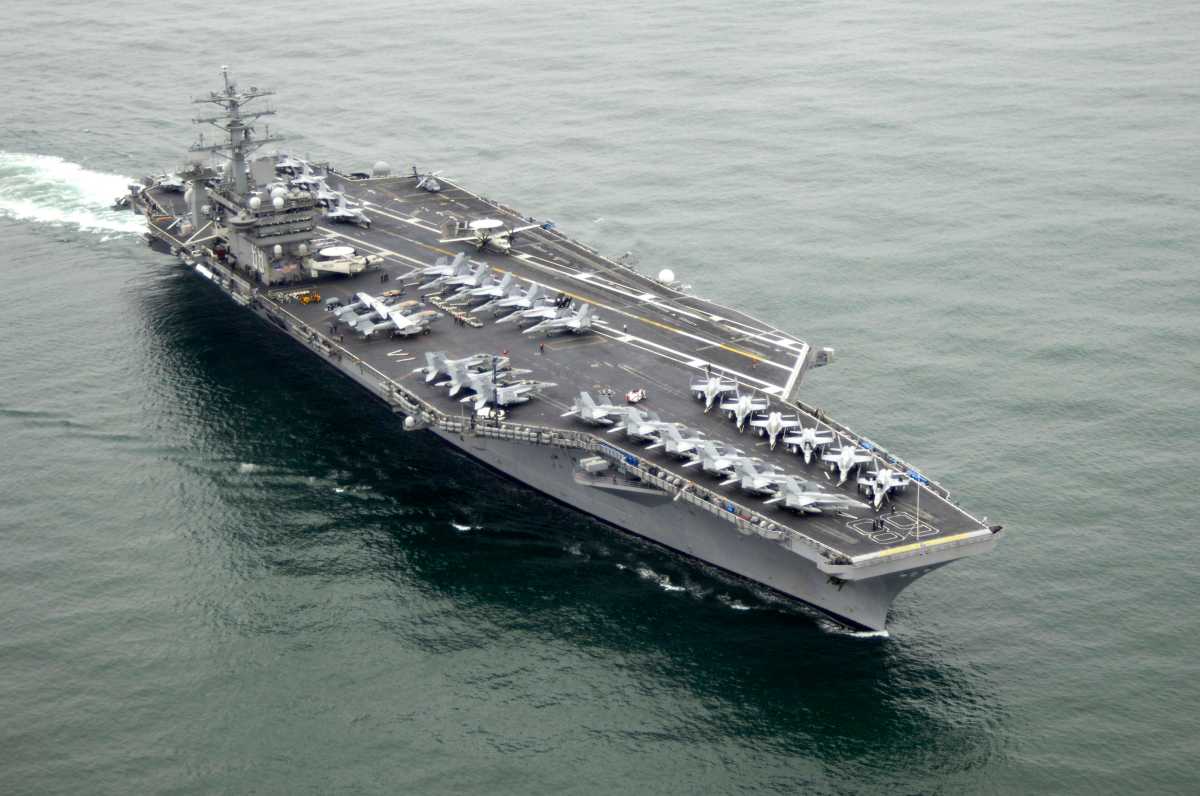
Jamaica’s government has come down hard on opposition and other critics from last week’s port call by the USS Nimitz, saying it has nothing to do with the already stated American military and other plans against neighboring Cuba.
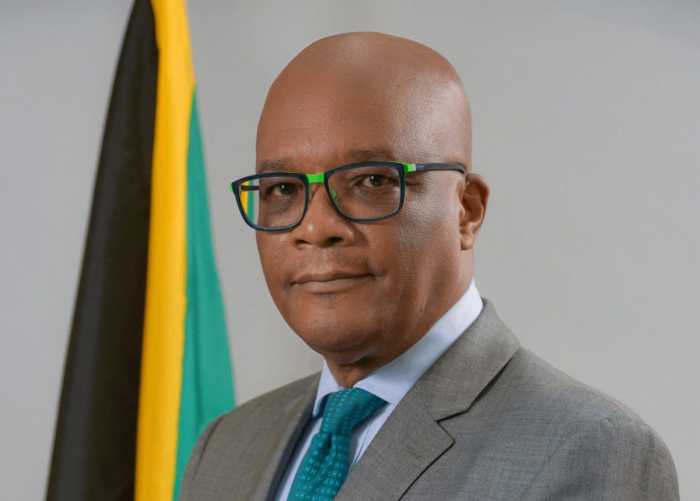
Rather, Foreign Minister Kamina Johnson-Smith said that the five-day call on the northern Caribbean island has more to do with a goodwill visit underlining strong bilateral relations between the US and Jamaica.
The Nimitz, one of the world’s largest and most powerful aircraft and troop carriers, arrived in Jamaica on Monday in what US officials say is part of a structured program in the lead up to the retirement of the vessel in the coming months. The carrier was built in the mid-1970s.
The vessel had also made offshore calls to Suriname, Guyana, Trinidad, and Grenada. Government officials, including President Irfaan Ali of Guyana and Prime Minister Dickon Mitchell of Grenada, were among senior regional politicians who were flown out to the vessel for a day trip and briefings. The government said the visit is mainly a goodwill stop.
“This is a scheduled port visit under an established program of maritime cooperation and goodwill. They have been at sea for about two and a half months since they left port in the US. I ask our public to think logically. The US has not been shy about demonstrating power and the possibility of force that they have wished to do,” Foreign Minister Kamina Johnson Smith said in a recorded message.
“They would be no need to burden themselves with receptions and school paintings and community football and to use resources in this way in order to send a message of menace or threat,” she said, referring to stinging criticism from many quarters in the country.
Among the harshest was retired CARICOM trade chief Byron Blake as he made it clear in an opinion piece that the Jamaica visit by the carrier and its support fleet was no accident.
“What this means is that the Jamaican government, and, by implication, we the Jamaican people are complicit in whatever will follow from here on with respect to Cuba and the US,” said Blake. “We have seen a listing of activities, which I would call pedestrian activities. Painting schools? Which high-level soldier does that? I think that it is really part of the intimidation and possible attack strategy on Cuba, and it should be seen and called in those terms. I cannot see any other term by which to describe it.”
Meanwhile University of Guyana law professor Neville Bissember says he is also suspicious of the American intentions, even though people monitoring its presence in Jamaica must wait to see what develops from a port call so close to Cuba.
“The stationing of the Nimitz in the Caribbean has been well publicized,” Bissember said. “Moving the boat into Jamaican waters for a visit can be interpreted differently given close proximity of Jamaica to Cuba. It is reminiscent of what transpired in Trinidad and Tobago (earlier this year). In the case of T&T, it was radar, facilities and material support lent to (US) air and maritime assets. In this it is the actual stationing of the carrier from which attacks can be launched onto Cuba,” he said, arguing that international law frowns on third states which offer material support to one nation to attack another.
“We wait to see,” what happens, he told this publication.